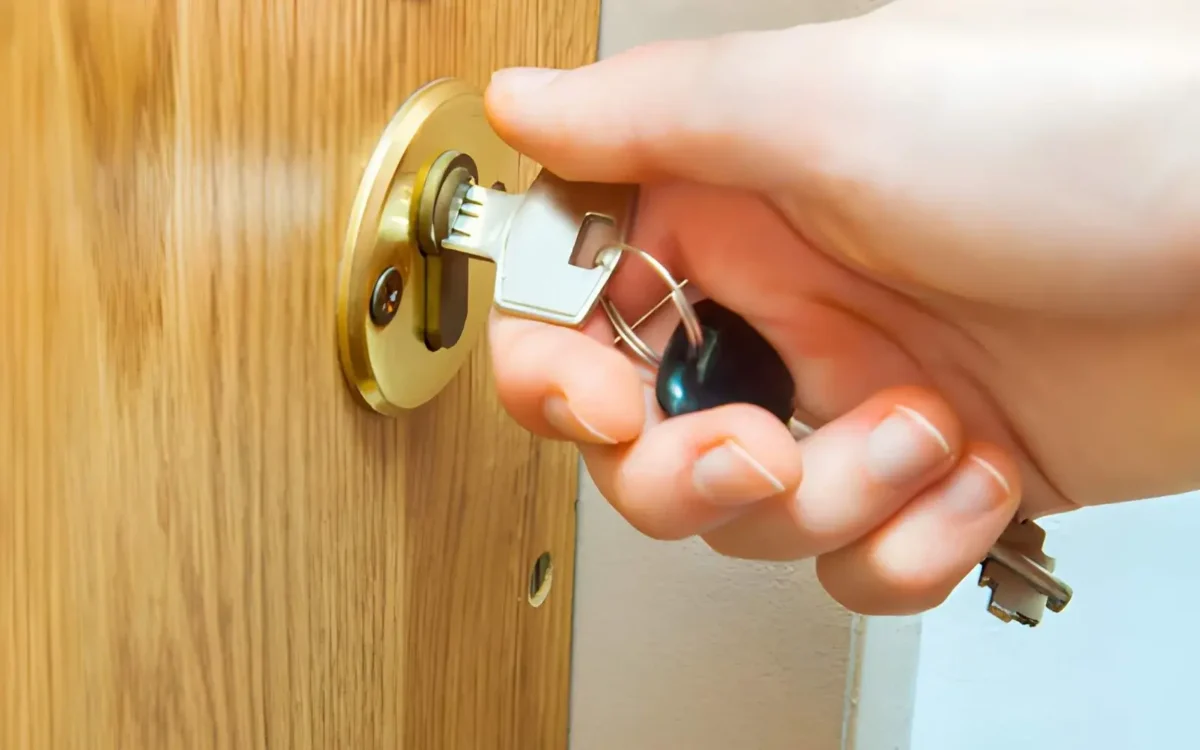

A home’s keys change hands more often than many homeowners realize. Previous residents, contractors, cleaners, dog walkers, and neighbors may have had copies over the years. If you’re unsure who can still unlock your door, lock rekeying may be a practical way to restore control without replacing every lock.
Rekeying changes the lock’s internal configuration so that old keys no longer work and a new key does. The lock hardware stays in place, which can make it a useful alternative to replacement when the lock is in good condition. Here are the key moments when homeowners may want to consider it.
1. After moving into a new home
A new home often comes with a small collection of keys, but there may be no reliable record of how many copies exist. The previous owner might have given keys to relatives or neighbors. A contractor, house cleaner, or property manager may also have had access.
Even if the seller hands over every key they know about, there is no easy way to confirm that all copies have been returned. Rekeying after a move gives the new homeowner a fresh start: old keys stop working, and access can be limited to the people you choose.
Consider rekeying exterior doors first, including the front, back, and garage entry doors. If there are separate locks for a shed, side gate, or other outbuilding, decide whether those should be included too.
2. When a key is lost or stolen
Losing a house key can be an inconvenience, but whether it’s a security concern depends on the circumstances. A key lost far from home, with nothing identifying its owner, may pose less risk than one attached to a tag with your name or address. A stolen key or a lost key near your home deserves more attention.
Think about who could connect the key to your address and whether it might have been taken deliberately. If you’re concerned that someone could use it to enter, rekeying can make the missing key ineffective. Simply making another copy does not solve the problem: the lost key will still operate the lock.
If you rent, contact your landlord or property manager before arranging any changes. Lease terms and local rules may specify who is responsible for the locks and who may authorize work.
3. After a change in household or access
A household’s access needs can change over time. An adult child may move out, a roommate may leave, or a relationship may end. In other cases, someone who once needed a key, such as a caregiver or regular visitor, may no longer require access.
The decision to rekey should be based on the situation, not simply on the fact that someone has moved out. If every key has been returned and there is no reason to believe copies exist, you may decide there is no immediate need. If keys are unaccounted for, or you want a clear boundary around access, rekeying can remove uncertainty.
It can help to keep track of who has keys and collect them when access arrangements change. A simple household record can prevent confusion later.
4. After renovations or repairs
Home improvement projects can bring a steady stream of people to the property. Contractors, subcontractors, delivery crews, and temporary workers may need access while the work is underway. Homeowners sometimes provide a key or leave one in an agreed location for convenience.
When the project is complete, consider whether any keys were handed out, left unsecured, or copied. If you cannot account for them, rekeying the affected doors may be a sensible precaution. This is especially worth considering if the key was available to multiple workers or was left outside the home.
For future projects, ask about alternatives such as meeting workers at the property or using a temporary access arrangement. If you use a lockbox, change its combination after the work is finished and avoid leaving it in an obvious place.
5. When you’ve relied on a spare key outside
Many people leave a spare key with a trusted neighbor or hide one outdoors. These arrangements are convenient, but keys can be misplaced, discovered, or passed along without your knowledge.
If you stop using a particular spare-key arrangement, ask for the key back. If it cannot be returned, or you’re unsure whether anyone else copied it, rekeying may restore confidence. For the future, consider giving a spare to someone you trust rather than hiding it near an entrance. Avoid obvious hiding spots such as under a doormat, in a flowerpot, or on top of a doorframe.
6. After a break-in or attempted entry
If someone has entered your home using a key, or you suspect that a key was taken, treat the situation seriously. Rekeying may be appropriate, but it should not replace checking for other security issues. A break-in may involve a damaged frame, a compromised door, or another point of entry.
If the lock or door has been forced, a professional can help determine whether the hardware still works properly. A damaged or worn lock may need replacement rather than rekeying. If there is immediate danger, prioritize getting to a safe place and contacting local emergency services.
After an incident, it can also be useful to review how keys are stored and who has access. Rekeying addresses old keys, but good door, frame, and window security matters too.
7. When you want several doors to use one key
Some homes have multiple exterior doors with different keys. Depending on the lock types and their compatibility, a locksmith may be able to rekey several locks to work with the same key. That can make everyday access simpler and reduce the number of keys you carry.
This option is not available for every lock. The locks generally need to be compatible, and their condition matters. Before making a decision, ask which doors can be keyed alike and whether any locks should remain separate. For example, you may prefer to keep a rental unit, home office, or storage area on a different key.
Convenience should not come at the cost of thoughtful access control. If one key opens every exterior door, losing that key affects all of those locks.
8. When a key has been shared more widely than intended
Keys are often lent for practical reasons: to let a friend feed a pet, give a cleaner access, or allow a family member to check on the house. Over time, it can become difficult to remember who has a copy or whether a key was passed to someone else.
If you have a clear list of key holders and can collect every copy, you may not need to rekey. But if the number of copies is uncertain, or a key has circulated beyond the people you trust, rekeying can help reset access.
For recurring visitors, decide whether they truly need a physical key or whether another arrangement would work. It’s also wise to avoid labeling keys with your address or other identifying details.
Rekeying or replacing: how to decide
Rekeying and replacement solve different problems. Rekeying changes which keys operate a compatible lock while keeping the lock itself. Replacement installs new hardware. If the lock is functioning well and you mainly want old keys to stop working, rekeying may be suitable.
Replacement may make more sense if the lock is damaged, badly worn, difficult to operate, or incompatible with the keys you want to use. It may also be worth considering if you want a different style of hardware or additional features. A locksmith can assess the lock and explain the available options.
The right choice depends on the condition of the hardware, the kind of lock, and what you want to accomplish. Avoid assuming every lock can be rekeyed; some designs are not compatible or may require special parts.
What to expect from the process
A professional typically checks the lock, removes or accesses its cylinder, and changes the internal components so that a new key works. The old key should no longer operate the reconfigured lock. The work may be straightforward for common residential locks, but the time and cost can vary with the lock type, condition, number of doors, and location.
Before scheduling, ask which locks will be rekeyed, how many new keys are included, and whether the locks can be keyed alike. Confirm that the old keys will no longer work in each serviced lock. Once the work is complete, test every door with the new key while the door is open, then check that the lock operates smoothly with the door closed.
Make key access part of home maintenance
There is no single schedule that every homeowner needs to follow. Instead, think about rekeying when access changes or when you can’t account for who has a working key. Moving in, losing a key, ending a shared-access arrangement, and completing a renovation are all natural times to reassess.
Keep a simple record of who has keys, collect them when circumstances change, and address damaged hardware separately. These small habits can make it easier to decide whether rekeying is necessary and help you feel more certain about who can enter your home.
Also Read
- What Types of Businesses Benefit Most From SMS Communication?
- Expert TV Mounting in Brisbane: Enhance Your Home Entertainment Setup
- Top Tips to Find the Best Mattress Sale in Sydney and Save Big





Leave a Comment