
Key Takeaways
- Shared workplaces need cleaning routines based on building use, traffic, and specific risks.
- Focus extra attention on high-touch areas, restrooms, break rooms, entrances, and shared equipment.
- Cleaning and disinfecting serve different purposes and should follow proper product instructions.
- Keep hand hygiene supplies stocked and address spills, waste, and moisture promptly.
- Adjust cleaning plans for offices, schools, healthcare facilities, warehouses, and residential communities.
- Train employees and cleaning teams on safe product use and clear responsibilities.
- Review schedules regularly based on occupancy, seasonal conditions, complaints, and recurring concerns.
- Professional cleaning services can complement an organization’s existing workplace hygiene plan.
Detroit workplaces bring together employees, visitors, residents, students, patients, and delivery teams in spaces used throughout the day. A healthier shared environment starts with practical routines that match the building, whether it is an office downtown, a school, a medical facility, a warehouse, or an apartment community. For organizations evaluating professional support, disinfection cleaning in Detroit, MI can complement an in-house plan for high-use spaces. The strongest approach is not simply to clean more often. It is to identify where people gather, what they touch, how the space is used, and which tasks deserve the most attention. In Detroit, winter moisture at entrances, busy break rooms, shared equipment, and fluctuating occupancy can all affect what a facility team prioritizes.
Why Shared Workplace Health Matters
Shared buildings have hygiene needs that private spaces do not. Doors, restrooms, kitchens, workstations, elevators, loading areas, and meeting rooms may be used by many people in a single day. Consistent care helps the space look maintained, keeps supplies available, and gives occupants confidence that routine concerns will be addressed promptly. Cleaning is one part of a broader workplace health plan that should also consider communication, hand hygiene, ventilation, and building operations.
Start With A Simple Risk Review
Before changing a schedule, walk through the facility at different times of day. List the busiest rooms, identify surfaces that receive repeated contact, and note areas where food, moisture, or waste can accumulate. Also consider who uses the building. A clinic, school, senior living community, and warehouse may all require different procedures because their activities, occupants, and equipment differ.
Focus On High-Touch Areas
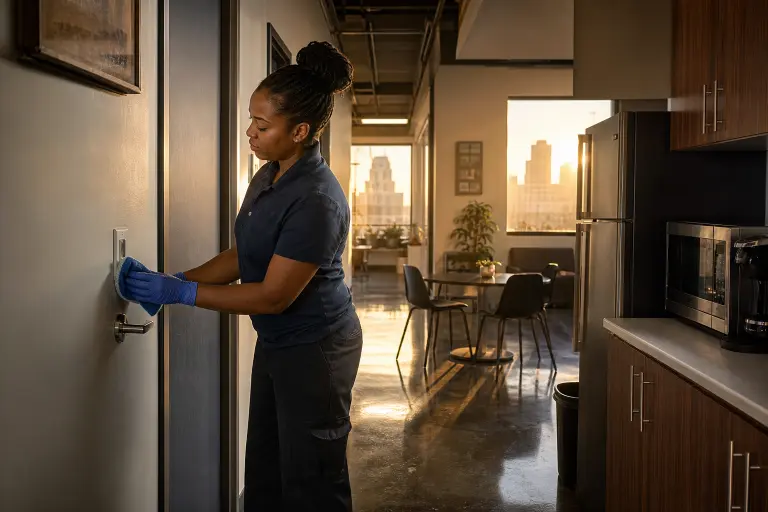
A smart plan does not treat every surface the same. Give extra attention to frequently handled points, especially during peak traffic periods. Common examples include:
- Door handles, push plates, light switches, and elevator buttons.
- Shared keyboards, phones, touchscreens, printers, and copiers.
- Break-room appliance handles, tables, chairs, and sink fixtures.
- Restroom dispensers, faucets, flush handles, and stall hardware.
- Shared tools, carts, scanners, steering controls, and warehouse equipment.
Cleaning Vs. Disinfecting
Cleaning removes dirt, debris, and other material from a surface. Disinfecting uses a product designed to reduce certain microorganisms on a surface when it is used according to the label. In many routine situations, ordinary cleaning is the appropriate starting point. When disinfection is needed, clean the surface first, as directed by the product directions, allow the stated contact time, and provide appropriate ventilation. Staff should never mix cleaning chemicals, and products should remain in labeled containers with accessible safety information. School and facility leaders can use cleaning and disinfection guidance to help shape procedures around product selection, protective equipment, storage, and room-specific needs.
Create A Routine That Fits The Space
A three-level schedule makes it easier to assign responsibilities and adapt tasks as traffic changes.
Daily Tasks
- Clean restrooms and break rooms, remove waste, and restock essentials.
- Respond quickly to spills, visible soil, and wet entry areas.
- Wipe high-touch points in busy shared spaces.
Weekly Tasks
- Clean less-used shared equipment and detail corners, ledges, and vents.
- Check supply levels, tool condition, and whether traffic patterns have shifted.
Periodic Tasks
- Review the full plan after renovations, schedule changes, or occupancy changes.
- Inspect chemical storage and refresh staff training.
Improve Air And Hand Hygiene
Surface care works best alongside simple habits that reduce avoidable mess and support everyday health. Keep soap, paper towels, and hand sanitizer stocked where appropriate. Place clear reminders near restrooms, entrances, and shared equipment. Encourage people to report empty dispensers, spills, or damaged fixtures. Building managers can also review ventilation and filtration needs with qualified professionals, particularly when a space is crowded or used for long periods.
Adjust Plans For Different Facilities
- Offices: Prioritize meeting rooms, shared desks, kitchens, printers, and elevators.
- Schools: Include classrooms, cafeterias, buses, restrooms, and shared learning materials.
- Healthcare spaces: Follow facility-specific infection prevention procedures and applicable requirements.
- Warehouses: Include shared equipment, break rooms, loading zones, and high-traffic walkways.
- Residential communities: Focus on lobbies, mailrooms, fitness rooms, laundry rooms, and amenities.
Train People Without Creating Friction
Good routines last when people understand them. Use short instructions that indicate which product belongs on each surface, how long it must remain wet during disinfection, and where employees should report problems. Assign responsibilities clearly among managers, occupants, and cleaning teams. Repeat essential points during onboarding, before seasonal changes, and whenever equipment or procedures change.
Measure What Works
Improvement does not require complicated reporting. Track missed tasks, repeat complaints, supply shortages, and response times for spills or urgent requests. Compare cleaning rounds with actual building traffic, then ask occupants which areas seem overlooked. Workplace programs are more likely to gain participation when teams account for real barriers and create shared buy-in, as noted in research on workplace participation.
Common Questions
How Often Should Shared Surfaces Be Cleaned?
Frequency depends on traffic, the type of activity, the presence of visible soil, and how often a surface is touched. Busy restrooms, entrances, kitchens, and shared equipment generally need more frequent attention than low-use areas.
Is Disinfecting A Replacement For Cleaning?
No. Cleaning and disinfecting serve different purposes. The appropriate task depends on the surface condition, the facility’s procedures, and the product label.
Which Areas Need The Most Attention?
Start with restrooms, break rooms, entrances, meeting spaces, shared tools, and frequently handled controls.
When Should A Cleaning Plan Be Updated?
Review the plan when occupancy, layout, operating hours, equipment, or building use changes. A regular review also helps Detroit facility teams prepare for seasonal conditions and shifting traffic patterns.
Conclusion
A healthier shared workplace in Detroit does not depend on a complicated system or constant changes to daily operations. It depends on a clear risk review, steady cleaning routines, safe product use, stocked hygiene supplies, and regular feedback from employees and facility staff. High-touch surfaces, shared equipment, restrooms, break areas, entrances, and other frequently used spaces may require consistent attention based on how the building is used. Cleaning schedules should also reflect changes in occupancy, seasonal conditions, special events, and activities throughout the workplace. When cleaning plans align with the people, spaces, and activities within the building, facility teams can respond to practical needs without causing unnecessary disruption. Regular checks can also help identify supply shortages, recurring cleanliness concerns, or areas that need additional attention. By combining organized routines with employee awareness and ongoing adjustments, businesses can maintain workspaces that feel cleaner, more orderly, and more comfortable throughout 2026.
Also Read
- clinical-boundaries-6-risks-of-treating-chatgpt-medical-advice-as-a-diagnosis/
- timeless-elegance-discover-the-latest-ladies-watches-collection/
- nhancing-community-development-through-data-driven-decision-making/






Leave a Comment