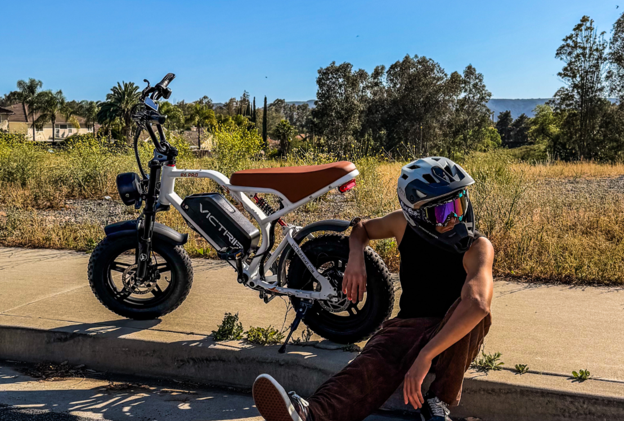

Choosing an electric moped is easier when the decision starts with the road rather than the specification sheet. Motor output, battery capacity, tire size, suspension, and braking all matter, but their value depends on where and how an adult rider plans to travel. A setup that feels practical on smooth city pavement may be less comfortable on broken roads or steep routes.
The most useful approach is to look at the daily riding environment first. Consider the road surface, hills, trip distance, traffic, weather, charging opportunities, and the amount of weight the moped will carry. Once those conditions are clear, it becomes easier to identify which specifications deserve attention and which impressive-sounding features may not make much difference.
Start With the Roads, Not the Moped
A road-first approach prevents riders from choosing a vehicle simply because it has a long range or powerful motor. Start by thinking about the route you use most often. Is it mostly smooth pavement, a mixture of residential streets and busier roads, or a route with cracks, potholes, gravel, and regular climbs? The answer can change which features deserve priority.
For example, a short trip across well-maintained streets may place greater emphasis on predictable handling, comfortable ergonomics, braking, and easy maneuverability. A longer route with uneven surfaces may make tire design, wheel stability, suspension, and ground clearance more relevant. There is no single specification that determines whether a moped is suitable. The better choice is the one that fits the conditions you actually encounter.
It also helps to separate normal conditions from occasional ones. If a rough section appears only once a month, it may not justify choosing a much heavier setup. Conversely, if poor pavement is part of every commute, treating it as an exception can lead to an uncomfortable daily experience.
Route consistency matters, too. A rider should think about the roads used most frequently, not just the easiest or most convenient trip. If a regular commute includes one difficult stretch, that section may influence the choice more than a long stretch of smooth pavement. Looking at the route as a whole helps prevent a vehicle from being optimized for conditions that are rarely encountered.
Match the Moped to Urban and City Streets
Urban riding often involves frequent starts, stops, turns, intersections, parked vehicles, and changing traffic conditions. On these roads, balanced handling can be more useful than simply pursuing maximum performance. A manageable size, predictable steering, effective brakes, and a comfortable riding position can make everyday travel less demanding, particularly when the rider is repeatedly slowing and accelerating.
Tire characteristics also deserve attention. Tires need to provide suitable contact with paved surfaces while supporting stable handling. Wheel size, tread pattern, and tire pressure can influence how the moped responds to imperfections and turns. Riders should also consider where they will store the vehicle and how often they need to maneuver it by hand. For many commuters comparing an electric moped for adults, practical usability is more important than choosing the largest numbers on a specification sheet.
Traffic conditions add another layer. A quiet neighborhood route is different from a road where vehicles, cyclists, pedestrians, and buses regularly share limited space. In busier environments, predictable braking, visibility, rider position, and smooth control become especially important. These qualities support confidence without requiring the moped to be excessively powerful.
Consider Rough, Uneven, or Poorly Maintained Roads
Not every commute takes place on freshly paved streets. Cracks, potholes, patched asphalt, loose gravel, and uneven surfaces can change how a moped feels under normal use. When these conditions are common, tires and suspension deserve closer attention because they influence how impacts are transmitted to the rider and how steadily the vehicle tracks over imperfect ground.
Suspension can help manage repeated bumps, but it should not be treated as a guarantee that every rough road will feel comfortable. Tire construction, wheel size, rider weight, speed, and the severity of the surface all contribute to the experience. Ground clearance can also matter where there are pronounced bumps or damaged sections that could otherwise contact lower components.
There are trade-offs. More rugged components can support stability and comfort on imperfect surfaces, but they may add weight or affect efficiency and handling. A rider whose route is mostly smooth pavement may gain little from choosing the most rugged setup available. The goal is to match the equipment to the frequency and severity of rough conditions rather than preparing for every possible road.
How Hills and Slopes Change the Equation
A moped that feels responsive on flat pavement may behave differently on a sustained incline. Hills require the motor to work harder, and the total load includes the rider as well as any cargo. Steeper grades, repeated climbs, higher speeds, and frequent acceleration can increase energy use and may reduce the practical range available from a battery.
Motor specifications can therefore be useful, but they should be interpreted in context. A single power figure does not describe every real-world climbing situation. Riders should consider the steepness and length of the hills on their regular route, the total load they carry, and whether they need to maintain steady movement rather than simply manage a short incline.
Descending also matters. Reliable braking and controlled handling are important when traveling downhill, especially where roads are busy or surfaces are uneven. Instead of asking only whether a moped has enough power to climb, evaluate the complete hill experience: starting, climbing, turning, stopping, and descending under realistic conditions.
Think About Distance, Range, and Charging
Daily distance is another major part of matching a moped to its environment. A short local trip and a long commute create different battery requirements. Start with the distance of a normal round trip, then consider whether charging is available at home, work, or another regular destination. A rider with convenient charging may have different priorities from someone who needs to complete several trips before reaching a charger.
Advertised range should be treated as a reference rather than a guaranteed result. Real-world range can change with rider weight, speed, terrain, wind, temperature, tire pressure, road conditions, and stop-and-go traffic. Repeated hill climbs, for example, can consume more energy than steady travel on level pavement.
It is sensible to leave some margin rather than planning every trip around the maximum claimed range. A practical buffer can reduce the need to monitor the battery constantly and provides flexibility when weather, traffic, or an unexpected detour changes the route. Charging time and battery access should also be considered because range is useful only when the vehicle fits the rider’s actual daily routine.
Consider Traffic, Speed, and Riding Conditions
The type of traffic around a rider can influence which characteristics matter most. Residential streets may involve lower speeds and frequent turns, while major urban routes can require more awareness of surrounding vehicles and changing gaps. In either situation, predictable control and braking are valuable because conditions can change quickly.
Visibility is another practical consideration. Riders need to remain aware of vehicles, pedestrians, cyclists, road markings, parked cars, and surface hazards. Weather can make this more demanding. Wet pavement may affect traction and stopping behavior, while strong wind can influence stability. These conditions do not automatically make electric mopeds unsuitable, but they reinforce the importance of appropriate equipment and sensible riding.
Speed should also be considered in relation to the road rather than treated as a goal by itself. A higher-capability vehicle is not automatically a better fit for every commuter. Matching performance to the roads, traffic environment, local requirements, and rider comfort can create a more useful balance than selecting specifications simply because they are higher.
Match Features to Your Everyday Riding Environment
Once the road, terrain, distance, and traffic have been considered, individual features become easier to evaluate. Instead of asking whether a moped has the best tires or the largest battery, ask what problem each feature solves. This keeps the selection process practical and prevents specifications from becoming disconnected from everyday use.
For example, riders on rough roads may prioritize suitable tires and suspension, while riders facing regular hills may pay closer attention to motor performance and battery demands. Longer commuters may care more about usable range and riding comfort, whereas riders making short urban trips may value maneuverability, storage, and easy charging.
Different electric two-wheelers are also designed around different rider needs and environments. A vehicle intended for one type of user should not automatically be judged by the same criteria as an electric dirt bike for kids. The relevant comparison is always between the vehicle’s intended use and the conditions in which it will actually be ridden.
Build a Practical Checklist Before Choosing
Before comparing individual models, turn your daily route into a short checklist. This makes it easier to identify which specifications deserve the most attention.
- Where will most riding take place?
- Are the roads smooth, rough, or mixed?
- How many hills are on the normal route?
- What is the typical round-trip distance?
- Where can the battery be charged?
- How much rider or cargo weight will be carried?
- How busy are the roads?
- What weather conditions are common?
- How important are comfort, storage, and easy maneuverability?
The answers do not need to point toward the most powerful or expensive option. They should help establish a sensible priority order. Once the most demanding parts of the regular route are identified, riders can compare specifications based on actual needs instead of marketing claims.
Conclusion
Choosing an electric moped for adult riding is ultimately a matter of matching capabilities to real conditions. Smooth city commuters may prioritize control, braking, comfort, and maneuverability, while riders on rough or hilly routes may need to give more attention to tires, suspension, motor performance, and energy use. Longer journeys also make practical range and charging more important.
The best choice is therefore not necessarily the moped with the biggest battery, highest power, or longest advertised range. It is the one that makes sense for the roads, terrain, distance, traffic, and conditions a rider actually faces. Riders comparing practical options can also explore VICTRIP EBikes as they evaluate which characteristics best fit their everyday routes.
FAQs
1. How should adults choose an electric moped for their usual roads?
Adults should first consider the surfaces, terrain, traffic, distance, and weather conditions they regularly encounter. Smooth city streets may prioritize maneuverability and braking, while rough or hilly routes may require greater attention to tires, suspension, motor performance, and battery use.
2. What features matter most when riding an electric moped on rough roads?
Tire characteristics, wheel stability, suspension, and suitable ground clearance can become more important on rough or uneven roads. Riders should also consider their speed and the severity of the road conditions rather than assuming one feature will make every surface comfortable.
3. Does riding on hills reduce an electric moped’s practical range?
Yes. Regular hill climbing can require more energy than steady riding on level roads. Rider weight, cargo, incline, speed, weather, and stop-and-go conditions can also affect energy consumption, so advertised maximum range may not reflect everyday performance on hilly routes.
4. How much electric moped range does an adult commuter really need?
The required range depends on the rider’s normal round-trip distance and available charging opportunities. It is generally better to calculate the regular route and leave some practical margin rather than relying on the maximum range advertised by a manufacturer.
5. Should an electric moped be chosen based on motor power alone?
No. Motor power is only one part of the decision. Road quality, hills, rider and cargo weight, braking, tires, suspension, battery capacity, traffic, and comfort can all affect whether an electric moped is appropriate for a particular daily route.
Read more: 6 Best LED Inspection Light Bar for Automotive Repair
Exploring the Best Fragrances for Women’s Perfume
Common Questions Women Ask Before a Mommy Makeover

Leave a Comment