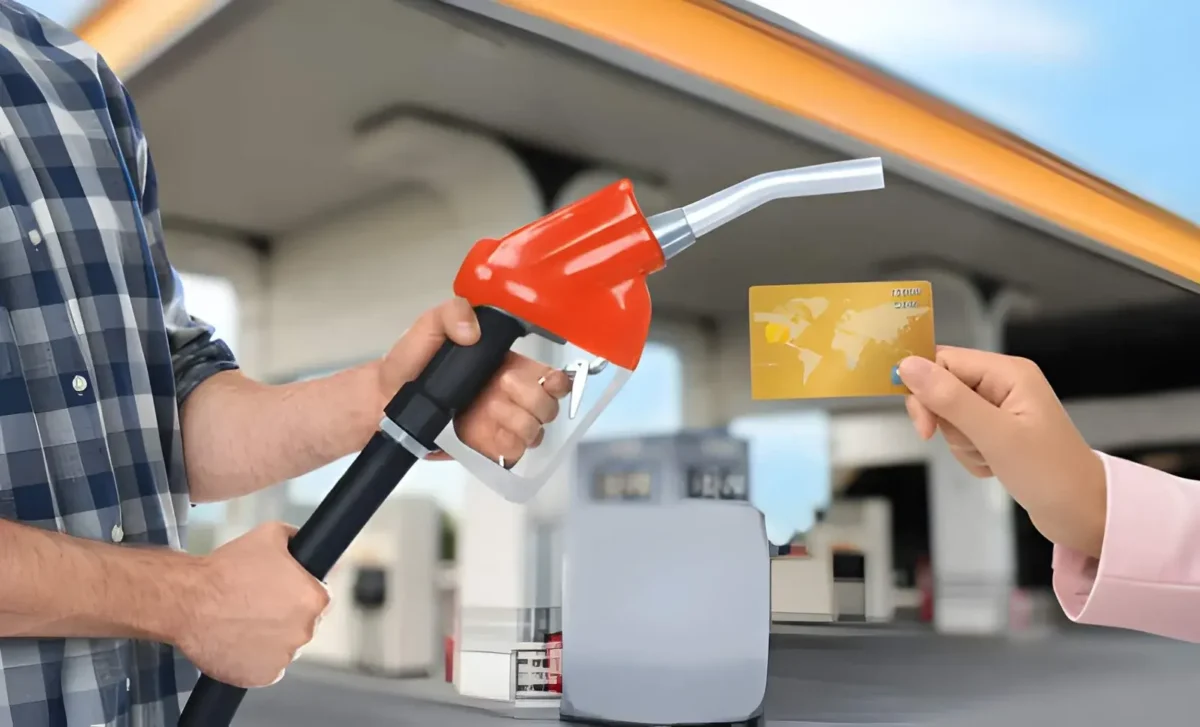

A driver pulls into a station, enters an identifier, chooses a pump, and leaves with a receipt. That familiar sequence can either end as an expense that someone chases later or begin a record a business can review the same day. The difference is the transaction data attached to the purchase. A fuel card is useful when it helps a business connect a vehicle, driver, location, time, product, and spending rule to one fuel transaction. Branded programs on both sides of the border, including Esso and Mobil business gas cards for Canadian fleets, are built around that same idea of tying each fill-up to a driver and vehicle.
The scale of that decision is easy to underestimate. The U.S. Energy Information Administration reports that Americans used about 136.72 billion gallons of gasoline in 2025. The Federal Highway Administration recorded 3.3 trillion vehicle-miles on public roads in 2024. The Census Bureau’s 2022 Commodity Flow Survey counted roughly 13.7 billion tons of freight moved domestically. None of those national figures tells a particular company what it spends, but they explain why a fuel purchase is not a minor administrative detail for businesses with vehicles on the road. For a company running its vehicles on Sunoco fleet cards with fuel rebates, those national figures turn into its own gallons, stations, and invoices.
Start with the transaction, not the plastic
A fuel card is a payment credential connected to a business account. Its practical value comes from the information and rules that travel with a purchase. Depending on the program, a driver may use a card number, driver ID, PIN, vehicle number, or a combination of those fields. The station submits an authorization request, the card program tests the request against the account rules, and the purchase either proceeds or is declined.
That process is different from handing out a general credit card. A general card may show a merchant and a dollar amount. A fuel-card program can often capture a station location, grade, gallons, unit price, odometer or mileage prompt, driver identity, and vehicle identity. The available fields differ by provider and network, so a business should verify the records it will actually receive rather than assume every fuel card produces the same data.
A useful setup begins with one question: what decision should this transaction support? A route manager may need to see whether a driver fueled outside an approved corridor. An owner may need to reconcile fuel expenses to jobs. An accounting team may need receipts, tax categories, and an export that matches its chart of accounts. The answer determines which prompts and controls matter.
Follow one purchase from driver to statement
Imagine a service company with six vehicles. Before a driver starts, the account manager assigns a card or digital credential to that driver and vehicle. The company sets a daily dollar ceiling, permits regular gasoline and diesel, blocks nonfuel purchases, and requires an odometer entry. Those are policy choices, not universal fuel-card features.
At the pump, the driver enters the requested identifying information. The network checks whether the location accepts that program, whether the purchase falls inside the authorized category, and whether the card remains within its allowed frequency or dollar limit. If the request passes, the station completes the sale. If an exception occurs, such as a purchase attempt outside the permitted product code, the program may decline the transaction or create an alert.
Afterward, the account record should show more than a total. A manager can compare gallons with vehicle mileage, review purchases by location, and question unusual timing. The statement or portal becomes the bridge between a driver’s stop and the business’s expense tracking. That bridge works only if people review it. A card does not create accountability by itself.
The network determines where a card is useful
A fuel card can be accepted at a broad retail network, a branded network, truck stops, or a narrower set of locations. Coverage should be tested against regular routes, not a map of the entire country. A contractor working within one metro area may value nearby stations and convenient hours. A long-haul fleet may care more about truck-accessible locations, diesel lanes, parking, and route continuity.
Ask for a station lookup before enrolling. Then compare it to the last 60 to 90 days of actual driver routes. Identify recurring stops, remote job areas, overnight routes, and locations where drivers need diesel or other approved products. A network that looks large on paper may have gaps along a specific operating pattern. Conversely, a more limited network can be workable if it closely matches where a business already fuels.
The payment terms matter here too. Some programs settle purchases as a charge account, some use prepaid balances, and some combine billing arrangements with discounts or rebates. Businesses should understand when payment is due, whether a balance affects access, and whether a discount depends on a particular location, volume tier, or invoicing cycle.
Controls should reflect the work, not a wish list
The most useful controls are specific enough to prevent predictable mistakes while flexible enough for legitimate work. A delivery operation might allow one diesel purchase per shift, a defined transaction ceiling, and no inside-store purchases. A sales organization with passenger vehicles might permit regular gasoline, cap daily spend, and flag weekend use. A construction crew may need different rules because equipment, job sites, and after-hours work create different patterns.
Avoid setting a single broad limit and calling that a policy. Think through four dimensions: who can buy, what they can buy, where they can buy, and how often they can buy. Driver IDs establish responsibility. Product restrictions control purchase categories. Location rules can reduce out-of-route spending. Frequency and dollar limits keep one authorization from becoming an open-ended account.
Every restriction needs an exception path. If an approved station is closed, a driver needs to know whom to contact. If a card is declined, the business should have a short escalation process that does not encourage someone to use a personal card without documentation. Exception handling is part of the control system.
Reporting is where savings claims become testable
A fuel card should not be selected solely because of a promised discount. A discount has value only after fees, qualifying conditions, station price differences, and driver behavior are considered. Reports make that comparison possible. Look for transaction detail, summary views by driver and vehicle, downloadable records, exception reports, and a clear billing statement.
A simple monthly review can answer practical questions. Which vehicles bought the most gallons? Which stations carry the highest effective price? Did fuel purchases occur outside shifts? Did odometer data reveal a missing entry? Did a card generate a transaction after a driver left the company? Those are operational questions, not accounting trivia.
A worked example helps. Suppose a business buys 1,800 gallons in a month. A program advertises a six-cent-per-gallon discount, producing $108 in gross savings. If the monthly account fee is $25 and two out-of-network purchases add $18 in extra cost, the apparent benefit falls to $65. The example is hypothetical, but the method is real: calculate net cost after every fee and condition.
Treat security as a response process
Fuel-card security has two parts: reducing the chance of misuse and responding when a transaction does not fit the pattern. Use separate driver credentials where possible, remove access immediately when employment changes, and avoid shared PINs. Set alerts for unusual transaction size, repeated declines, unexpected location, or purchase timing that conflicts with a work schedule.
Fuel-card security is not a software setting that can be forgotten after enrollment. If a card is lost, who contacts the provider? If a transaction looks questionable, who reviews the driver’s explanation and supporting record? If misuse is confirmed, how is access changed? A written sequence saves time during the moment when a vague policy is least useful.
Choose the program after mapping the business
Before applying, gather a basic picture of the operation: vehicles, drivers, fuel types, usual routes, estimated monthly gallons, preferred stations, payment terms, accounting process, and required reports. Then compare programs on fit rather than on a headline rebate.
The right fuel card is one a business can administer. It should work at the locations drivers need, produce records the office can use, apply controls that match real work, and make costs visible enough to test whether the program is delivering a net benefit. When those pieces line up, the pump purchase stops being a loose receipt and becomes an operating record.
Also Read
- https://grammerway.com/challenges-in-scaling-semiconductor-technologies-below-3nm/
https://grammerway.com/maximizing-returns-through-strategic-commercial-property-investment/
https://grammerway.com/transform-your-home-with-stylish-area-rugs-in-australia/





Leave a Comment