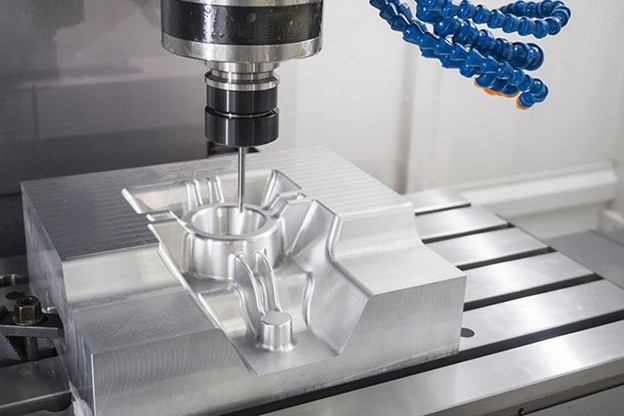

There’s one easy explanation as to why plastic is a bad rap, and that’s due to waste. Older manufacturing techniques used a tremendous amount of energy without caring much about environmental impact, landfills overflow with waste packaging and the oceans are filled with floating trash.
The industry, however, has been evolving at a greater rate than many realize in modern manufacturing facilities, particularly in advanced injection molding manufacturing facilities in China and Southeast Asia.
The capable custom injection mold manufacturer of today does not only concern him/herself with speed and low production costs anymore. The true challenge today is how to become as efficient as possible with materials, minimize energy use, use precision tooling, recycling, and sustainability. Often the cleanest factories are the most profitable.
A change that is changing plastic product design, molding, reusing, and recycling.
The reasons why traditional plastic manufacturing became an issue
Older molding processes were designed to meet volume demands, rather than efficiency.
Hydraulic machines were frequently operated in a factory around the clock, even when the factory was closed. Mold designs lost resin due to too large runners and inadequate gating. There was a significant amount of parts that were defective and were discarded in bulk and very little consideration was given to power usage or carbon emissions.
In low quality operations, material waste can work its way quietly into the margins and into sustainability objectives. Over time, the generation of plastic waste becomes enormous when a poorly optimised mould is used and generates an additional 2% scrap on a million part order.
That is why in modern days manufacturers are now spending heavily on tooling engineering, process control and material science. Sustainability isn’t just a marketing buzzword. It is now a part of operating survival.
Injection Molding is already more efficient than a lot of manufacturing methods
Since the process can be used by a custom injection mold manufacturer to manufacture parts in their final shape, less waste is generated compared to machining, cutting or subtractive manufacturing processes.
When the mold is set up properly, production begins to be very repeatable.
The quality of the mould can allow for the creation of hundreds of thousands, if not millions, of components with little to no difference. This uniformity significantly cuts down on the number of rejected parts, trimming and raw material consumption.
The recovery of materials is one of the most significant benefits in actual factory use. Sprues, runners and start-up scrap are frequently re-ground and used again in production for non-cosmetic or industrial applications.
An approach that is often taken by experienced injection molding engineers is to set a very close regrind ratio that will provide acceptable mechanical properties with minimal virgin resin use. The balance is significant as it does not want to sacrifice part strength or reliability in the name of sustainability.
Electric Injection Molding Machines revolutionized the molding industry
Stepping away from the older hydraulic systems was one of the greatest environmental enhancements in modern molding plants.
Servo motors only turn on when there is movement, which means that all-electric injection molding machines use much less power.
Electric systems have the following advantages over conventional hydraulic systems:
- Lower energy consumption
- Higher precision
- Less risk of oil contamination.
- Faster response times
- Better repeatability
- Cleaner factory environments
This is important particularly for a large volume production.
Massive reductions in electricity consumption can be achieved with the modernization of equipment in a factory that operates dozens of molding machines around the clock.
Many Chinese molding firms that were mainly export oriented enhanced their equipment due to the international customers’ testing of carbon reduction and sustainability standards.
The future of sustainable plastic manufacturing
Smart material recovery and clean energy instigation are likely the next steps in environmentally friendly molding.
There are a number of technologies now making considerable strides:
- Closed-loop recycling systems
- AI-driven process optimization
- Solar-powered manufacturing facilities
- Recycled engineering plastics chemically recycled.
- Water-saving cooling systems
- Low-emission resin formulations
Meanwhile, mold engineering is continually advancing. The improved cooling layouts, conformal cooling and more advanced hot runner systems are helping to minimize cycle times and resin waste.
The industry is shifting towards a more efficient and sustainable system that is no longer viewed as mutually exclusive. Nowadays, they rely on each other more and more in modern manufacturing.
Final Thoughts
The manufacturing of plastic is a process that is changing beyond recognition from the stereotype of throwing away waste and making a lot at the same time.
The major custom injection mold manufacturers of the present day are investing in cleaner technologies, improved tooling systems, recycled materials, automation and energy efficient operations that drastically cut down on environmental impact.
It is often said that the best progress is being made in factories where engineering precision is coupled with long term thinking. The new focus on sustainable injection molding is not just about “using less plastic”. It’s not just about smarter design, it’s about tighter process control, improved equipment and responsible material management across the entire production process.
With industries still looking for more eco-friendly supply chains, this is not a choice to be made, but one of the most important measures in current manufacturing.
FAQs
So, what is the role of a custom injection mold manufacturer?
Custom injection mould is a manufacturer of precision moulds that are engineered and manufactured to create plastic parts for the automotive, medical, electronics, consumer goods and industrial equipment industries.
Is injection molding green?
Injection molding is a relatively efficient manufacturing process compared with many manufacturing processes, as very little material is left over after optimization. Numerous factories also have their own internal recycling processes.
Is high quality molded products feasible with recycled plastics?
Yes. Plastics can be recycled for a diversity of commercial and manufacturing uses. The right choice of materials and process control are essential to ensure the strength and consistency of the parts.
Why are electric injection molding machines considered to be greener?
Because electric molding machines use servo motors that only work when needed, they utilize less energy than hydraulic molding machines. They also offer increased accuracy and cleanliness of operation.
Is the biodegradable plastics market replacing the plastic market?
Not completely. For some applications, biodegradable plastics are also profitable, but in many industries, engineered plastics are still used for their more durability, heat resistance and mechanical properties.
Read more: The Evolution of Digital Leisure and Online Entertainment Habits
Top 5 Enterprise Data Extraction Software for Smart Document Processing
How Portable Classrooms Support Flexible Learning Environments

Grace Mitchell is a content writer at GrammerWay, focused on English grammar, clear writing, and common language mistakes. She creates simple, reader-friendly guides to help improve writing confidence.
Leave a Comment