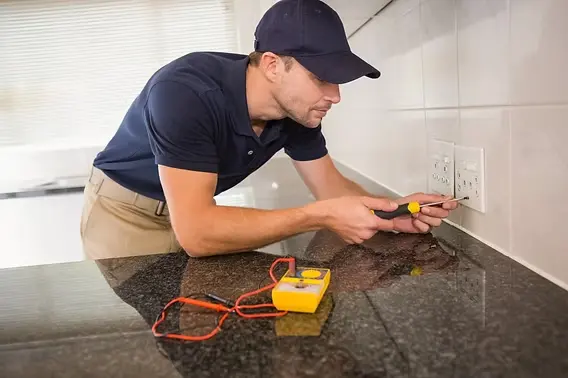

Most homeowners have a habit they probably don’t even realize they have. When something electrical goes wrong, they find the cheapest possible fix and move on. A light flickers, so they swap the bulb. An outlet stops working, so they buy a new cover plate and hope for the best. The problem is that electrical issues in a home are rarely about the part you can see. They’re usually symptoms of something happening behind the walls, and that something can be genuinely dangerous.
Knowing when to call a residential electrician instead of reaching for a quick fix is one of those skills that separates homeowners who catch problems early from homeowners who end up dealing with electrical fires or expensive emergency repairs. The seven signs below are the ones professionals say come up again and again in homes where something bigger was going on.
1. Your Breakers Trip More Than Once in a While
A circuit breaker doing its job once in a blue moon is normal. Plug in a space heater and a hair dryer on the same circuit and the breaker trips. That’s the system protecting itself.
But if you’re resetting the same breaker every week, or even every few days, your home is telling you something. Frequent tripping usually means one of three things: the circuit is overloaded because it’s carrying more demand than it was designed for, there’s a short circuit somewhere in the wiring, or there’s a ground fault that needs professional attention.
Some homeowners respond by moving appliances to different outlets or, worse, installing a larger breaker so it stops tripping. That second option is genuinely dangerous. Breakers are sized to match the wiring in the circuit. A bigger breaker won’t protect wires that were never meant to carry that much current, and overheating wiring inside your walls is how house fires start.
If a breaker trips repeatedly and you can’t trace it to an obvious cause, it’s time for a professional evaluation.
2. Lights That Flicker or Dim When Appliances Kick On
You turn on the vacuum and the living room lights dim for a second. The AC compressor starts up and the kitchen lights flicker. A lot of people live with this for years and never think twice about it.
Occasionally, this points to a minor issue, like a loose bulb or a single loose connection. But when it happens across multiple rooms or whenever a large appliance cycles on, it often means the electrical panel is struggling to distribute power evenly, or there’s a loose or corroded connection somewhere in the circuit. In older homes, it can also mean the whole service doesn’t have enough capacity for modern demands.
Here’s a good rule of thumb. If flickering happens in one light, check the bulb. If it happens in a whole room or a whole floor, stop troubleshooting on your own and get an inspection.
3. Outlets or Switches That Feel Warm, Look Discolored, or Smell Strange
This one deserves immediate attention. An outlet, switch, or wall plate that feels warm to the touch is never a good sign. Neither is any browning or scorching around the slots, and neither is a persistent burning or fishy plastic smell near a wall or panel.
These symptoms usually point to arcing or excessive heat building up in a connection. Arcing happens when electricity jumps across a gap in damaged wiring or a loose terminal, and it runs hot enough to ignite surrounding materials like wood framing and insulation.
If you notice any of these, unplug anything connected to that outlet and stop using it. Don’t wait to see if it gets better on its own, because it won’t. This is one of the few situations where calling a same-day professional is genuinely justified.
4. Buzzing, Crackling, or Humming Sounds
Electricity should be silent. When your panel, outlets, or switches start making noise, something is loose, arcing, or deteriorating.
A light buzz from a dimmer switch can be harmless, since some dimmers hum slightly under load. But buzzing from an outlet, sizzling or crackling sounds inside a wall, or a loud hum coming from the breaker panel itself are all signs of electrical arcing or a failing component. Arcing faults are among the leading causes of residential electrical fires according to fire safety research, and they’re completely invisible until they’re not.
Trust your ears on this one. If something electrical in your home has started making sounds it didn’t make before, treat it as a warning rather than a quirk.
5. Two-Prong Outlets or a Lack of GFCI Protection in Wet Areas
Walk through an older home and you’ll often find outlets that only accept two-prong plugs. Those outlets tell you the wiring behind them has no ground path, which was standard practice decades ago but falls well short of today’s safety expectations.
The bigger issue shows up in kitchens, bathrooms, garages, and outdoor spaces. Modern electrical code requires GFCI protection in these areas because ground fault protection shuts off power the instant it detects current leaking somewhere it shouldn’t, like through a person. Homes without it are relying on luck in exactly the places where water and electricity are most likely to meet.
If your home still has two-prong outlets in the bathroom or no GFCI protection near the kitchen sink, this isn’t something to fix with an adapter from the hardware store. Adapters do nothing to create a ground that doesn’t exist. A professional can assess whether the wiring can support grounded outlets or GFCI devices and bring those areas up to current standards.
6. Your Home Still Has Its Original Panel, or You’re Adding Serious New Loads
There are two situations where an electrical service upgrade deserves a spot on your shortlist even if nothing is visibly wrong.
The first is age. If your home still has a fuse box or an original breaker panel from decades ago, especially certain brands with known reliability problems, it may be overdue for replacement regardless of how it’s performing. Panels don’t last forever, and insurance companies in many areas now ask about panel age and type when writing or renewing policies.
The second is demand. Adding an EV charger, switching to a heat pump, installing a hot tub, or putting in a workshop full of power tools can push a panel that was fine for 40 years past its comfortable limit. Even if everything works on day one, a panel running near its ceiling runs hotter and ages faster.
Planning a big appliance addition is the perfect moment for a load calculation. It’s a quick, inexpensive assessment that tells you whether your service can handle what’s coming or whether an upgrade should happen first.
7. You’re Renovating, and the Walls Are Already Open
This last one is less a warning sign and more a missed opportunity, and it deserves a place on the list because of how often it happens.
Kitchen and bathroom renovations are the most common place where homeowners discover outdated wiring, undersized circuits, or missing GFCI protection. When the drywall is already gone, addressing those issues costs a fraction of what it would cost to come back later. Yet plenty of renovation projects skip the electrical review entirely because everything “seemed to work fine.”
If you’re planning a remodel, bring a licensed professional in before the demo starts, not after the new cabinets are hung. Code requirements change, renovation work often triggers updated electrical standards, and catching problems early keeps both your timeline and your budget intact.
A Quick Word on When Not to Wait
One thing worth repeating because it comes up constantly in conversations with inspectors and fire investigators: electrical problems don’t self-resolve. A flickering light doesn’t decide to stop flickering. A warm outlet doesn’t cool down on its own. These issues develop slowly and then fail suddenly, and the failure mode is often a fire rather than a convenient breakdown.
The signs above aren’t reasons to panic. Most turn out to have manageable causes. But they are reasons to stop treating symptoms with a new bulb or a fresh outlet cover and start asking what’s going on behind the wall.
The Bottom Line
Your home’s electrical system is designed to give you warnings before things get dangerous. Flickering lights, warm outlets, buzzing panels, and tripping breakers are its way of asking for help. The homeowners who respond early usually spend a little on an inspection and a small repair. The ones who wait tend to spend a lot on emergency work, or worse, learn about the problem from a smoke alarm at two in the morning.
If any of these seven signs sound familiar, a licensed professional can tell you in a single visit whether you’re looking at a ten-minute fix or a project worth planning for. Either way, you’ll know. And when it comes to the system that powers everything in your home, knowing is worth a lot.
Also Read
- why-you-need-a-police-report-after-a-car-accident/
- /steps-to-take-for-comprehensive-fire-damage-restoration/
- /benefits-of-choosing-wood-flooring-for-everyday-living/







Leave a Comment