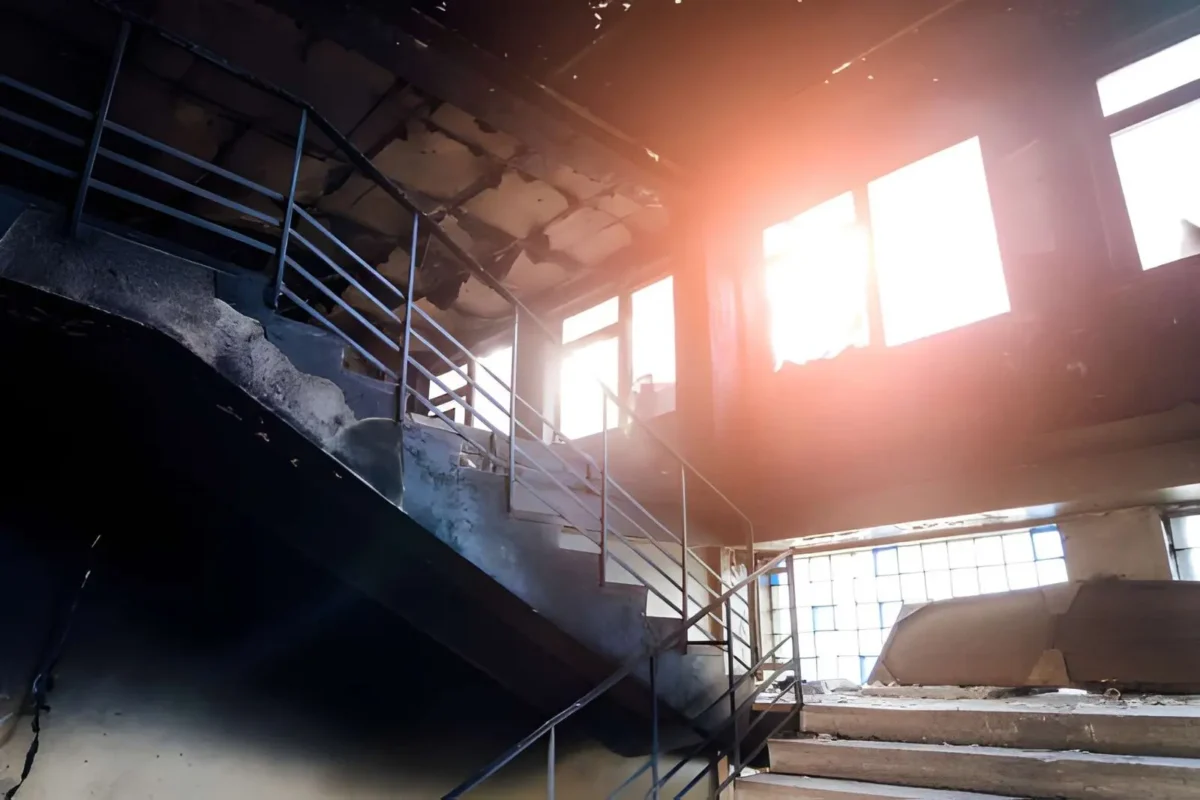

Fire damage restoration typically begins with a thorough inspection following initial emergency stabilization. Each step of the process helps assess which materials and structures require cleaning, repair, or replacement. Because fire incidents often involve smoke contamination and structural impacts, a comprehensive restoration plan is key for an organized recovery. Here are a few steps involved in fire damage restoration:
Assess Fire Damage
A fire damage inspection identifies structural impact and restoration needs before repair work begins. Restoration professionals assess key building components exposed to fire, heat, smoke, and firefighting water. The inspection also focuses on areas like load-bearing walls and other compromised elements. Water intrusion and heat exposure often weaken materials beyond visible damage, so a detailed evaluation determines the full extent of structural deterioration. Findings establish repair priorities and guide the restoration plan for returning the home to a safe structural condition.
Remove Smoke Residue
Smoke residue left after a fire settles into structural surfaces and building materials. Restoration work targets soot deposits on walls, framing, ceilings, flooring, and fixed components within the structure. Different materials require specific cleaning methods to lift residue without damaging finishes or spreading contamination.
Odor control treatments break down smoke compounds absorbed into porous building elements such as drywall and wood framing. Once the structure is dry, remediation focuses on removing remaining soot films and embedded residue that cling to surfaces after initial cleanup. Specialized tools and techniques reduce bonded buildup and restore structural surfaces to a clean, stable condition.
Control Water Damage
Fire suppression often leaves behind excess water and residual moisture within the structure. Water spreads into wall cavities, subfloors, and other concealed spaces, where it saturates building materials and slows drying. Standing water removal reduces ongoing exposure and limits further material deterioration.
Drying equipment, such as dehumidifiers, reduces moisture levels in both visible and hidden areas. Monitoring damp zones inside framing, flooring systems, and wall assemblies helps identify trapped moisture before structural repairs proceed. Combined fire and water mitigation stabilizes indoor conditions by reducing moisture, dust, and lingering odors during the restoration process.
Mold growth sometimes develops in structures exposed to moisture after fire suppression. Damp conditions inside walls, flooring systems, and enclosed cavities allow fungal growth to spread across porous building materials. Restoration professionals identify affected zones where water has penetrated structural components and created conditions for microbial growth. Remediation work focuses on removing contaminated materials and treating affected structural surfaces within enclosed or absorbent areas. Vacuum systems and containment methods assist in removing spores from exposed surfaces during cleanup. Mold remediation restores a stable environment for structural repair and rebuilding.
Rebuild Damaged Areas
Repairs in fire damage restoration address structural components and building systems affected by heat and flames. Reconstruction work focuses on restoring load-bearing elements, framing, roofing systems, and utility infrastructure to functional condition. Damaged plumbing and electrical systems require evaluation and repair before rebuilding proceeds.
Structural evaluation comes first, and rebuilding begins once framing, flooring systems, and wall assemblies meet stability requirements for safe repair work. Restoration teams then repair or replace compromised components and rebuild affected areas. This restores safe, usable building conditions.
Contact Fire Damage Restoration Experts
Fire damage repair and restoration services address structural and material damage caused by fire, smoke, and firefighting water. Cleaning treatments remove soot residues and odors from affected surfaces and building components. Before repair work begins, restoration planning identifies moisture intrusion and damaged structural materials that require replacement or reinforcement. A restoration specialist evaluates the extent of damage, outlines required repairs, and coordinates the repair process from assessment through completion. Contact a fire damage restoration expert for a detailed assessment and organized recovery plan.
Also Read-Innovative Technologies in Metalworking Equipment





Leave a Comment