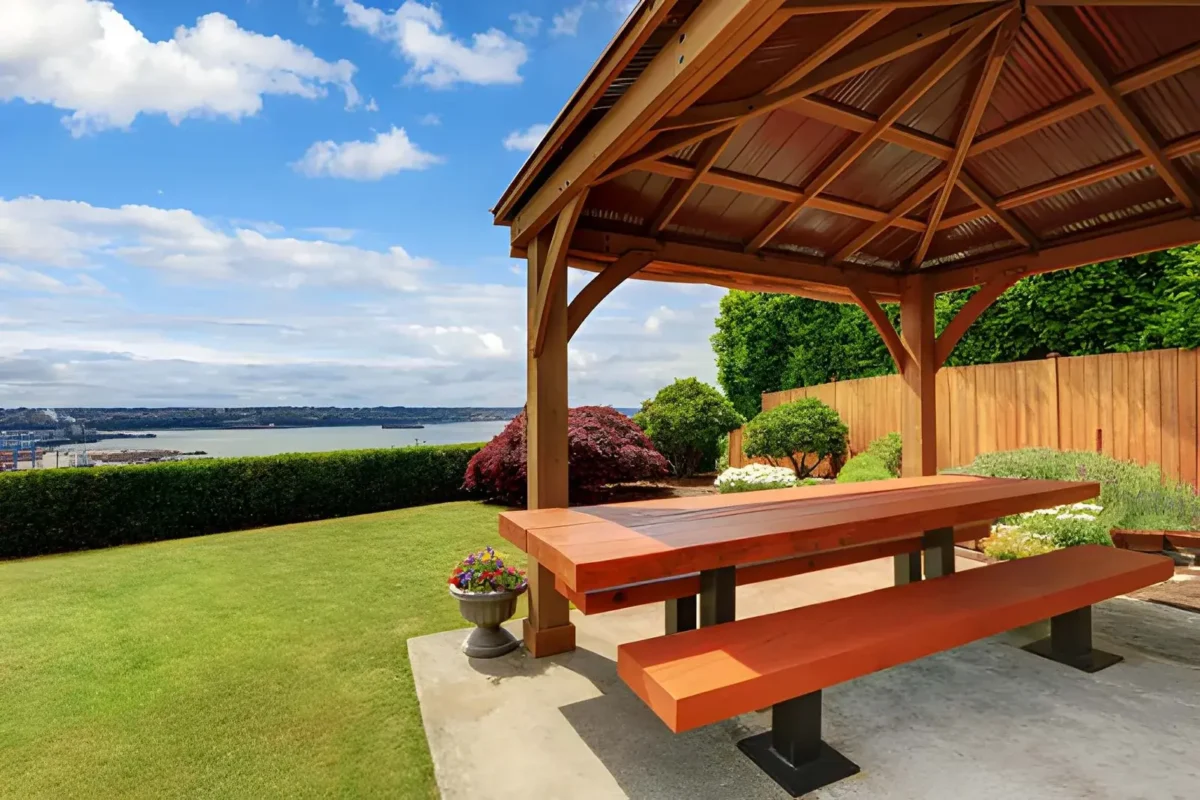

When most people picture a wood pavilion, they picture a patio cover: a nice roofed structure sitting beside the house, with a grill underneath and a couple of chairs. That is the classic use, and there is nothing wrong with it. But somewhere along the way, homeowners started getting more creative. Across the country, wood pavilions are showing up in corners of the property that nobody expected, solving problems that a patio cover never could.
If you have been assuming a pavilion is just a fancy grill shelter, here are ten ways homeowners are actually using them, along with the practical lessons learned from each one.
1. The Outdoor Kitchen Headquarters
The grill-under-the-pavilion idea grew up. Full outdoor kitchens are now one of the most common pavilion projects, with built-in grills, countertops, refrigerators, and bar seating all tucked under one roof.
The lesson from homeowners who have done it: plan utilities before you build. Running gas, water, and electrical to a freestanding structure is far easier when it is part of the initial plan rather than a retrofit. A pavilion placed twenty feet from the house needs a trench, conduit, and a plumber’s opinion before the posts are set.
2. The Poolside Retreat
A pavilion near the pool does something a patio umbrella never can. It gives swimmers a real place to dry off, eat lunch, and escape the sun without dripping through the house.
Homeowners with pools consistently mention two upgrades that matter most: ceiling fans, which make a shaded structure feel ten degrees cooler, and hooks or a bench for towels, which keeps the wet pile off the furniture. Placing the pavilion a few steps back from the water’s edge keeps the splash zone and the lounging zone separate.
3. The Hot Tub Enclosure
Soaking in January under a starry sky is wonderful. Walking across a frozen deck to get there is not. More homeowners are building their pavilion around the hot tub, turning a three-season luxury into something they use all year.
The key considerations are structural and practical. The pavilion must be sized so the tub can be serviced and covered, ventilation matters more than people expect, and privacy screening on one or two sides turns an open structure into a genuine retreat. Some owners add infrared heaters overhead and use the space comfortably in weather that would otherwise end the season.
4. The Garden Focal Point
A pavilion placed at the far end of a garden does something no other structure can: it gives the landscape a destination. Instead of a yard that just ends, you have a reason to walk to the back corner.
Garden pavilions tend to be smaller and simpler, sometimes just big enough for a bench and a view back toward the house. Homeowners use them as a shaded spot for morning coffee, a place to sit during a summer rainstorm, and, in more than a few cases, a backdrop for family photos. Climbing vines and surrounding plantings help the structure feel like it grew there.
5. The Outdoor Dining Room
Eating outside is one of the best parts of owning a home, and eating outside in August sun or a light drizzle is one of the worst. A pavilion built specifically as a dining room solves both.
The homeowners who use theirs most often share a common detail: they treated it like a real dining room, not a picnic area. A proper table that seats the whole family, comfortable chairs, a chandelier or string lights overhead, and sometimes a outdoor-rated rug underneath. When the space feels like a room, people use it like one, including for Thanksgiving dinner in good weather.
6. The Kids’ Play and Hangout Zone
Parents discovered something useful: kids will play outside for hours if the space is comfortable, and a pavilion keeps them out of direct sun without dragging them indoors.
Some families leave the pavilion open as a shaded play area with a table for crafts and snacks. Others, especially those with teenagers, furnish it with weatherproof seating, a fire table at a safe distance, and string lights, and suddenly the backyard is where the kids want to be, which means the parents know where the kids are. Anyone who has hosted a group of fifteen-year-olds knows that is worth a lot.
7. The Backyard Office and Studio
Remote work made a lot of people look at their backyard differently. A pavilion with screens or curtains, a ceiling fan, power, and Wi-Fi reaching from the house has become a surprisingly affordable alternative to a home addition.
It is not a year-round solution in every climate, but in most of the country a screened pavilion is a genuinely usable office from spring through fall. Artists, writers, and musicians have claimed these spaces too. There is something about working under a wood roof with the breeze moving through that no spare bedroom can match.
8. The Event and Celebration Space
Graduation parties, birthday dinners, holiday gatherings, even small weddings. Homeowners with large families keep discovering that a pavilion turns their yard into a venue.
The math is simple. Renting a tent for a single event costs hundreds of dollars, and a tent has no fans, no lights, and no permanence. A pavilion is there every weekend, and when the party ends, it becomes the family’s everyday space. Owners who host often recommend sizing up one step from what seems necessary, because the guest count always grows.
9. The Fire Pit Gathering Spot
A fire pit alone is a five-month feature in most climates. A fire pit beside or near a pavilion becomes the heart of the backyard, with seating under the roof for cool evenings and the fire providing warmth and atmosphere just beyond.
Placement matters here. Fire code and common sense both call for real distance between an open flame and a wood structure, so homeowners typically set the fire pit adjacent to the pavilion rather than under it, with the roofed seating oriented toward the fire. The combination of sheltered seating and open flame is what makes fall and early spring evenings outdoors actually happen.
10. The Property Line Problem Solver
Some of the most clever pavilion uses are about fixing an awkward yard. A pavilion can block the view of a neighbor’s shed, dress up a slope that was hard to mow, give purpose to a side yard that was just grass, or carve a private space out of a yard that felt exposed to the street.
Because a pavilion is a freestanding structure, it can go where a deck or a patio cover cannot. It does not need the house. That freedom is exactly what makes it such a flexible tool for reshaping how a property feels.
A Few Lessons That Apply to All Ten
Across every one of these uses, the same advice keeps coming up from homeowners who are happy with their pavilion.
Put power in the plan. Fans, lights, and outlets are the difference between a structure you look at and a structure you live in, and adding electrical after the fact costs more than doing it during installation.
Think about the sun before you build. Watch where the afternoon sun comes from and where you actually want shade, then orient the structure accordingly. The best-located pavilions are shaded at the hours people want to use them.
Check your local rules early. Setbacks, height limits, and permit requirements vary widely, and a five-minute call to the zoning office prevents the most common headache in the whole process.
Buy real wood quality. Whether it is cedar, pressure-treated pine, or another species, the homeowners happiest ten years later are the ones who chose good lumber and kept up with staining. A pavilion is one of the few backyard structures that can genuinely outlast the people who bought it.
The Bottom Line
A wood pavilion is not a patio accessory. It is a flexible, roofed, freestanding room that can go almost anywhere on a property and become almost anything: a kitchen, an office, a venue, a retreat, or the reason your backyard finally gets used every week instead of twice a summer. Figure out which of these ten lives fits your family best, plan the utilities and placement around it, and build the version that turns your yard into the place everyone wants to be.
Also Read
- https://grammerway.com/how-to-make-better-financial-decisions/
https://grammerway.com/maximizing-returns-through-strategic-commercial-property-investment/
https://grammerway.com/private-yacht-charter-dubai-or-shared-cruise-how-to-pick-the-right-format/





Leave a Comment