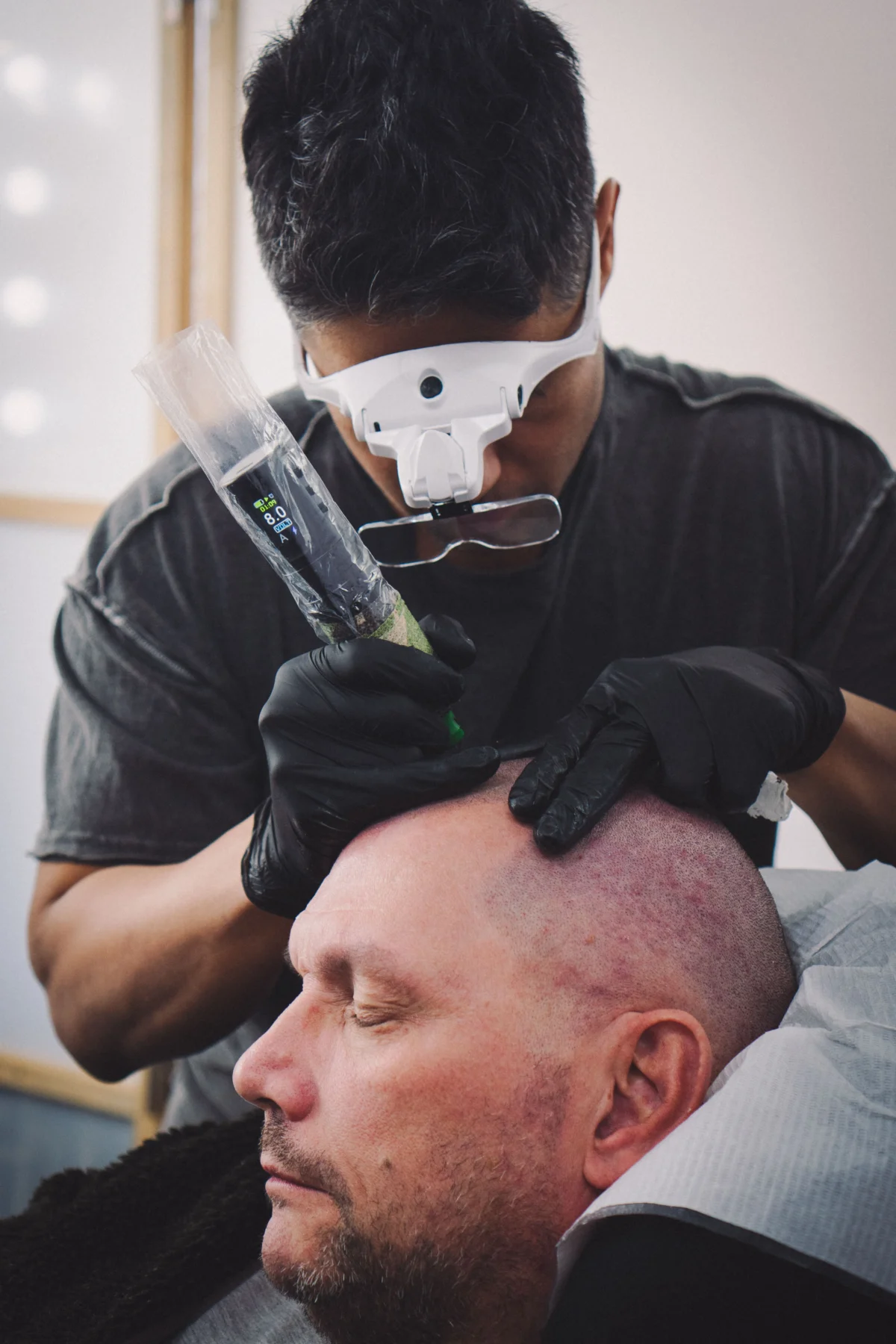

Scalp micropigmentation (SMP) helps address several forms of hair loss, including thinning hair, receding hairlines, bald areas, and certain types of scarring. The finished treatment lasts for several years, but appropriate care and periodic touch-ups help maintain its appearance over time. Here is more information on how long the treatment lasts and how maintenance helps clients have realistic expectations:
Treatment Longevity
Scalp micropigmentation typically lasts four to six years before a touch-up may be needed. It is a non-invasive and low-maintenance treatment option that doesn’t require daily commitment. Clients are able to have the hairline permanently, and some artists recommend touch-ups to maintain a neater, more natural appearance as their existing hair thins or recedes.
Clients may need to schedule a retouch sooner due to sun exposure, pigment type, new scarring, or hair loss speed. The longer an individual’s head is exposed to sunlight and ultraviolet rays, the faster their treatment will need a retouch. Some pigments also need retouches sooner when exposed to the elements.
A typical scalp micropigmentation may require two to four sessions that are 10 to 14 days apart. The entire procedure should be done by scalp tattoo artists who specialize in the treatment; they may also offer sessions to cover new bald spots for individuals with faster hair loss. With the artist’s help, clients can have high-quality outcomes that last several years.
Aftercare Guidelines
While micropigmentation is a long-lasting treatment option, clients need to follow aftercare guidelines for ideal results. Artists provide full instructions, including recommendations for faster healing and how to achieve an enhanced overall look. Some of these maintenance practices to follow during and immediately after the treatment include:
- Avoiding strenuous exercises because sweat can take some of the unsettled pigment with it.
- Not scrubbing or shampooing the scalp for four to five days after treatment to give the pigment time to settle.
- Taking a break from Rogaine during the treatment and for 30 days after completion.
- Avoiding chlorinated pools, saunas, and steam rooms for a few days to give the skin time to breathe.
Following the aftercare guidelines may reduce the likelihood of the pigments fading after SMP. If fading occurs a week after your first treatment, experienced practitioners add more density during the second and third treatments. Clients may also notice redness for a few days after the treatment, but this is normal for some people.
Maintenance Practices
Once the treatment is complete and the scalp is healed, regular care helps maintain the appearance of scalp micropigmentation. Daily moisturization helps prevent dryness, and appropriate sun protection reduces exposure that may contribute to pigment fading. Having a gentle scalp-care routine also supports the condition of the skin surrounding the treated area.
Some practitioners recommend using a gentle, fragrance-free moisturizer paired with products specifically designed for bald heads; this helps maintain scalp health and appearance. During consultations, artists educate clients on specialized products to help them make informed decisions. Clients can use these sessions to ask questions about products they should use and how to avoid prolonged sunlight exposure.
Because the treatment creates the appearance of short hair, clients also have to maintain their existing hair length. The treatment is designed to work with the visible scalp and existing hair, so maintaining the preferred hair length helps preserve the intended appearance. The appropriate routine will differ depending on the client’s hair loss pattern and treatment goals.
Licensed Practitioners
Working with an expert in scalp micropigmentation provides clients with long-lasting outcomes. These professionals use high-quality products to provide a thicker, fuller hair appearance; the treatment also requires precision and artistry with attention to detail. Experienced artists carefully assess the client’s existing hair pattern to create a design that meets their expectations. They work with clients to develop a long-lasting treatment approach that corresponds with their treatment goals.
Maintain Scalp Micropigmentation
Scalp micropigmentation allows clients to have a scalp with a tattoo that resembles their hair follicles. By working with an experienced practitioner, clients benefit from long-lasting results that match their treatment goals and hair-loss patterns. SMP can also address scarring from surgeries or transplants; it helps camouflage the scarred tissue with the surrounding skin. Start by booking a consultation with qualified SMP artists to discuss ways the treatment can help restore your appearance.
Read more: Chasing the Sunset Driving Guide
How North Texas Property Owners Can Plan a Durable, Low-Maintenance Fence in 2026
Why simple mobile games still bring people together

Leave a Comment