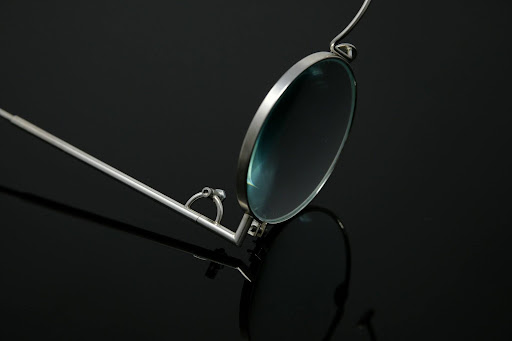

If you wear spectacles all day, you probably know the relief of taking them off before bed. That small sigh when the pressure lifts off the bridge of your nose, rubbing away the red indentations left by the pads, and easing the faint ache sitting right behind your ears.
For decades, people simply accepted this as the price of needing vision correction. Frames were made from stamped sheet metal or thick blocks of heavy plastic. They looked sturdy enough on the shelf, but after ten or twelve hours of working at a desk, commuting and running errands, every single gram started to make its presence felt.
Thankfully, eyewear engineering has moved on dramatically over the past decade. The introduction of aerospace-grade titanium and high-tech memory plastics has completely changed what we expect from everyday frames. Modern lightweight glasses no longer need to be fragile or bland to feel comfortable. By using materials originally developed for aircraft and medical implants, manufacturers can now produce frames that weigh next to nothing while surviving the knocks and bumps of daily life.
The Trouble with Traditional Eyewear Materials
To appreciate why modern materials feel so different, it helps to understand what older frames were made from.
Traditional metal frames were usually manufactured from basic copper-nickel alloys, brass or standard stainless steel. While these metals are easy to shape and solder, they carry a fair amount of physical weight. They also react over time to the natural oils and acids in human sweat, leading to green corrosion around the nose pads and skin irritation for anyone with nickel allergies.
Traditional acetate plastic has its own set of drawbacks. While high-grade cellulose acetate offers beautiful colour depth, it is dense. A chunky classic frame can easily weigh thirty to forty grams once prescription glass or thick resin lenses are fitted. That weight rests entirely on two tiny pressure points on your nasal bone and the delicate skin behind your ears.
The Rise of Titanium in Modern Eyewear
Titanium completely altered the optical industry when it was first introduced, and it remains the gold standard for premium metal frames.
Extracted primarily from rutile and ilmenite minerals, titanium has the highest strength-to-weight ratio of any known metal. It is roughly forty-five percent lighter than standard steel, yet just as strong.
There are three main varieties of titanium used in modern frames today:
- Pure Titanium: Incredibly light, corrosion-resistant and one hundred percent hypoallergenic. It will never rust, pit or turn green from perspiration, making it ideal for people with sensitive skin.
- Beta-Titanium: An alloy blended with small amounts of vanadium and aluminium. It provides the same lightweight characteristics as pure titanium but adds a spring-like flexibility. This allows designers to make paper-thin temple arms that gently hug the sides of the head without squeezing.
- Memory Metal (Titanium-Nickel Alloy): Often called shape-memory alloy, this material can be twisted, bent double or sat on accidentally, and it will immediately snap back to its original shape without snapping.
Because titanium is so strong, frames can be engineered with ultra-slim wire profiles. You get a clean, minimalist aesthetic that holds your prescription securely without weighing down your face.
Memory Plastics and Advanced Polymers
While titanium transformed metal frames, polymers did the same for plastic eyewear. Designers wanted a way to create full-rim frames that offered the bold look of acetate without the heavy, rigid feel.
The standout material in this category is TR90, a thermoplastic material produced using Swiss polymer technology.
TR90 has several distinct characteristics that make it exceptional for everyday wear:
- Extreme Flexibility: You can bend the frame arms outward well past ninety degrees without cracking the material.
- Featherlight Density: TR90 is up to eighty percent lighter than traditional acetate plastics, meaning the frame floats on the face.
- Heat and UV Resistance: Unlike cheaper plastics that become brittle and fade in strong sunlight, TR90 retains its shape and colour across extreme temperatures.
- Moulded Memory: The polymer naturally returns to its factory mould whenever it is bent or pulled, meaning it rarely needs manual adjustments.
Alongside TR90 sits Ultem, a polyetherimide resin originally developed for aerospace components and medical tools. Ultem is exceptionally rigid even when sliced into razor-thin sheets. It allows for ultra-fine, full-rim plastic frames that are practically weightless yet flame-resistant and nearly impossible to break by accident.
Comparing Eyewear Materials
| Material Type | Weight Profile | Flexibility | Skin Friendly | Durability |
| Standard Nickel-Alloy | Heavy | Low (bends permanently) | May cause nickel rash | Moderate |
| Traditional Acetate | Medium to Heavy | Rigid | High | Good (can crack if dropped) |
| Pure Titanium | Exceptionally Light | Moderate | 100% Hypoallergenic | Outstanding (rust-proof) |
| Beta-Titanium | Featherlight | High (spring action) | High | Excellent |
| TR90 Memory Plastic | Ultra Light | Extreme (bends and snaps back) | High (BPA free) | Very High |
| Ultem Resin | Paper Light | High | High | Exceptional |
Why Shedding a Few Grams Makes a Massive Difference
It might sound trivial to worry about a difference of fifteen or twenty grams, but optical ergonomics is all about cumulative pressure over time.
When your frames are heavy, they constantly try to slide down your nose, especially if your skin gets slightly warm or oily in the afternoon. This forces you into an unconscious habit of scrunching your nose or pushing the bridge back up every few minutes. That constant movement strains the tiny muscles around your eyes and can lead to dull tension headaches by the end of the working day.
Lightweight materials solve this by lowering the center of gravity. When you pair titanium or memory plastic frames with modern high-index lenses, the entire unit sits balanced on your face. You stop noticing that you are wearing glasses at all, which is exactly how everyday vision wear should work.
Things to Keep in Mind Before Buying
While these advanced materials offer huge benefits, there are a couple of practical quirks worth knowing before you pick a pair:
- Adjustment limitations: Because memory plastics always want to snap back to their original moulded shape, an optician cannot easily warm them up and bend the ear hooks to a custom angle in the way they can with traditional acetate. You need to make sure the frame fits your head size well straight off the shelf.
- Solder repairs: Titanium requires specialized laser welding equipment in an argon gas chamber if a joint ever breaks. Standard high street jewellers or repair shops cannot easily solder broken titanium hinges. Fortunately, the metal is so durable that structural breaks are very rare.
Final Thoughts
Eyewear has quietly shifted from being a clunky piece of medical hardware to a masterclass in modern materials science.
Whether you lean towards the sleek, understated precision of beta-titanium or the colourful, indestructible flexibility of TR90 memory plastic, you no longer have to put up with sore nose bridges or heavy frames. By choosing materials engineered for genuine optical comfort, you can wear your glasses from early morning until late at night and completely forget they are even there.
Read more: Ride With Added Security Using an Electric Fat Bike Password System
What Should You Clean Before and After a Home Repair Project?
Top Watch Styles For People With Small Wrists

Leave a Comment