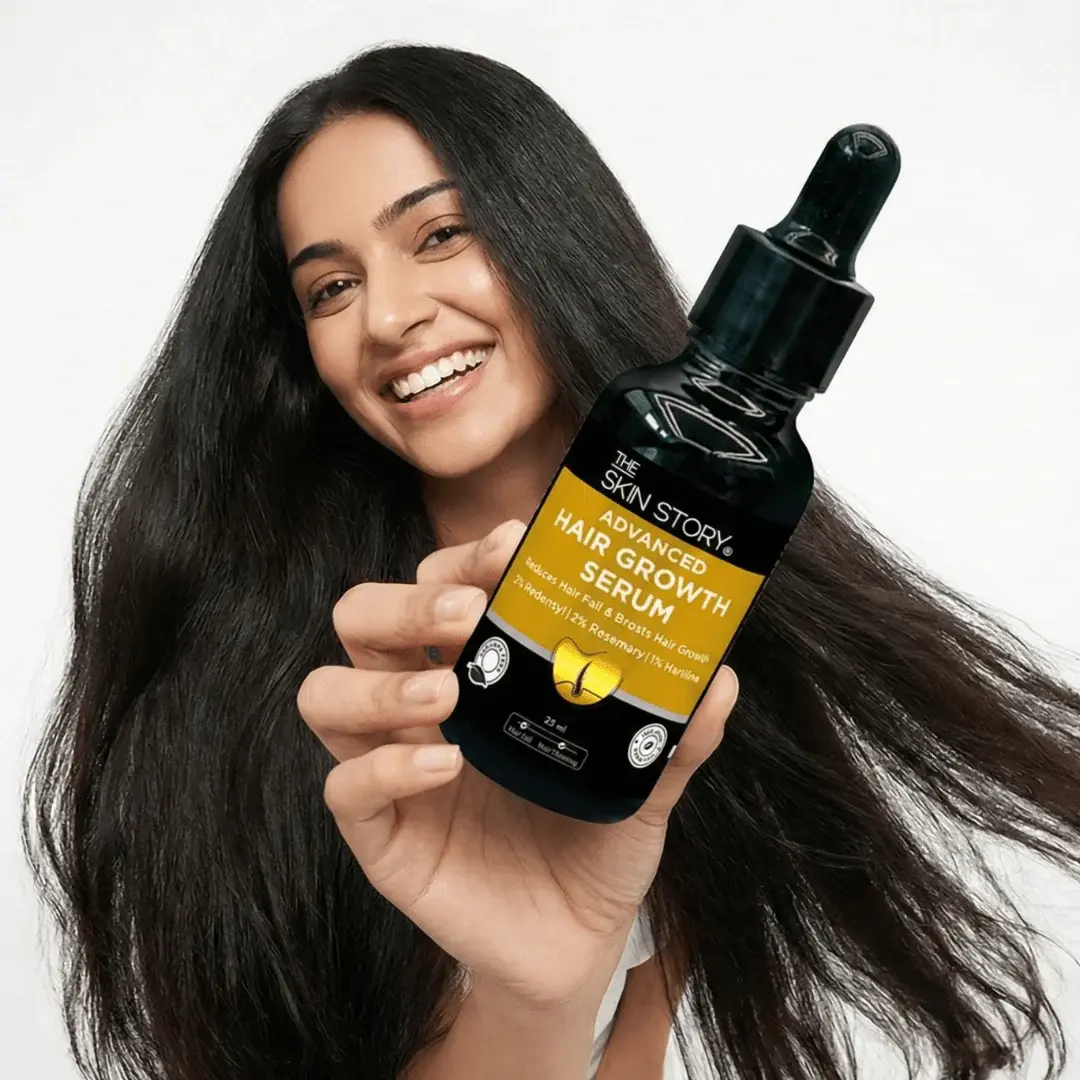

Hair growth products are everywhere right now. A quick search online brings up countless serums, oils, and treatments that promise thicker, fuller-looking hair. At the same time, hair fall, thinning, and reduced hair volume have become common concerns across different age groups, making it easy to wonder which products are genuinely worth adding to a routine.
A hair growth serum is one of the most talked-about options. It is often touted as the answer to hair fall and thinning. But does it really promote stronger, healthier hair?
The trick is knowing what these serums are supposed to do. A good scalp care routine can help promote healthier-looking hair growth over time. Let’s take a closer look at how hair growth serums work and the results they can actually support.
Signs Your Hair Care Routine Needs More Scalp Support
Hair does not always show obvious signs of stress immediately. Small changes are often not visible at first, but become more and more obvious.
Some of the more common signs are:
- Increased hair loss when washing or brushing
- Less volume than before
- Brittle hair
- A broader parting line
- Hair that looks thinner or weaker
- Slower hair growth after cutting off damaged tips
As these concerns start cropping up regularly, taking care of your scalp might be just as important as picking the right shampoo or conditioner.
What Does a Hair Growth Serum Actually Do?
A hair growth serum is designed to be applied directly to the scalp, where it can help support the environment around the hair follicles.
Traditional hair oils tend to work more on the lengths of the hair, while serums are designed to work closer to the roots. Their role is to help scalp health and to create the conditions for healthier-looking hair over time.
Depending on the formulation, a serum can help:
- Better-looking hair roots support
- Improve the appearance of hair volume.
- Reduce the appearance of thinning hair.
- Scalp nourishment
- Strengthen existing strands
- Encouraging healthier hair growth cycles
Because these serums stay on the scalp after application, they can offer ongoing support as part of a regular hair care routine. They are also available in different formats, including dropper bottles and a hair growth serum roll-on, which can make scalp application more targeted and easier to apply.
Can Hair Growth Serums Really Deliver Results?
This is always the first question people ask before investing in a new hair care product. The truth is, hair takes time to grow. Hair grows in cycles, with the growth, resting, and shedding phases. That’s why you don’t see visible changes in a matter of days or weeks.
A hair growth serum can be a great way to help support your scalp and hair follicles, but it won’t replace lost hair overnight or reverse every cause of hair thinning. If the hair problem is caused by a medical condition, nutritional deficiency, or hormone imbalance, it usually requires professional attention in addition to medical treatment.
But with regular scalp care, you can help promote healthier-looking hair growth and stronger strands. When used consistently, the active ingredients work with the natural hair cycle, not against it.
How to Use a Hair Growth Serum Effectively
Using the right hair growth serum properly can help you get the most out of your hair care routine. A few simple habits can help support better results over time. These are as follows:
- Apply the serum directly on a clean, dry scalp or as given on the product label.
- Concentrate on areas where thinning or hair fall is visible, especially the front.
- Massage the product into the scalp evenly.
- Do not wash the scalp immediately after application unless directed on the product.
- For routine scalp care, use as directed.
- Pair the serum with a balanced hair care routine that involves appropriate cleansing and nourishment.
Regular application is often more helpful than inconsistent use of the product, since hair growth is a slow process. Regular scalp care allows the active ingredients to assist in supporting healthier-looking hair over time. You can also use an effective hair growth serum roll-on to make application more precise by helping distribute the formula directly onto targeted areas of the scalp.
Support Your Hair Growth Routine with Bare Anatomy
A targeted scalp treatment complements a routine for stronger, healthier-looking hair. The Bare Anatomy Hair Growth Serum has 3% Redensyl, 4% Anagain, 3% Bicapil, and 1% Capilia Longa to help support your scalp and hair roots.
Key Ingredients
- Redensyl: Supports the hair growth cycle and improves the look of healthier hair.
- Anagain: Improves the appearance of hair thickness and volume.
- Bicapil: Strengthens the hair roots and helps to retain the hair.
- Capilia Longa: Helps to reduce excessive hair fall and helps in stronger hair strands.s
- Rosemary & Rice Water: Helps to nourish the scalp and provide healthier-looking hair
Key highlights:
- Supports stronger-looking hair from the roots
- Helps improve the appearance of thicker hair
- Targets visible thinning and excessive hair fall
- Lightweight leave-on formula for everyday use
- With ingredients like Rosemary and Rice Water for additional scalp care support
Used regularly, this serum can become an easy addition to a routine that focuses on improving overall hair health.
Conclusion
Healthy-looking hair begins with regular care, and the right hair growth serum can be an important part of the process. It supports the scalp environment, strengthens the roots, and addresses common concerns such as hair fall, thinning, and reduced hair volume, while promoting stronger-looking hair over time.
Visible improvements don’t happen overnight, so consistent use and routine are essential. When combined with good scalp care and healthy hair habits, it can help support fuller, healthier-looking hair in the long run.
Look through the grammar mistakes in every blog before finalizing
Noted, will keep that in mind
Also Read
- Creative Custom Apparel Printing with HTVRONT D2 DTF Printer and Puff Vinyl Heat Transfer Technology
- Pendeja Meaning in English: Definition, Usage, Cultural Context, and Real-Life Examples
- 5 Reasons SMS Works Better For Business Communication







Leave a Comment