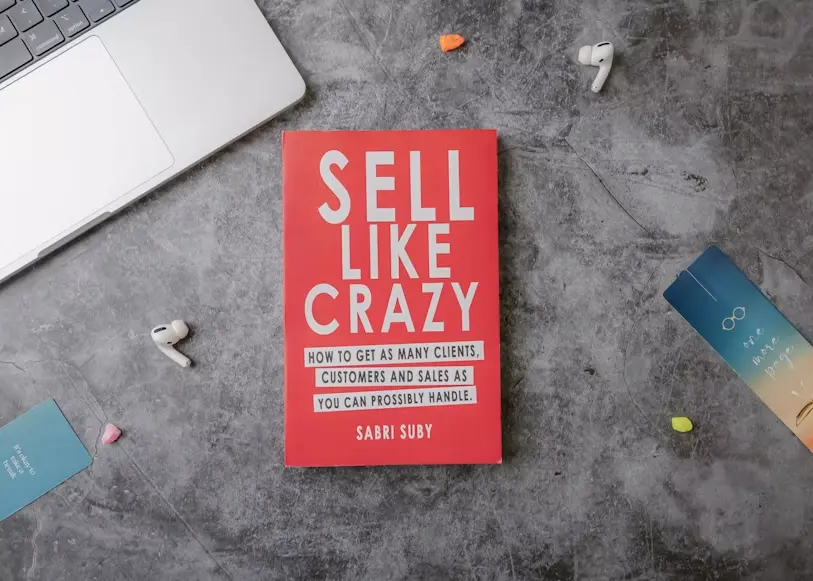

Want to know where the best lean business lessons are hiding?
Not in a business book. They’re hiding in the messy, unglamorous world of self-publishing.
The reason is because a self-published author is a small business owner. They just don’t think of themselves that way. Production. Budgets. Suppliers. Pricing. Marketing. Customer service. It’s all done by one person… usually with very little funds.
And that’s exactly the point.
If your budget is minuscule, every choice is revealed. Waste becomes apparent quickly. Poor expenditures are corrected within weeks rather than years. Independent authors learn all the same lessons that allow mom-and-pop stores to survive. Only faster and cheaper.
Here’s what that looks like in practice…
What’s covered below:
- Why Every Self-Published Book Is A Micro Business
- Where Lean Operators Actually Spend Money
- The Systems That Keep One-Person Businesses Running
- Marketing On Almost No Budget
- Knowing What To Cut
Why Every Self-Published Book Is A Micro Business
Overall, the statistics on the volume side are legitimately nuts. Self-published titles skyrocketed by 38.7% in 2025, increasing from 2.5 million books to over 3.5 million books in one year.
That’s a lot of tiny businesses launching at the same time.
It’s reflective of what is happening throughout the broader economy as well. 82.3% of US small businesses have zero paid employees. Meaning 29.8 million entrepreneurs are going it completely alone. About half of those make it to five years in business.
Sound familiar?
Having written one book is like starting a janitorial service with yourself as the sole employee:
- A product that has to be good enough to sell twice
- A brand that has to look credible from the first glance
- A budget that runs out much faster than expected
- Nobody to delegate the boring parts to
Wait for it… the writers who earn money typically aren’t the best writers. They are the best operators.
Consider packaging. The cover of your book is its packaging, and consumers evaluate it in two seconds flat on a postage stamp-sized screen. That’s why savvy indie authors farm that job out to a professional book cover designer, instead of wrestling with some free software package over a weekend. Effective book cover design is the only expense that affects every single sale. So while other budgets get slashed, that one gets guarded fiercely. It’s the same instinct that drives a café owner to spend money on a hand-painted sign instead of stapling a printed sheet of paper to their window.
Lean businesses don’t spend evenly. They spend where the customer looks.
Where Lean Operators Actually Spend Money
If you ask any experienced self-publisher where the money goes, they’ll likely tell you three things:
- Editing
- The cover
- Advertising
Everything else waits.
Buying notebooks without branding. Hiring a designer to redesign your logo. Purchasing that feels like running your own business without lifting a finger.
And that’s the trap most small business owners fall into.
New owners love buying the props. Business cards, branded pens, programs they open twice. It’s busywork that feels productive. While the stuff customers actually judge them on – the shopfront, the packaging, the quality of the work – gets whatever’s left.
Self-publishing shines a big spotlight on that problem. The feedback loop is immediate. A crappy cover = crappy clicks. Crappy clicks = No sales. You can’t hide.
So the smart approach is to split spending into two buckets:
- Revenue spend — anything the customer sees or experiences before they buy
- Comfort spend — anything that makes the owner feel more official
Revenue spend is what gets funded first. Comfort spend gets funded from profit…if it ever gets funded at all. Hiring a professional book cover designer falls into the former category. Buying a custom logo for the imprint no one will ever see falls into the latter.
Simple rule, and it works in any industry.
The Systems That Keep One-Person Businesses Running
Authors who write three/four books a year aren’t working themselves into the ground compared to those who publish once a year. They just stopped redesigning the wheel every time.
Everything is a checklist:
- Draft, then rest the manuscript for two weeks
- Send to the editor on a fixed date
- Brief the designer using the same template every time
- Load the files, check the previews, schedule the launch
- Run the same promotion sequence that worked last time
Boring? Very. But boring is what makes a one-person business survivable.
Small businesses refer to this as a standard operating procedure. Most never actually document one, which is why the owner becomes a bottleneck. Every job requires their brain, their memory and their approval so growth becomes limited to what one person can know.
Self-publishing as a business model is repeatable. Because the author isn’t editing or doing the artwork. They’re hiring small teams of freelancers they trust to work within briefs, with deadlines.
The mark of a professional though, is knowing what to make yourself, what to outsource and how to SPEC so you get the work back correctly the first time around.
Marketing On Almost No Budget
Here’s a habit worth stealing.
Indie authors who are serious about their work start an email list on day one. Often before their book even exists. Not because email is cool. But because it’s the only list they truly own.
Social networks lease you an audience to your business. Algorithms shift. Reach evaporates. Accounts get banned. An email list never stops working.
The rest of their marketing is just as cheap:
- Asking readers for honest reviews so new buyers trust the product
- Turning one piece of content into five smaller ones
- Testing two versions of a description and keeping the winner
- Building genuine relationships with people in the same niche
None of that needs an agency. It needs consistency. Which is much harder, and much cheaper.
Knowing What To Cut
This is the lesson most small business owners resist.
Occasionally a book bombs. The writing’s good, the cover’s good, there just isn’t a market. Successful writers move on. Learn what they can from it and invest their energies in their next project. They don’t stubbornly stick to their bad decision just because they invested X dollars into it for another two years.
Small business owners rarely ever delete things. They hold onto the product line that nobody ever orders. They hang onto the hard client that’s always late paying and loudly complains. They keep the location that has NEVER EVER been profitable.
Cutting things grows your business. Every hour/dollar spent on something that doesn’t work is an hour/dollar that can’t be spent on something that does.
The Takeaway
Self-publishing is the most honest business simulator out there. There’s no boss, safety net or money for screw ups so the basics show up quick and in bold.
The lessons carry across to any lean operation:
- Spend where the customer looks and delay everything else
- Build repeatable systems instead of relying on memory
- Own your audience rather than renting it
- Buy in specialist skills for the jobs that make or break the sale
- Kill what isn’t working before it drains what is
Slowly. Most failing small businesses do it gradually, one hundred tiny choices that didn’t seem detrimental when made. Indie authors learn this within a month. This brutally quick response time is exactly why their playbook should be emulated.
Also Read
- What Types of Businesses Benefit Most From SMS Communication?
- Life Fitness: Revolutionizing Wellness and Exercise Solutions







Leave a Comment