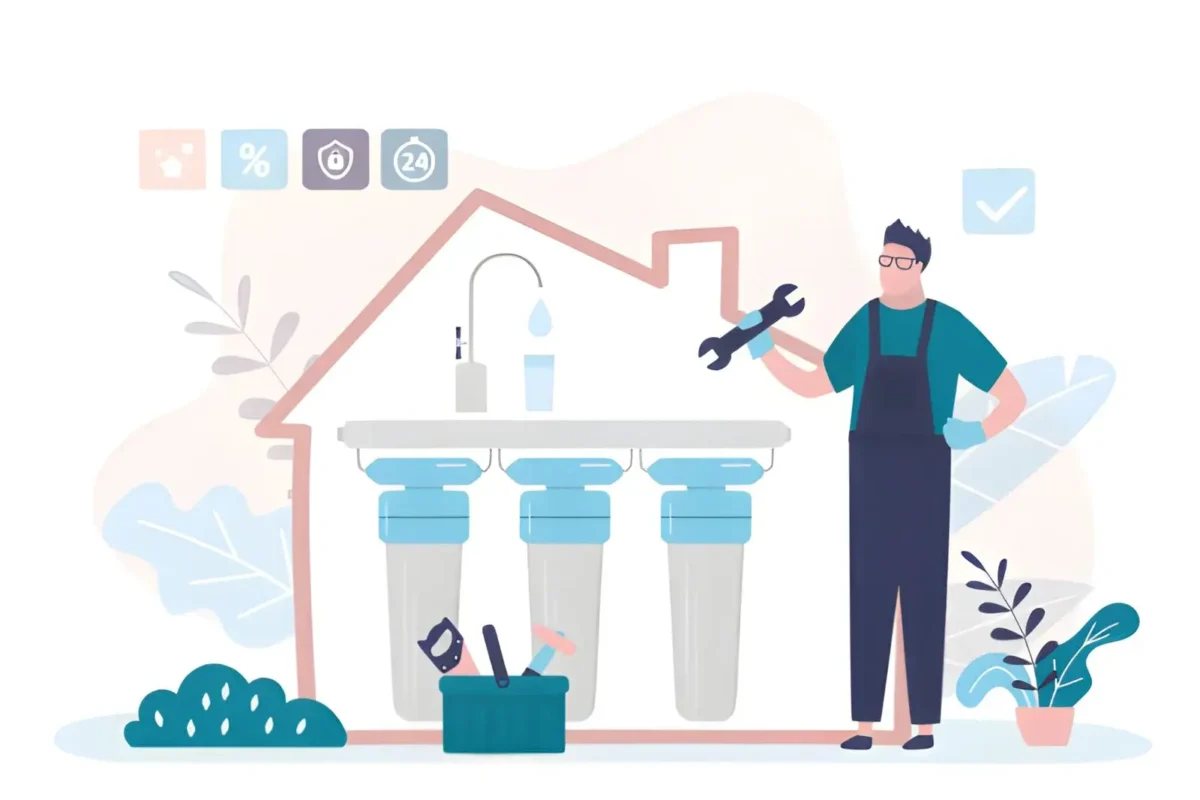

When planning a home improvement project, most property owners immediately think of kitchen remodels, fresh paint, or new flooring. However, some of the most impactful upgrades happen behind the scenes. Improving your residential water quality is a practical investment that enhances daily comfort, protects your plumbing, and supports your household’s overall wellness. With recent changes in national drinking water standards, more homeowners are realizing that a robust water treatment setup is not just a luxury item but a crucial component of modern living.
A 2025 Consumer Insights Report revealed that concern for household water quality has reached a decade high. Currently, 45 percent of surveyed households in the United States report using some type of home water filtration system. Despite this steady growth, over 70 percent of households still regularly purchase bottled water. Understanding the upfront costs and learning how to install a water filter system can help families transition to a whole-home solution, directly addressing safety concerns while offering significant long-term financial returns.
Enhancing Daily Health and Reducing Costs
Water quality regulations have become much stricter in recent years, prompting homeowners to take matters into their own hands. For example, in 2024, the Environmental Protection Agency finalized improvements to the Lead and Copper Rule, lowering the action level for lead from 15 parts per billion to just 10 parts per billion. Around the same time, the agency established its first legally enforceable national limits for certain perfluoroalkyl and polyfluoroalkyl substances, capping them at a strict 4.0 parts per trillion.
While municipal treatment plants work hard to meet these standards, aging city infrastructure and private pipes can still introduce contaminants before the water reaches your tap. A high-quality filtration unit acts as a final barrier of defense for your family. Furthermore, replacing a daily bottled water habit with filtered tap water offers immediate economic benefits. A typical household spending 50 dollars a month on disposable bottled water can save approximately 600 dollars annually. This means a new purification system can often pay for itself in just a few short years.
Protecting Your Plumbing and Appliances
Beyond drinking water, untreated water takes a massive toll on a property’s internal infrastructure. The United States Geological Survey estimates that 85 percent of American homes are supplied with hard water. This mineral-heavy water is a leading cause of premature appliance breakdown and plumbing calcification.
When hard water flows through your pipes, it leaves behind mineral deposits that act as an insulator. The Department of Energy notes that a mere quarter-inch of mineral scale on a heating element can reduce a water heater’s efficiency by roughly one-third. Because of this scale buildup, water heaters must consume 20 to 30 percent more energy just to reach their target temperatures. Proper water treatment effectively doubles the lifespan of many major plumbing appliances. A standard water heater expected to last 8 to 12 years in a hard-water environment can often operate for 20 years or more when supplied with conditioned water.
Additionally, washing clothes, dishes, and your body in soft, filtered water requires significantly less lather. Industry data shows that this can reduce a family’s annual spending on soap, laundry detergent, and body lotions by up to 50 percent.
Choosing the Right Setup for Your Home
Upgrading your home’s water quality requires careful planning and a clear understanding of your specific household needs. In 2026, the national average cost to professionally install a whole-house water filtration system typically ranges between 1,200 and 5,800 dollars. This price fluctuates based on your household’s flow capacity, pipe accessibility, and the chosen filter media. Before making a purchase, assessing the installation requirements can help you evaluate the complexity of the project and decide whether to take a do-it-yourself approach or hire a professional plumber.
When selecting a system, you will find several different technologies on the market. Understanding the core differences is essential for maximizing your home improvement investment:
- Reverse Osmosis: Units certified to industry standards are highly effective at reducing harmful contaminants like arsenic, lead, and total dissolved solids. However, traditional residential units can waste up to four gallons of water for every one gallon they purify.
- Ultrafiltration and Carbon Blocks: To avoid the water waste associated with reverse osmosis, many modern homeowners are moving toward carbon block combinations. These provide eco-friendly contaminant removal without negatively impacting water pressure.
- Water Softeners: These systems specifically target calcium and magnesium, exchanging them for sodium or potassium ions to eliminate hard water scale and protect your plumbing infrastructure.
Investing in a comprehensive water filtration and softening setup is a brilliant move for any homeowner. By eliminating unseen contaminants and damaging minerals, you not only create a safer environment for your family but also preserve the integrity of your home for decades to come.







Leave a Comment