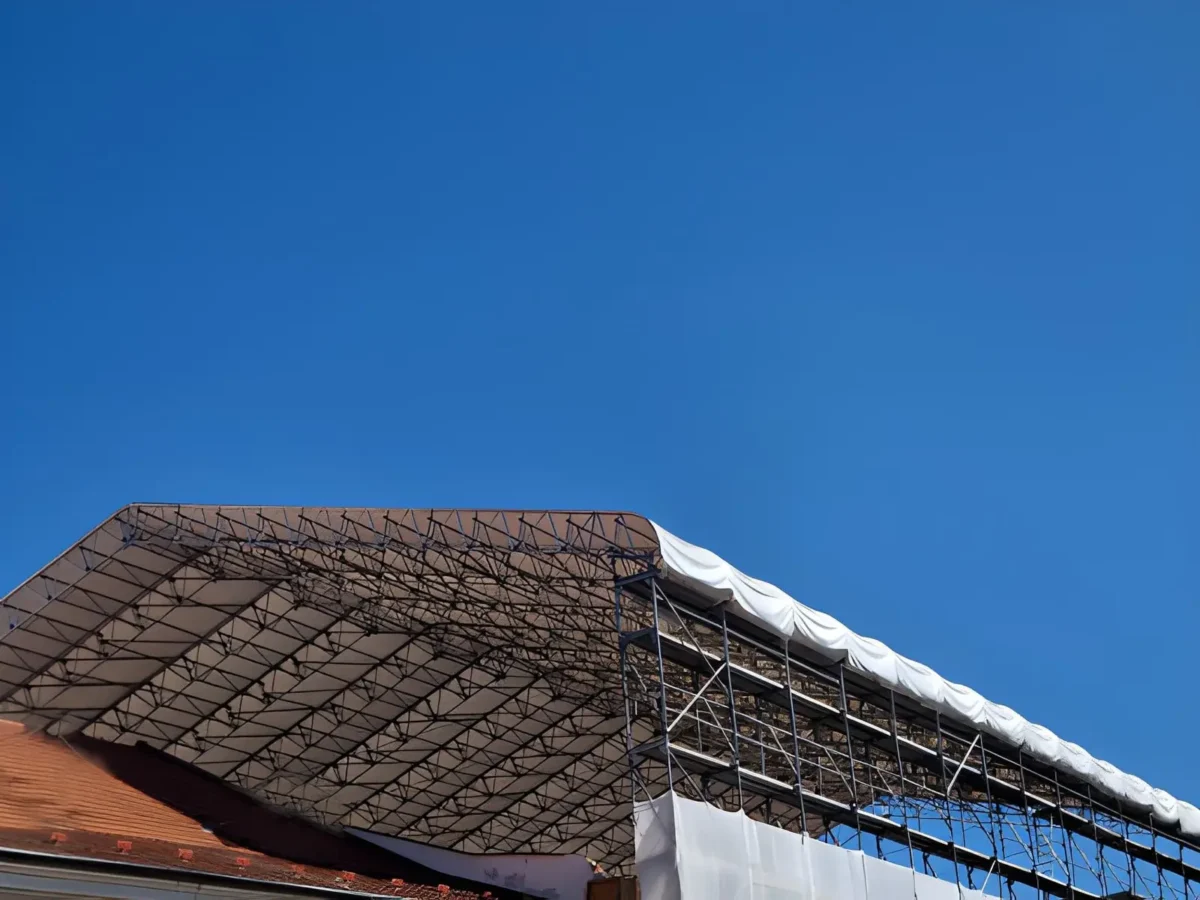

In the construction and renovation industries, ensuring the safety and efficiency of the work environment is paramount. One crucial aspect of this is the use of scaffolding, particularly temporary roof scaffolding. This type of scaffolding provides a weather-resistant shelter that allows for uninterrupted work on the site.
Understanding Temporary Roof Scaffolding
Temporary roof scaffolding is a flexible solution that creates a provisional covering over a construction site. It serves multiple purposes, from protecting the workforce and materials from adverse weather conditions to creating a more controlled environment for sensitive tasks. By doing so, it ensures that schedules are adhered to, reducing the likelihood of delays caused by weather interruptions.
Why Opt for Temporary Roof Scaffolding?
The primary reason for using temporary roof scaffolding is its ability to safeguard ongoing work from weather-related disruptions. On-site accidents and material damage can lead to significant project delays and increased costs. Temporary roofs mitigate these risks by providing a reliable shield against rain, wind, and snow.
Flexible Solutions for Various Projects
Temporary roof scaffolding is adaptable to various structural configurations, making it suitable for a wide range of projects. Whether involved in residential builds, commercial renovations, or industrial maintenance work, adapted scaffolding systems accommodate the unique requirements of each project, providing comprehensive coverage as needed.
Components and Design
Typically, temporary roof scaffolding comprises modular components that can be assembled on-site to fit specific dimensions. This modularity is a key feature, allowing for quick assembly and disassembly, thus contributing to cost savings and efficiency. The materials used are robust yet lightweight, ensuring structural integrity without compromising on ease of movement.
Enhancing Project Efficiency
Projects that utilise temporary roof scaffolding often experience fewer delays, resulting in accelerated project timelines. By maintaining a consistent environment, tasks can proceed regardless of weather conditions, allowing teams to maintain productivity levels even during adverse weather.
Considerations for Safety
While temporary roof scaffolding offers numerous benefits, adherence to safety standards and regulations remains critical. Proper training for workers in the use of scaffolding and regular equipment inspections are essential to ensure safety and minimise the risk of accidents.
Regulatory Compliance
Firms using temporary roof scaffolding must comply with local safety regulations and standards. Regular inspections help ensure that the scaffolding is erected correctly and maintained adequately, providing a safe environment for workers and protecting them from potential hazards.
Cost Implications
Although initially perceived as a significant investment, temporary roof scaffolding often proves to be cost-effective in the long run. Reduced weather delays, decreased risk of accidents, and protection of materials collectively contribute to lower overall project costs.
Conclusion
Temporary roof scaffolding is an invaluable asset in construction and renovation projects, offering numerous advantages ranging from weather protection to improved project efficiency. By providing secure and reliable shelter, it ensures that projects can be completed on time and within budget, while also safeguarding workers and materials.
In summary, the strategic use of temporary roof scaffolding significantly enhances the operational capacity of construction sites, demonstrating its necessity in modern project management.
Also Read
- Innovative Technologies in Metalworking Equipment
- Pendeja Meaning in English: Definition, Usage, Cultural Context, and Real-Life Examples
- What Is a 3D Scanner? Common Misconceptions and the Reality Behind Modern Scanning Technology







Leave a Comment