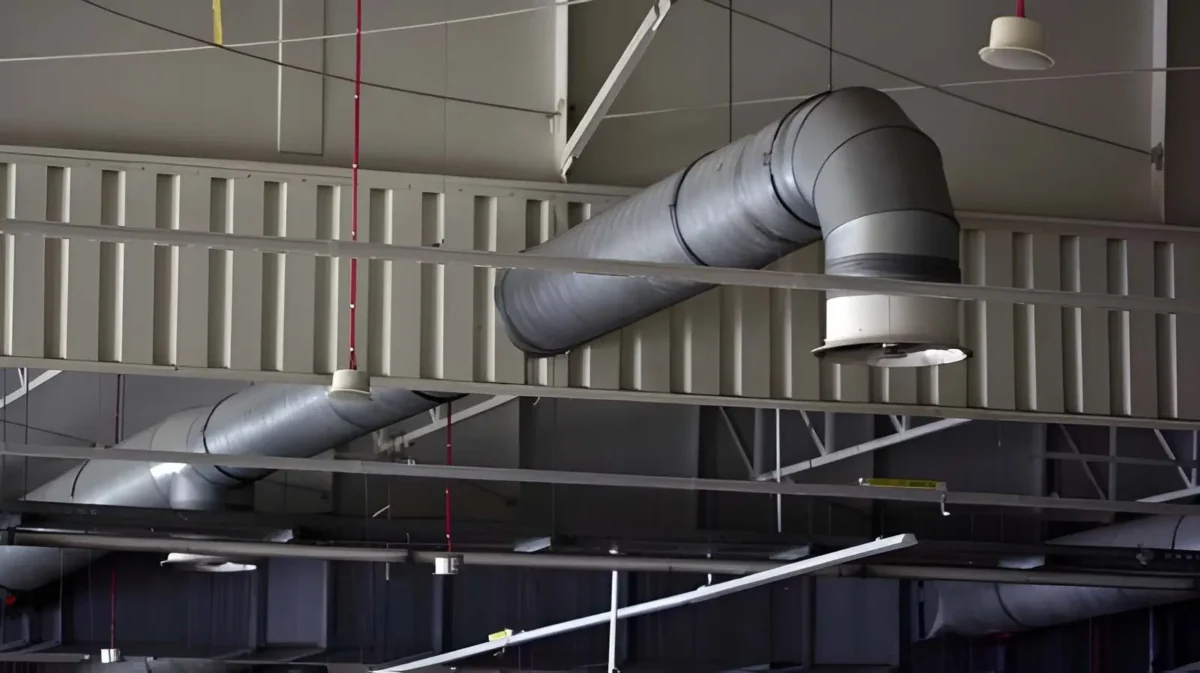

Commercial duct cleaning helps businesses address dust, odors, and airflow issues within connected HVAC systems. When indoor air quality issues disrupt daily operations, visible warning signs can indicate that duct cleaning is needed. Here are a few signs your business needs commercial duct cleaning:
Dust Around Supply Vents
Recurring dust from supply vents points to a system-related issue that often calls for commercial air duct cleaning. Dust collecting on vents and grilles reflects poor air system maintenance, which spreads particles throughout the space instead of controlling them. Dust rings around ceiling diffusers show steady movement of debris-filled air through those outlets.
Lint forming along return grille edges indicates a broader issue within the HVAC system. Particles bypass filtration points and collect where air re-enters the duct network. Ordinary office dust responds to regular cleaning, but buildup at return vents points to ongoing circulation of contaminants through shared indoor air pathways. Return vents draw air back into the system, and visible debris around them reflects repeated redistribution through occupied areas.
Professional HVAC technicians address these issues by inspecting the full duct network, not just visible vent surfaces. During commercial duct cleaning, they remove accumulated debris inside supply and return lines, clean diffusers and grilles, and evaluate airflow balance across the system. Technicians also check filter performance and replace components that no longer capture fine particles effectively. After cleaning and adjustment, airflow moves more cleanly through the building, reducing ongoing redistribution of dust and helping the system operate as designed.
Frequently Full Filters
Air filters that fill up ahead of schedule often point to deeper issues that go beyond routine replacement. Filters are designed to capture fine particles during normal air circulation, yet the rapid buildup of heavy debris suggests that a large volume of contaminants is moving through the ductwork. Maintenance logs sometimes show that repeated filter changes do not resolve the problem when dust continues to originate inside the system rather than from the indoor environment.
Addressing this issue requires more than frequent filter replacement. Professional HVAC technicians inspect duct interiors, identify buildup zones, and remove accumulated debris that feeds excessive filter loading. They also evaluate airflow balance and verify that filtration components match system demands. After cleaning and system correction, filters last closer to their expected lifespan and capture particles under more stable airflow conditions.
Foul Interior Odors
Tracking when and where odors appear helps determine whether a commercial property has duct-related issues. Stale smells often gather near return-air pathways where air is pulled back into the system. Offices that sit closed overnight may develop noticeable odors by morning, which points to buildup in stagnant sections of the HVAC system. When smells return after weekends or reappear as spaces are reopened, the ductwork often contains debris or microbial growth that needs inspection and more frequent cleaning cycles. Professional HVAC technicians address these conditions by inspecting duct interiors, locating odor sources, and removing built-up debris from supply and return lines. System filtration and ventilation settings are also evaluated and adjusted so contaminants are captured more effectively instead of recirculated. These services allow airflow to move through cleaner pathways, reducing recurring odors.
Airflow Loss Across Zones
Uneven heating or cooling between rooms often points to airflow problems inside the duct system. A conference room that remains warm while nearby offices reach the set temperature suggests restricted air movement rather than a thermostat issue. Vents located farther from the main trunk line may release weaker airflow than central vents, which often reflects the buildup of dust or partial obstructions along the duct run.
HVAC technicians address these conditions by inspecting branch lines, identifying blockages, and removing accumulated debris inside the ductwork. Cleaning restores open pathways so air reaches each zone more evenly. Technicians also balance airflow across supply branches to correct uneven delivery between rooms. Temperature differences between adjacent offices can stabilize as conditioned air moves through the system without obstruction.
Regular system evaluations also allow facility managers to maintain consistent airflow and limit unnecessary wear on primary HVAC equipment. Partnering with a qualified contractor like Air Specialty helps ensure that internal components remain clean and properly balanced, supporting steady indoor comfort throughout every season.
Hire Commercial Duct Cleaning Professionals
Excess dust, odors, and filter issues may indicate the need for duct cleaning or improved ventilation. Professional cleaning technicians locate airflow blockages or contaminants that threaten indoor air quality and cause discomfort. A duct inspection will identify buildup near vents and return pathways, and those findings help guide the right cleaning approach. Contact an HVAC professional today for commercial duct cleaning.
Also Read-Affordable Whole Home Remodeling Tips







Leave a Comment