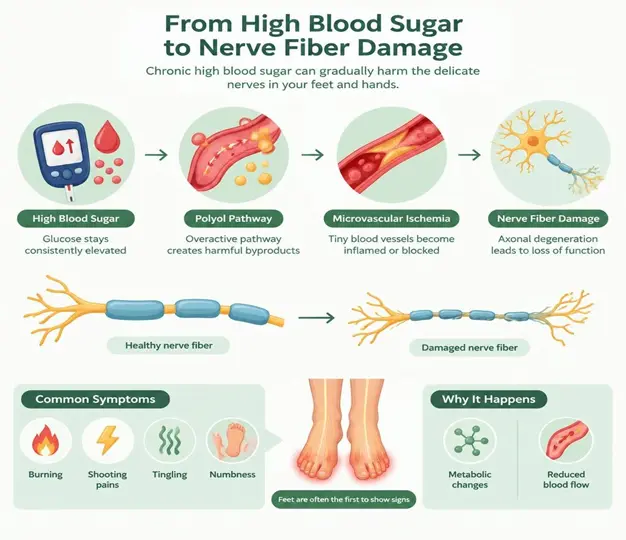

To effectively manage nerve pain, we must first understand what is happening beneath the skin. Diabetic peripheral neuropathy, specifically distal symmetric polyneuropathy, is the most common form of nerve damage associated with diabetes. It occurs when chronic hyperglycemia—consistently high blood sugar—damages the delicate fibers of the peripheral nervous system. Over time, this leads to axonal degeneration, where the nerve cells themselves begin to wither, disrupting the signals between the extremities and the brain. In addition to direct axonal injury, sustained glycemic stress impairs Schwann cells, the protective insulating cells that produce myelin sheaths, slowing down nerve conduction velocities throughout the lower limbs.
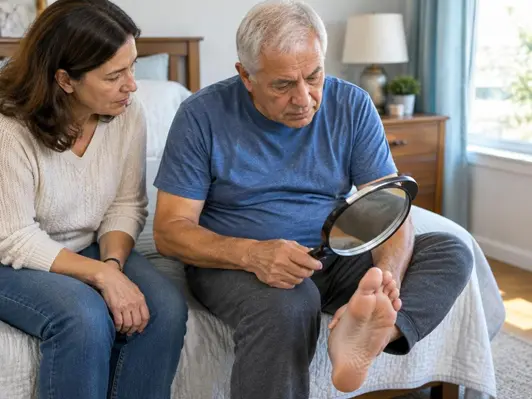
This damage is not merely a loss of sensation. It often manifests as a complex sensory distortion. Patients may experience “positive” symptoms, such as sharp, shooting pains, burning sensations, or intense tingling, as well as “negative” symptoms like numbness or a total loss of feeling. Clinicians often use a Total Symptom Score to quantify these experiences, tracking changes in severity over time. Because the feet are the furthest from the heart and receive the least blood flow, they are typically the first to show signs of distress. Regular monofilament screening—a simple test using a thin, nylon fiber to check for loss of sensation—alongside vibration perception testing with a 128-Hz tuning fork and ankle reflex evaluations, serves as a critical diagnostic battery in identifying subtle neuropathic changes before they progress to irreversible tissue injury or diabetic foot ulcers.
Pathophysiological Drivers of Neuropathic Pain
The root of this pain is multifaceted. High blood sugar triggers a cascade of metabolic and vascular issues. The polyol pathway, a metabolic route that becomes overactive during hyperglycemia, leads to the accumulation of sorbitol and fructose while depleting intracellular myo-inositol and antioxidant reserves. Concurrently, the accumulation of advanced glycation end-products (AGEs) cross-links structural proteins within the extracellular matrix, stiffening vessels and triggering systemic inflammation. Simultaneously, microvascular ischemia occurs as the tiny endoneurial blood vessels that nourish the nerves become inflamed or blocked, effectively “starving” the nerves of oxygen and nutrients.
As nerves are damaged, they may begin to misfire, sending spontaneous ectopic discharges to the spinal cord and brain even when no external injury is present. This central and peripheral sensitization leads to hyperalgesia, where minor stimuli cause disproportionate pain, or allodynia, where even the light touch of a bedsheet feels excruciating. Furthermore, autonomic dysfunction—damage to the unmyelinated fibers regulating involuntary body functions—can complicate the picture, impairing microvascular thermoregulation, skin hydration, and blood pressure control, which further lowers the body’s threshold for discomfort.
Limitations and Risks of Conventional Pharmacotherapy
For decades, the standard approach to managing this pain has been a regimen of oral medications. These include gabapentinoids (like gabapentin and pregabalin) and serotonin-norepinephrine reuptake inhibitors (SNRIs) such as duloxetine. While these drugs can be effective for many, they are not without challenges. Systemic side effects—ranging from dizziness and drowsiness to peripheral edema, nausea, and cognitive “fog”—are common, frequently causing patients to discontinue therapy prematurely.
Furthermore, because these medications act primarily on neurotransmitter pathways within the central nervous system, they often fail to address the underlying microvascular hypoxia and peripheral nerve damage. There is also a growing consensus in the medical community regarding the risks of long-term opioid use for chronic neuropathic pain; due to the high potential for dependence, tolerance, and limited long-term efficacy, modern guidelines strongly advocate for opioid avoidance. This shift has accelerated interest in non-invasive diabetic polyneuropathy treatment options that focus on localized relief, cellular repair, and functional improvement rather than systemic sedation.
Core Modalities in Non-Invasive Neuropathy Therapies
Non-invasive therapies aim to “reset” the nerve signals or promote healing at the tissue level. These modalities operate on the principle of neuromodulation—the alteration of nerve activity through targeted delivery of a stimulus, such as electrical current or light. By focusing directly on the affected anatomical structures, these therapies aim to bypass the systemic side effects of oral medications while providing meaningful pain relief and stimulating microcirculatory repair.
Electrical Stimulation and TENS
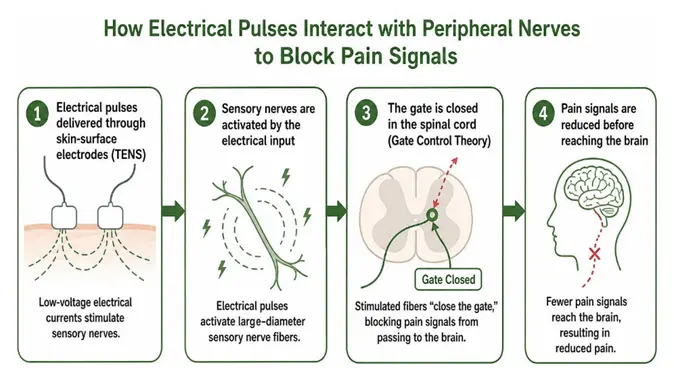
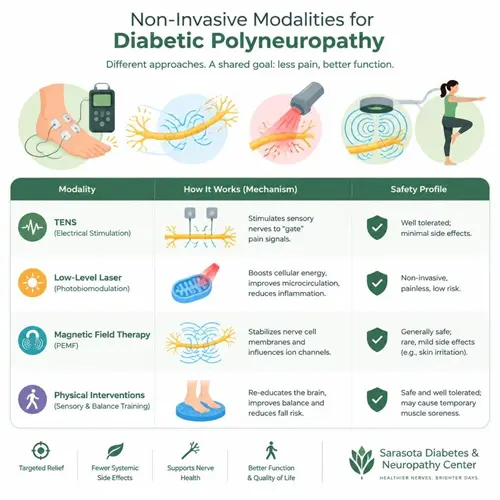
Transcutaneous Electrical Nerve Stimulation (TENS) is perhaps the most well-known form of non-invasive neuromodulation. By applying low-voltage electrical currents through skin-surface electrodes, TENS units can stimulate large-diameter sensory nerves to “gate” pain signals at the dorsal horn of the spinal cord before they reach the cerebral cortex. Essentially, the non-painful electrical input occupies the nerve pathways, making it more difficult for noxious pain signals to pass through. Frequency-modulated and high-density microcurrent variations also stimulate the release of endogenous opioids, such as endorphins and enkephalins. While advanced invasive forms like spinal cord stimulation exist for refractory cases, the non-invasive nature of TENS and microcurrent devices makes them an accessible, low-risk first-line adjunct for patients seeking to decrease their daily pharmacological burden.
Low-Level Laser and Photobiomodulation
Photobiomodulation, or low-level laser therapy, utilizes specific red and near-infrared wavelengths of light (typically between 600 and 1000 nanometers) to interact with cellular chromophores. When light energy is absorbed by cytochrome c oxidase within the mitochondria—the metabolic engines of our cells—it accelerates electron transport, triggering increased production of cellular energy (ATP) and localized nitric oxide release. This localized vasodilation enhances capillary blood flow to ischemic nerve tissue, clears inflammatory cytokines, and supports endogenous axonal repair mechanisms. It is a painless, drug-free approach that has shown measurable success in reducing burning paresthesia and improving tactile sensation in clinical trials.
Magnetic Field Therapy and Physical Interventions
Pulsed electromagnetic field (PEMF) therapy is another emerging modality gaining clinical traction. By generating low-frequency magnetic waves that penetrate deeply into soft tissue, PEMF devices help stabilize hyperpolarized nerve cell membranes and regulate voltage-gated ion channels, which are frequently dysfunctional in neuropathic pain states. Beyond technology-based interventions, targeted physical therapy remains a cornerstone of comprehensive neuropathy care. Sensory re-education protocols, proprioceptive conditioning, and vestibular balance training are essential for individuals who have lost protective sensation, training the central nervous system to utilize alternative visual and muscular feedback mechanisms to prevent falls, maintain postural stability, and minimize secondary musculoskeletal strain.
Clinical Evidence and Guideline Frameworks for Drug-Free Relief
The medical community relies on rigorous evidence grading to determine which therapies are truly effective in day-to-day clinical practice. Guidelines from major professional bodies, including the American Academy of Neurology (AAN) and the American Diabetes Association (ADA), provide a standardized framework for clinicians to evaluate treatments based on randomized controlled trial data, safety margins, and long-term patient outcomes. While drug-free and physical interventions were historically viewed as secondary alternatives, their integration into structured, multimodal clinical care plans is now strongly endorsed by contemporary clinical practice standards.
Clinical Evidence for Non-Invasive Neuropathy Therapies
Evidence for non-invasive therapies is evaluated through standardized clinical endpoints, such as self-reported pain reduction on a Visual Analog Scale (VAS) or Numeric Rating Scale (NRS), alongside objective metrics like nerve conduction studies and validated quality-of-life surveys. Several Class I and Class II clinical trials have demonstrated that targeted electrical stimulation and photobiomodulation yield statistically significant reductions in neuropathic symptom intensity, daytime functional impairment, and sleep disruption. Even when certain modalities are categorized with moderate evidence due to heterogeneity in treatment protocols across studies, their exceptionally benign safety profile makes them an invaluable option for individuals with polypharmacy concerns or renal and hepatic contraindications. The overarching clinical objective is not merely masking discomfort, but establishing sustainable symptom control that restores mobility, prevents deconditioning, and fosters daily independence.
Topical and Adjunctive Non-Systemic Approaches
For patients seeking localized intervention without systemic exposure, prescription topical formulations offer an evidence-backed solution. High-concentration capsaicin patches, formulated from natural capsaicinoids, work by binding to TRPV1 receptors and subsequently depleting substance P—a primary neurotransmitter responsible for transmitting peripheral pain signals—from hyperactive C-fibers. Although application may cause an initial transient burning sensation, the resulting desensitization provides prolonged regional pain relief. Similarly, 5% lidocaine plasters deliver an effective localized anesthetic action by reversibly blocking voltage-gated sodium channels, attenuating cutaneous allodynia and hyperalgesia without altering systemic hemodynamic parameters.
Comprehensive Lifestyle and Disease Management Strategies
No therapy can fully compensate for uncontrolled blood sugar. The most effective diabetic polyneuropathy treatment is one that integrates advanced therapy with rigorous metabolic management. Maintaining an A1C under 7% and managing blood pressure are not just general health goals; they are active components of nerve protection.
Metabolic Optimization and Targeted Nutrition
Glucose variability—the “swings” between high and low blood sugar—is often just as damaging to nerves as a consistently high average. By smoothing out these fluctuations through diet, exercise, and appropriate medication, patients can often halt the progression of their symptoms. Additionally, nutritional support such as alpha-lipoic acid and acetyl-L-carnitine are frequently discussed as adjuncts to improve nerve health. Recent clinical findings regarding agents like Cytoflavin have also highlighted the potential for therapies that target nerve regeneration rather than just symptom suppression.
Integrating Non-Invasive Neuropathy Therapies into Long-Term Care Plans
Living with neuropathy requires a multidisciplinary team. Endocrinologists, neurologists, and podiatrists must work in concert with the patient to build a plan that is both sustainable and effective. Shared decision-making is vital; the patient’s preferences regarding side effects, cost, and convenience should drive the selection of therapies. Whether it involves incorporating daily aerobic exercise to boost circulation or utilizing mobility aids to prevent foot ulcers, the goal is to create a proactive, long-term strategy that prioritizes quality of life.
Frequently Asked Questions About Neuropathy Pain Management
What are the primary benefits of drug-free neuropathy interventions?
The primary benefit is the avoidance of systemic side effects like dizziness, fatigue, and cognitive impairment. Drug-free interventions, such as TENS or light therapy, offer localized relief that is non-addictive and can be used in conjunction with other treatments to improve sleep and mobility.
Can non-invasive techniques reverse established nerve damage?
While significant nerve cell death is difficult to reverse, symptom alleviation and functional recovery are very possible. By improving blood flow and reducing inflammation, these techniques can help “revive” dormant nerve fibers and improve the quality of signals reaching the brain, often leading to a significant reduction in pain perception.
How quickly do patients typically experience pain relief?
Response times vary significantly based on the individual and the modality used. Some patients report immediate relief with topical agents or electrical stimulation, while others—particularly those using metabolic or light-based therapies—may require several weeks of consistent use to see cumulative benefits. Adherence to a protocol is key to achieving lasting results.
Conclusion
Managing diabetic polyneuropathy is a journey that requires patience and a willingness to explore beyond the conventional pill bottle. By combining strict glycemic control with evidence-based, non-invasive therapies, patients can move from a state of constant pain to one of active management. Whether through neuromodulation, photobiomodulation, or targeted physical interventions, there are more tools available today than ever before to help restore comfort and function. If you are struggling to find the right balance, consult with a specialist to discuss how these personalized, drug-free strategies can be integrated into your care. The goal of any diabetic polyneuropathy treatment is to empower you to live a full, active life, regardless of the challenges posed by your diagnosis.
Also Read
- https://grammerway.com/how-to-make-better-financial-decisions/
https://grammerway.com/maximizing-returns-through-strategic-commercial-property-investment/
https://grammerway.com/exploring-the-bachelor-in-science-at-james-cook-university-your-pathway-to-a-scientific-career/






Leave a Comment