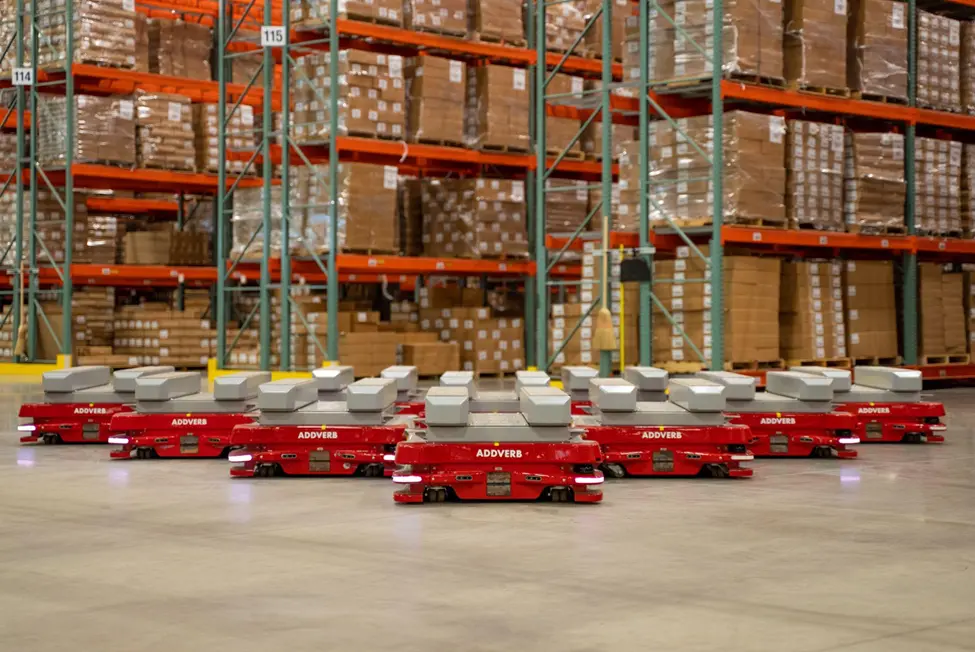

High-throughput distribution centres in the USA are facing increasing demands to handle orders efficiently, precisely, and consistently with regard to their processing capacity. The rise in the volume of online transactions, omnichannel retailing, and the need for expedited deliveries is leading USA-based warehouses to work more effectively than before. It has become increasingly difficult for the traditional warehousing configuration to cater to such demands.
Modern warehousing solutions are evolving into integrated ecosystems comprising automated technologies, smart software solutions, and optimised material handling systems. In the USA, such systems have become crucial for ensuring synchronisation in processes related to storage, transportation, and fulfilment. With the increasing complexity of logistics operations in the USA, the demand for well-organised and data-driven warehouse systems keeps rising.
What Storage Systems Are Essential for High-Throughput Distribution Centres?
Storage systems play an important role in building up high-efficiency distribution centres in the USA, where effective space management is directly linked to efficiency. Due to high real estate costs and growing inventories, warehouses need to utilise space not only horizontally but also vertically.
High-density storage solutions, such as ASRS automation, are important for enhancing efficiency through storage optimisation. Using such technology enables the USA distribution centres to manage numerous SKUs without necessarily increasing the physical size of the building. Proper arrangement of storage makes the process easier, less congested, and efficient even during times of high demand.
How Do Material Handling Systems Improve Distribution Centre Throughput?
Handling of material plays a key role in ensuring the flow of goods from one section to another in the USA-based warehouses. These systems are essential in ensuring an uninterrupted workflow between receiving, storage, picking, and dispatch operations.
Through conveyor systems and automated sortation systems, goods can be moved quickly and efficiently. As a result, delays are decreased in the USA through the reduction of human intervention while minimising bottlenecks and inconsistencies in periods of peak demand.
Smooth flow of materials also guarantees good coordination between processes, and this is key to sustaining high throughput levels at large distribution centres.
- Automated flow reduces dependency on manual transport
- Continuous movement improves processing speed across zones
- Systems adapt to variable order volumes in the USA
- Reduced congestion improves operational reliability
How Do Picking Technologies Support High-Throughput Distribution Operations?
Picking operations are one of the most time-sensitive processes in any distribution centre within the United States. The larger the number of orders, along with an increasing number of different SKUs, the need for effective picking procedures becomes crucial to ensure efficiency. One of the most vital warehousing solutions is an automated picking system since it minimises travel time through optimised workflows.
The goods-to-person solutions further enhance the efficiency of the operations by moving the inventory to the workstation. In high-volume facilities across the USA, this strategy is used to minimise mistakes, increase accuracy, and facilitate fast order fulfilment.
What Role Does Software Integration Play in Improving Throughput in Warehouses?
Software integration represents the primary coordinating mechanism within modern distribution centres in the USA. This is because software integration connects the storage, transportation, and fulfilment systems to form one framework that facilitates instant decision-making.
The use of WMS, WES, and WCS systems is helpful for managing tasks such as inventory visibility, task assignment, and equipment coordination in the warehouse. This ensures that there is improved precision and efficiency in executing plans. In the USA, software systems help in scaling operations without affecting the existing infrastructure or workflows.
- Real-time visibility improves operational decision-making
- Centralised control reduces inefficiencies across systems
- Better coordination enhances order fulfilment speed
- Scalable architecture supports warehouse expansion in the USA
How Addverb Supports High-Throughput Warehousing Solutions
Addverb provides cutting-edge automation technology that is aimed at improving the functioning of large-scale distribution centres in the United States. The ecosystem encompasses the use of autonomous mobile robots, AS/RS solutions, sortation technology, and software platforms in warehouses.
Warehousing solutions that are integrated into the WMS, WES, and WCS systems facilitate coordination among all the warehouse activities. This facilitates better visibility, quick decision-making, and higher productivity across big distribution networks operating in the USA. Addverb’s flexible systems enable warehouses to handle the fluctuating demands in the market while maintaining consistent performance and operational efficiency.
Conclusion
The high-speed distribution centres in the USA require modern technology that should integrate elements like automation, storage, movement, and software within an effective operational framework. Contemporary warehousing solutions are important to improve efficiency across complex logistics networks.
As demand rises within the supply chain in the USA, the synchronisation of warehousing operations is becoming even more important. The automation and software solutions provided by Addverb aid in this process by enabling scalable, high-performance warehouse environments that can sustain long-term operational efficiency and resilience.
Also Read
- Innovative Technologies in Metalworking Equipment
- How Routines and Activities Boost Quality of Life in Memory Care
- Is Long-Term Vision Correction Worth Exploring? Here’s the Real Conversation







Leave a Comment