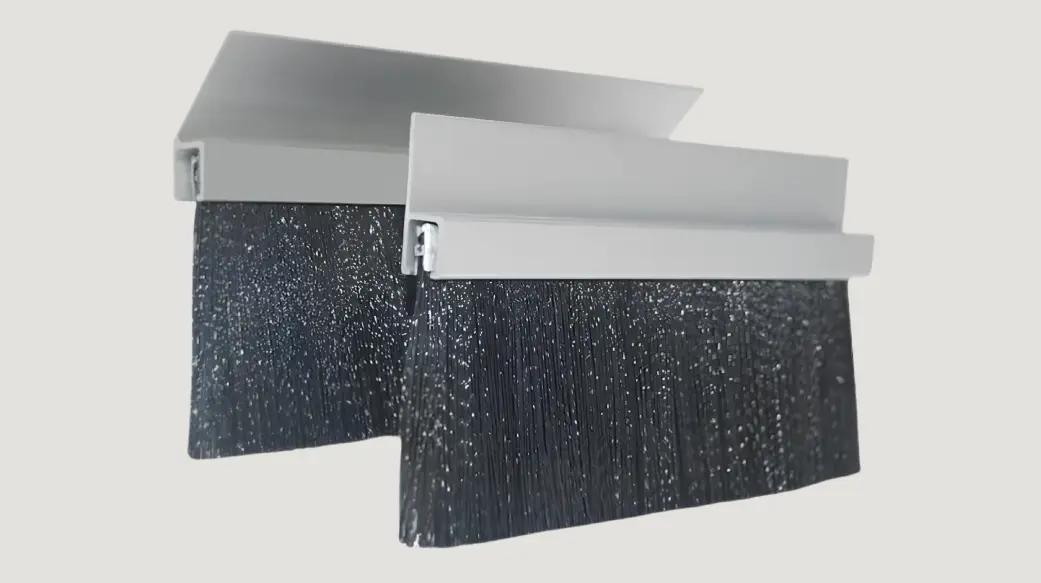

Commercial roll-up doors are in constant use and undergo repeated opening and closing cycles and changing environmental conditions. Small gaps may exist around the edges and upper sections of the door curtain and guides even when the door curtain and guides are properly installed. These openings may permit dust, insects, wind, rain, and other unwanted light to enter, which will diminish the effectiveness of the door assembly.
A factory-made brush seal offers a convenient solution for the control of these clearances in commercial applications without adversely affecting the normal operation of the door. It has flexible bristles that follow the moving curtain and are in contact with the surrounding frame. This makes brush sealing ideal for warehouses, self-storage facilities, garages, service buildings, and other commercial spaces which are often used.
Understanding the Role of a Roll-Up Door Brush Seal
The basic components of a roll-up door brush seal are flexible nylon filaments that are mounted in a firm casing. The holder is attached to the door frame or other support, with bristles pointing towards the moving door curtain. As the curtain moves up or down, the filaments bend rather than providing a hard blockage.
If it is for commercial use, the brush profile should be in line with the opening and mounting arrangement. A seal that is correctly chosen can seal gaps on the sides of the door along a vertical guide or openings above the door.
The Core Sealing Function:
- Flexible Contact: Nylon filaments move with the door and provide a tight seal around the door opening.
- Gap Coverage: There are different bristle heights to fit different gaps between the door and frame.
- Environmental Protection: The brush provides an effective barrier to dust, wind, insects, moisture, and light.
- Low-Interference Movement: Flexible filaments are used to enable the door to move without the resistance of rigid sealing materials.
Why Factory-Made Seals Matter for Commercial Projects
Commercial door projects can be comprised of several openings, all having the same size and installation needs. Manufactured parts offer a controlled manufacturing process that helps ensure consistency from one part to another. Rather than making each brush assembly on site, installers can get the brush assembly with predetermined lengths, holder configuration, and bristle specification.
When a project requires multiple coordinated components, a factory-made roll up door brush seal kit can also make procurement a breeze. A complete kit can include brush material, aluminium holders, and mounting hardware depending on the desired configuration. This can help minimize separate sourcing of compatible parts.
When brush seals are required for a lot of doors, it is important to have manufacturing consistency. Installers can expect predictable components on the job because the size of the holders, the density of the filaments, and the length of the bristles are consistent.
Selecting the Right Brush Profile and Materials
Brush seal performance is very sensitive to the physical configuration. Commercial doors are available in a variety of widths, construction, operating conditions, and mounting space. For this reason, the first step in choosing a seal should be the actual door assembly, not just the generic size.
One of the most important specifications is the height of the bristles. Depending on the gap, shorter filaments could be used, and longer profiles for larger gaps. Typical lengths for common configurations are: around 1″, 1.5″, 2″, 3″, and 4″ bristles, depending on the use.
Material Considerations:
- Nylon Filaments: Flexible and suitable for repeated contact with moving door surfaces.
- Aluminum Holders: Lightweight and rigid enough to provide a stable mounting base.
- Holder Widths: Options such as 1-inch or 2-inch holders can accommodate different installation requirements.
- Custom Lengths: Factory-cut sections can match specific door dimensions and project quantities.
Side and Top Applications for Roll-Up Doors
Brush seals may be used in various locations around a commercial roll-up door. Side-mounted assemblies are frequently installed along vertical guides where there are gaps between the curtain and frame laterally. It’s to make a barrier flexible, but still allow the curtain to move.
Top-mounted brush assemblies are for holes in the ceiling above the door. The specific installation procedure will vary according to the construction of the opening, the available mounting wall, and the direction of curtain movement.
A straight holder can be best for conventional mounting, and an angled holder can be useful for specific frame geometry. The correct orientation is important so that the bristles will touch the desired surface without being compressed too much.
A useful installation assessment should consider:
- Door width and height
- Existing side-guide dimensions
- Gap size around the curtain
- Available mounting surface
- Required bristle height
- Holder width and orientation
- Quantity required for the project
Customization for Commercial Door Manufacturing
Business door sizes are not necessarily the same as standard dimensions. Large facilities might want to have various openings throughout one project, and replacement work might involve seals that match an existing door configuration.
Brush seals can be customized for the project through factory customization. Manufacturers may offer a variety of bristle lengths, holder widths, section lengths, and configurations. This flexibility is important if the contractor, the distributor, or the door manufacturer has a need for components for different roll-up door sizes.
Customization also aids with bigger procurement programs. Rather than modifying a generic seal during installation, the necessary sizes can be determined prior to production. The completed parts can then be delivered ready for the desired application.
Installation and Long-Term Performance
A brush seal is effective if it is securely mounted and installed properly. The mounting surface must be clean, structurally appropriate, and free of conditions that might cause loosening of the holder before installation. The seal should be in line with the desired gap and will not be subject to undue pressure on the moving curtain.
Positioning is also critical. Too much bristle compression can cause too much friction, and too little bristle compression can result in gaps that need to be filled. Periodic inspections may be helpful in determining if holders are displaced, filaments are damaged, or if the surrounding door structure has changed.
Brush seals are flexible and relatively easy to maintain. Maintaining the cleanliness of the mounting area and inspecting the condition of the brushes during routine door checks can help to detect brush wear prior to its impact on the sealing arrangement.
Conclusion
For commercial doors that need seal flexibility, factory-made roll-up door brush seals offer a functional sealing component. They are suitable for use on sides and tops for a range of roll-up door projects with their nylon filaments, robust holders, customisable size, and adaptable mounting configurations.
The right solution starts with understanding the opening, measuring the gaps, choosing the right bristle size, and choosing the right holder for the surface to be installed on. Commercial door projects can get brush seals that integrate smoothly with the purpose of their assemblies, as these seals are manufactured consistently and can be customised. These needs are addressed by factory-made roll-up door parts for commercial standard and custom applications from Gemax.
Also Read
- Innovative Technologies in Metalworking Equipment
- Lifeguard Classes: Where to Start Your Journey to Becoming a Certified Lifeguard







Leave a Comment