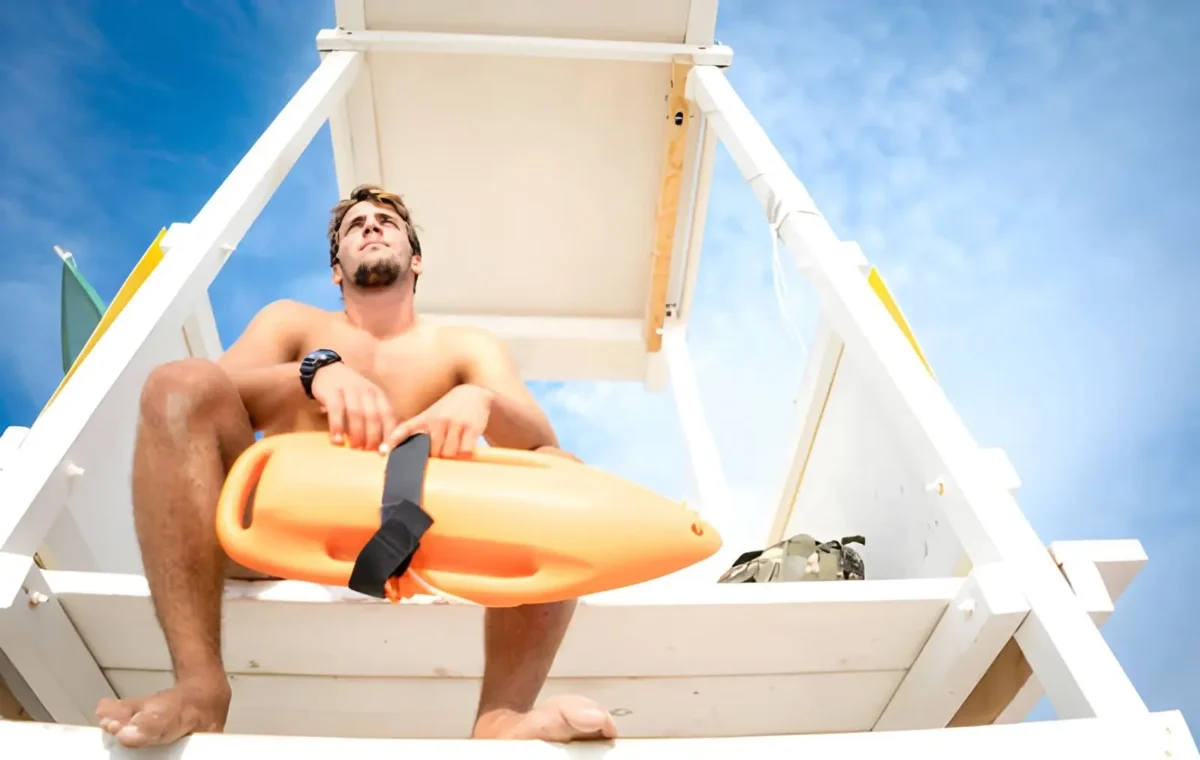

When you start looking for a Lifeguard Class Near Me near you, the first question that comes to mind is “Will I be able to do this?”
The truth is that these classes are not just about swimming. Their main goal is to make you a responsible person who does not panic in difficult times. When you enroll in a professional class, you are taught CPR, First Aid, and methods of removing people from the water that ordinary people do not know.
Many people think that joining the nearest class is enough. But it is not just about distance, but about quality. The advantage of classes affiliated with places like the American Lifeguard Association is that their certification is recognized everywhere. In these classes, instructors give you individual attention so that your fear is gone. So whenever you search for a lifeguard class near me, be sure to check how much practice is done there, because becoming a lifeguard is not a book job, it is a practical job.
Once you complete your class, you are no longer just a swimmer, but a certified protector. These classes teach you discipline and build confidence that will come in handy in every aspect of your life. Whether you are looking for a summer job or want to make it your career, choosing the right class is the first step to your success. So don’t be lazy and sign up for the best class near you today.
The 2026 Edge: Why the American Lifeguard Association is Leading the Way
The American Lifeguard Association is currently making some big moves in 2026. For one, they’ve just secured a national grant, which is a huge talking point if you’re writing for budget-conscious students or seasonal workers looking to get certified. ALA lifeguard training prepares you to prevent accidents and respond in water environments. You learn how to identify risk, perform rescues, and deliver medical care. The American Lifeguard Association provides structured programs designed for fast certification and job readiness.
Beyond the pricing, they are leaning heavily into their “video instructor-led” model this year. It’s a bit of a game-changer for people who can’t wait weeks for a local pool to host a class. Once someone finishes the online modules and demonstrates their skills, their records hit the National Verification System immediately.
This is a solid detail to include if your article focuses on the speed of getting hired. They also recently got a formal nod from the U.S. Department of Veterans Affairs (VHA Directive 1040), which officially lists them as an approved provider. If your audience includes veterans or people looking for federal employment, that’s a high-authority detail that builds a lot of trust.
From a technical standpoint, the ALA is strictly following the Model Aquatic Health Code (MAHC) standards this year. They are pushing a “blended” approach where the online education is rigorous, but the heavy lifting happens during the employer’s pre-service evaluation. It’s less about just “passing a test” and more about ensuring that once a guard sits in that chair, they actually know the specific layout and emergency plans of their facility. Including these 2026 updates will make your content feel current and give you an edge over older, generic articles.
The Vital Role of Professional Oversight: Lessons from the Cocoa Beach Crisis
Swimming doesn’t make ocean safety complete. The real test comes when we learn to make split-second decisions. This is what develops so many skills. What happened recently at Cocoa Beach, Florida, is a lesson for us all in how a calm day can suddenly turn into a disaster. When two adults lost their lives trying to pull a child out of a rip current, it became clear that courage alone is not enough—you must have professional training.
The accident has once again brought to the fore Wyatt Werneth, a recognized figure of the American Lifeguard Association (ALA). Werneth, a former Chief of the Cocoa Beach Patrol, jumped in to help without thinking, even though he was retired. His quick response shows that lifeguard training is not just a certificate, but a passion that stays with you for life. It’s not just a job, but a never-ending promise to save the lives of others.
This incident also brought a familiar face into the spotlight—Wyatt Werneth, a name synonymous with the American Lifeguard Association (ALA). As the ALA’s National Spokesperson and a former Chief of Cocoa Beach Patrol, Werneth’s immediate, instinctive response—even in retirement—highlights the core philosophy of professional lifeguard training: the duty to protect is a lifelong commitment.
Expertise That Matters: Why Who Trains You Defines Your Career
Werneth’s background is a testament to why organizations like the American Lifeguard Association and the American Red Cross are recognized as the industry’s heavy-hitters. With over 20 years in military marine operations (MAROP) and service in the U.S. Coast Guard, Werneth represents the elite level of expertise that modern lifeguard training aims to instill.
It’s not just a piece of paper, it’s a mindset
When you choose a certification program, realize that you’re not just getting an expensive certificate to hang on your wall. In essence, you’re developing a new mindset. Whether you join the American Lifeguard Association or another major organization, the goal is to make you a responder who won’t panic in difficult situations. Think of it like Werneth’s intense tactical and medical training with Special Ops—the goal is to be prepared for the worst-case scenario.
Frequently Asked Questions (FAQ)
1. What is the easiest way to find a class near me? Just turn on location on Google and type “Lifeguard Class Near Me”, and you will see the nearest centers.
2. Are these classes held every weekend? Most centers hold classes on weekends to make it easier for students and job seekers to attend.
3. Do I need to be an expert swimmer? You don’t have to be an expert, but you should be comfortable in the water and know basic swimming.
4. How much does it cost to join a class? The fees vary from place to place, but places like ALA often offer grants and discounts.
5. How many hours is a class? These are usually full-day classes, but the physical time has now been reduced a bit due to online modules.
6. Can I take online classes? Yes, ALA now offers a “video instructor-led” model where theory is online and practice is physical.
7. What are these classes taught? Water rescue, CPR, first aid, and not panicking in an emergency—that’s all that’s taught.
8. When do I get a certificate after class? ALA’s new system is so fast that records are verified immediately and certificates are issued quickly.
9. What if I fail the swimming test? Don’t worry, the instructors will give you another chance and make you practice better.
10. Will this certificate only work in my city? No, if you have taken the certification from ALA, it is recognized all over the country.
11. What should I bring with me to class? Just your swimsuit, towel and a desire to learn! The rest is provided by the center.
12. Are these classes very difficult? It does take a little effort, but if you listen carefully to the instructor, it is quite easy and fun.
13. Are there any special facilities for veterans? Yes, under VHA Directive 1040, specific paths and trusts have now been created for veterans as well.
Also Read-Innovative Technologies in Metalworking Equipment






Leave a Comment