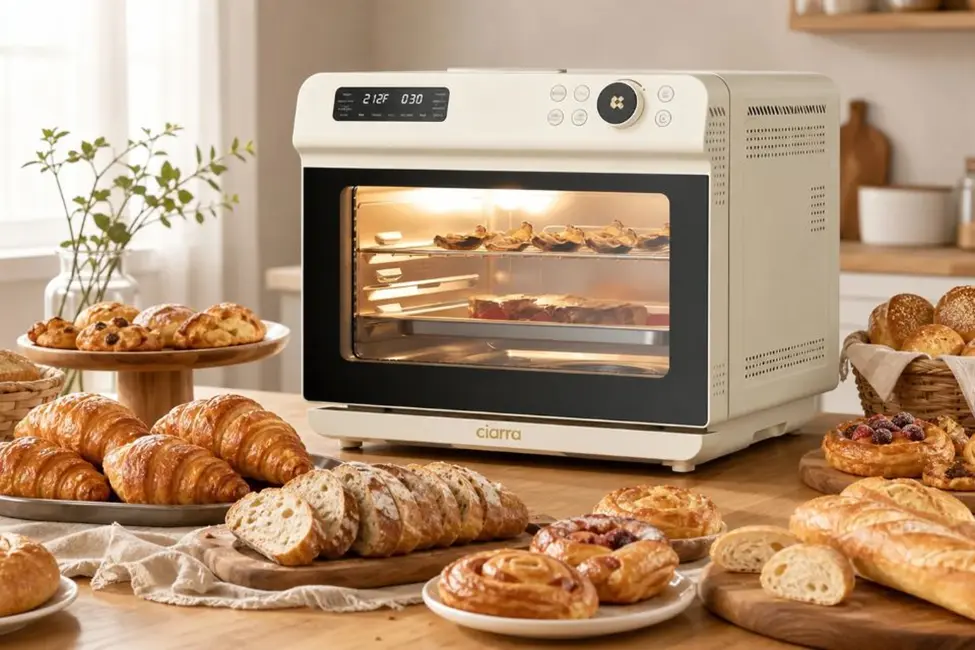

Cooking for a large household and preparing a meal for one or two people do not always require the same approach. Yet many kitchens rely on a full-size oven even when the cooking task involves only a small portion of food. That can make a simple meal feel more involved than necessary, particularly when counter space, preparation time, and everyday convenience matter.
This is one reason smaller cooking appliances have become more relevant to modern kitchens. A countertop oven can provide a practical middle ground between a full-size oven and smaller appliances designed for very specific tasks. Its appeal is not simply that it takes up less space. More importantly, its capacity and accessibility can match the way many people actually cook smaller meals.
Why Small-Batch Cooking Requires a Different Approach
Small-batch cooking changes what people need from an oven. Preparing dinner for one or two people rarely requires the same amount of cooking space as preparing a meal for a large family. The quantity of food may be smaller, the cookware may be more compact, and the entire cooking process may involve fewer steps.
That difference can influence whether using a full-size oven feels practical. A large oven remains valuable for substantial meals, but its capacity may be unnecessary when preparing a small dish, a few portions of vegetables, or a modest baking batch. For people who frequently cook smaller quantities, convenience can become just as important as maximum capacity.
Small-batch cooking also tends to involve a wider variety of everyday tasks. One day might involve reheating leftovers, while another could involve roasting vegetables or preparing a small baked dish. An appliance that handles these jobs without requiring the same setup as a large oven can therefore fit naturally into a smaller cooking routine.
Why a Countertop Oven Fits Smaller Meals
A compact cooking appliance makes particular sense when the amount of food being prepared is limited. Instead of choosing an appliance based on the largest meal it can accommodate, people can consider how much cooking space they actually use most often. A countertop oven can be useful in this context because it provides dedicated oven-style cooking without requiring the footprint of a traditional full-size unit.
Its accessibility can also make a difference. A countertop appliance is generally positioned within easy reach, which can make it convenient for everyday cooking tasks. For someone preparing a small portion of food, having an appropriately sized cooking space may feel more practical than using a much larger oven.
This does not mean a smaller oven is automatically better. Its value depends on cooking habits, available counter space, and the types of food being prepared. However, when most meals involve modest portions, matching appliance capacity to the task can make everyday cooking feel simpler and more manageable.
Convenience Can Matter More Than Oven Size
The usefulness of an oven is not determined entirely by how much food it can hold. For everyday cooking, convenience can have a significant influence on which appliance people actually choose to use.
A smaller oven can be appealing when the cooking task is straightforward. Preparing a quick meal, reheating a portion of leftovers, or making a small baked dish may not require the capacity of a large oven. Having a compact option readily available can reduce the sense that a simple meal requires a major cooking setup.
Convenience also matters for consistency. When an appliance is easy to access and suited to common cooking tasks, it may encourage people to prepare meals at home more frequently. The goal is not necessarily to cook everything in the smallest possible appliance. Instead, it is about having an option that feels appropriately sized for the job.
What Foods Work Well for Small-Batch Cooking?
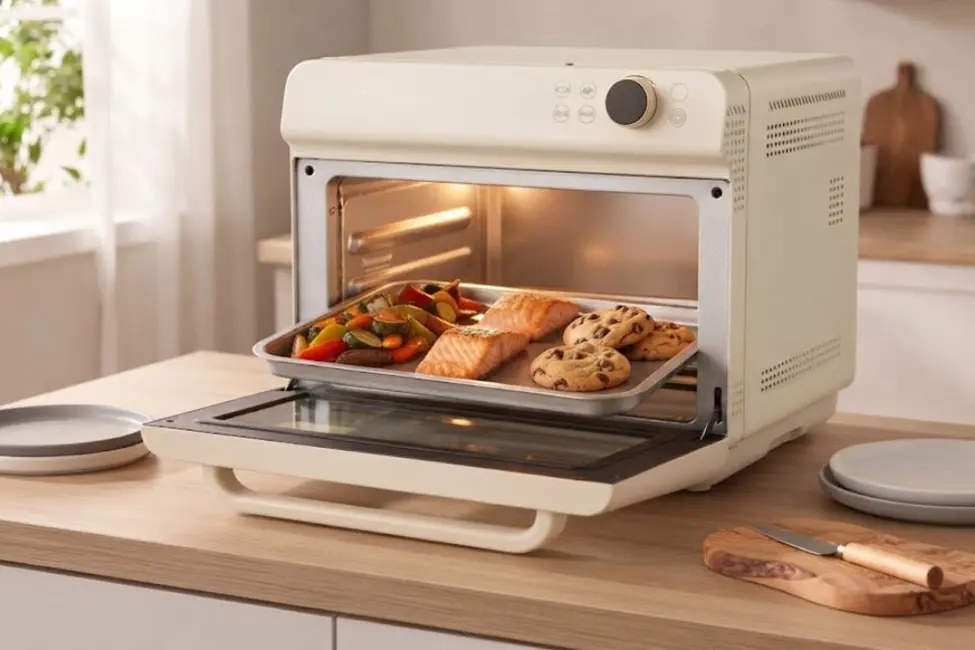
Many everyday foods can work well when prepared in smaller quantities. The important factor is not simply the food itself but whether the portion and cookware fit comfortably within the available cooking space.
Examples include:
- Roasted vegetables for one or two servings
- Individual portions of fish or chicken
- Small pizzas and sandwiches
- Baked dishes prepared in smaller cookware
- Cookies and other limited baking batches
- Leftovers that need reheating or crisping
These foods are useful examples because they do not necessarily require a large cooking cavity. A smaller portion of vegetables, for instance, can be spread across a suitable tray without needing the capacity of a full-size oven. Similarly, a small baking project may be easier to manage when the cooking space is proportional to the quantity being prepared.
The same principle applies to reheating. Rather than viewing an oven only as a tool for preparing complete meals from scratch, people can use it for smaller everyday tasks that benefit from controlled heating or crisping. This broader role helps explain why compact ovens can become useful parts of a regular cooking routine.
Can a Countertop Oven Replace a Full-Size Oven?
For some cooking tasks, it can reduce how often a full-size oven is needed. However, it should not automatically be considered a complete replacement. The two types of ovens serve different capacity requirements, and the right choice depends largely on the size and complexity of the meal.
A countertop oven can be particularly practical for:
- Small portions and everyday meals
- Limited baking batches
- Reheating and crisping food
- Cooking for one or two people
- Kitchens where space is limited
A full-size oven remains advantageous when cooking involves:
- Large family meals
- Multiple dishes at once
- Large roasts
- Multiple baking trays
- Oversized cookware
- High-volume food preparation
This distinction is important because appliance decisions should reflect actual cooking habits rather than broad claims about which option is universally better. Someone who regularly prepares large meals may value the capacity of a traditional oven, while someone who usually cooks smaller portions may appreciate having a more compact alternative.
For some households, the two can also work together. A countertop oven can handle smaller everyday jobs while the full-size oven remains available when greater capacity is genuinely needed.
What Should You Look for When Choosing a Countertop Oven?
Choosing a countertop oven should begin with the cooking tasks you perform most often. An appliance with numerous functions may appear attractive, but those features have limited value if they do not match your normal routine.
Capacity: Consider the portions you usually prepare and the size of cookware you expect to use. A compact appliance should still provide enough interior space for your common meals.
Counter space: Measure the available area before choosing a model. The oven should fit comfortably while leaving enough room for safe operation and normal kitchen activities.
Temperature control: Consistent and understandable temperature settings are important for different cooking tasks, from reheating to baking and roasting.
Cooking modes: Consider which functions are genuinely useful to you. Baking, roasting, broiling, or convection-related settings may be valuable depending on your cooking habits.
Controls: Straightforward controls can make an appliance easier to use regularly, particularly for simple meals.
Cleaning: Removable trays, accessible surfaces, and a manageable interior can make routine maintenance less demanding.
Safety: Stable placement, appropriate ventilation, surrounding heat, and following the manufacturer’s instructions should all be part of the decision.
When comparing different models, including options such as the Ciarra Nosh Oven, it is more useful to evaluate these practical characteristics against your own cooking needs than to focus solely on a long feature list.
Who Benefits Most From a Countertop Oven?
A countertop oven can be particularly useful for people whose cooking habits revolve around smaller portions. Someone living alone may not need the capacity of a full-size oven for most daily meals. The same can apply to couples or smaller households that rarely prepare large quantities of food.
It can also make sense in kitchens where space is limited. Apartments, compact kitchens, and other smaller cooking environments may benefit from an appliance that provides oven-style functionality without requiring the footprint of a traditional built-in unit.
Another potential user is someone who already owns a full-size oven but wants a secondary option for smaller tasks. In that situation, the countertop appliance does not have to replace the main oven. Instead, it can handle everyday cooking jobs while leaving the larger appliance available for occasions when greater capacity is necessary.
When a Countertop Oven May Not Be Enough
A smaller oven is not suitable for every cooking situation. Large households that regularly prepare substantial meals may quickly find its capacity restrictive. The same applies when several dishes need to be cooked simultaneously or when recipes require large cookware.
Counter space is another consideration. Although a countertop oven is smaller than a traditional oven, it still occupies a permanent or semi-permanent area in the kitchen. In an extremely compact space, even a smaller appliance may compete with other essential equipment.
Understanding these limitations helps keep the decision realistic. The goal is not to choose the smallest appliance possible, but to select cooking equipment that matches the food, portions, space, and frequency of use.
The Bigger Reason Small Ovens Are Becoming More Practical
The growing usefulness of smaller ovens is ultimately connected to how people approach everyday cooking. Not every meal involves several dishes, a large roast, or multiple baking trays. Many cooking tasks involve only a modest quantity of food.
That makes capacity only one part of the decision. Convenience, available space, cooking frequency, and portion size can be equally important. A countertop oven fits this approach because it gives smaller cooking tasks their own practical space without requiring the capacity of a traditional oven every time.
Conclusion
A countertop oven is becoming an increasingly practical choice for small-batch cooking because it can better match the size and nature of many everyday meals. It can be useful for smaller portions, limited baking projects, reheating, roasting, and other routine tasks while taking up less space than a full-size oven.
It is not a universal replacement, however. Larger meals and high-volume cooking still benefit from greater oven capacity. The better approach is to consider how you actually cook and choose an appliance accordingly. For readers comparing compact cooking solutions, Ciarra Appliances offers another option to explore alongside other countertop oven choices.
FAQs
1. Is a countertop oven good for small-batch cooking?
Yes. A countertop oven can be particularly practical for preparing smaller portions because its cooking space is better suited to modest quantities than a full-size oven. It can work well for meals for one or two people, small baking batches, roasted vegetables, individual portions of meat or fish, and reheating leftovers.
2. Can a countertop oven replace a full-size oven?
Not in every situation. A countertop oven can handle many everyday small-batch cooking tasks, but a full-size oven remains more practical for large meals, multiple dishes, large roasts, multiple baking trays, and oversized cookware. For some households, using both appliances for different tasks may be the most practical approach.
3. What foods can you cook in a countertop oven?
Depending on the model and its capacity, countertop ovens can be used for foods such as roasted vegetables, fish, chicken portions, small pizzas, sandwiches, baked dishes, cookies, and reheated leftovers. The appropriate cooking method and cookware will depend on the specific appliance and recipe.
4. What should you consider when choosing a countertop oven?
Consider the oven’s capacity, countertop footprint, temperature controls, cooking modes, controls, cleaning requirements, and safety features. It is also important to consider the types and quantities of food you normally prepare rather than choosing a model based only on the number of available features.
5. Are countertop ovens suitable for small kitchens?
They can be useful in smaller kitchens because they generally require less space than a full-size oven. However, they still need adequate counter space, ventilation, and safe clearance around the appliance. Measuring the available area before choosing a model can help ensure that it fits comfortably.
Also Read
- https://grammerway.com/why-modern-casino-platforms-are-focusing-on-faster-gameplay-and-real-time-features/
- https://grammerway.com/elevating-the-client-unboxing-experience-with-photography-presentation-boxes/
- https://grammerway.com/why-modern-casino-platforms-are-focusing-on-faster-gameplay-and-real-time-features/







Leave a Comment