
Most homeowners have no idea how much money slips out through their windows every month. It is not a dramatic loss. There is no visible hole in the wall or puddle on the floor. Instead, your heated air drifts outside all winter long, and your air conditioning works overtime all summer to cool the neighborhood. When people finally add up the numbers, many discover that window replacement pays for itself faster than almost any other efficiency upgrade they have considered.
I want to walk you through how this actually works. Not with vague promises, but with the real mechanics of how old windows waste energy, how to tell if your windows are the problem, and what your realistic options are, including a few cheap fixes that help in the short term.
The Slow Leak You Cannot See
Here is the uncomfortable truth about old windows: they are rarely a single leak. They are dozens of small failures working together.
The glass itself conducts heat. Single-pane windows, which are still common in older homes, transfer heat straight through the glass. In January, the inside surface of a single pane can be 15 to 20 degrees colder than the room air. Stand next to it and you feel cold radiating off the glass, even with zero drafts. Your furnace responds by running longer to compensate.
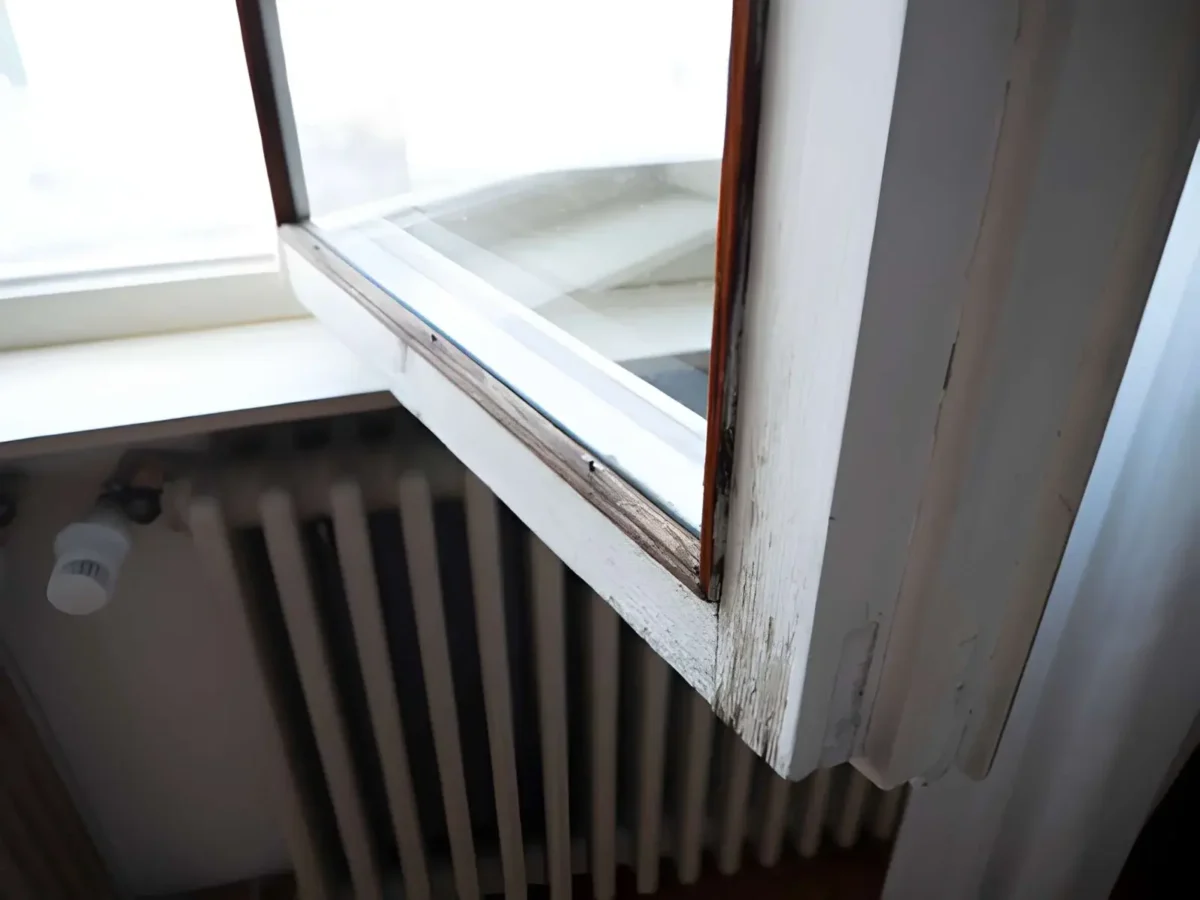
Then there is the frame. Wood frames shrink and swell with the seasons for decades until the seals no longer sit tight. Metal frames conduct heat aggressively. Old caulk hardens, cracks, and pulls away from the siding. The weatherstripping that once sealed the sash flattens into a thin ribbon that stops nothing.
Put it all together and a typical older window leaks air in a dozen places at once. The Department of Energy has estimated that air leakage through and around windows accounts for a meaningful chunk of the energy a home loses, roughly 25 to 30 percent of typical heating and cooling use when you include all the related losses. On a 200 dollar winter heating bill, that is real money every single month.
The Summer Side of the Problem
People usually associate drafty windows with winter, but summer has its own version of the problem.
Old glass lets solar heat pour straight into your home. Modern low-emissivity coatings reflect a large share of that heat before it ever enters. A single-pane window with no coating is basically a greenhouse panel. The sun hits it, the heat comes inside, and your air conditioner runs for hours trying to catch up.
Leaky seals hurt in summer too. Hot humid air works its way in around the sash, which means your cooling system fights the outdoor temperature around the clock instead of maintaining the temperature you set. If certain rooms in your house never seem to get comfortable no matter how long the AC runs, your windows are a prime suspect.
How to Tell If Your Windows Are Costing You Money
You do not need special equipment to diagnose problem windows. Here are the checks I use, and you can do all of them in an afternoon:
The candle or incense test. On a windy day, slowly move a lit candle or stick of incense around the inside edge of each window frame. If the smoke or flame flickers, you have found an air leak.
The hand test. On a cold day, hold your palm a few inches from the window and frame edges. A draft is unmistakable. Also touch the glass itself. If it feels dramatically colder than the room, that window is pulling heat out of your home.
The paper test. Open the window, slide a sheet of paper into the sash, and close it. If you can pull the paper out easily, the weatherstripping has given up.
Visual inspection. Look for condensation or fog between double-pane glass, which means the seal has failed and the insulating gas is gone. Check for rot, cracks in the caulk, and gaps where the frame meets the wall.
Your comfort map. Walk your house on a hot or cold day and note which rooms feel uncomfortable. Rooms with old windows will stand out clearly.
What the Numbers Actually Look Like
Let us make this concrete. Suppose you spend 2,400 dollars a year on heating and cooling, which is close to the national average. If leaky old windows are responsible for 25 percent of that load, you are losing around 600 dollars a year through them.
Now compare that to the cost of fixing the problem. Modern double-pane windows with low-e coatings cut heat loss through the glass dramatically compared with single panes, and proper installation eliminates the drafts entirely. The energy savings alone will not recoup the full cost of new windows in a couple of years, and anyone who tells you otherwise is selling something. But when you combine the monthly savings with improved comfort, better resale appeal, and the elimination of cold spots and condensation problems, the investment starts making sense for a lot of homeowners, especially those planning to stay put for five years or more.
There is also the maintenance math. Old wood windows need scraping, painting, and reglazing on a cycle that never ends. Newer windows are largely maintenance-free. If you value your weekends, that counts for something.
Cheap Fixes That Help While You Decide
If new windows are not in the budget this season, you are not stuck. A few low-cost measures genuinely reduce the losses:
- Re-caulk the exterior gaps. A tube of quality exterior caulk costs a few dollars and seals the frame-to-wall joint where a lot of leakage happens.
- Replace worn weatherstripping. Adhesive-backed foam or V-strip weatherstripping is inexpensive and easy to install yourself.
- Add cellular shades or heavy curtains. Properly fitted insulating shades reduce heat loss through the glass noticeably, and they help in summer by blocking solar gain.
- Apply interior window film. Heat-shrink film is not elegant, but it creates an air gap that cuts winter drafts for a few dollars per window.
- Lock the sashes. It sounds silly, but many windows leak simply because they are never fully locked into position, which is what compresses the seals.
These measures buy time and trim maybe 10 to 20 percent off your losses. They do not fix failed seals, rotted frames, or single-pane glass. Eventually the underlying problem comes back.
When Repair Stops Making Sense
Here is the honest decision framework. If your windows are structurally sound and the problem is one or two leaks, caulk and weatherstripping are the right answer. If the glass has failed, the frames are rotting, the sashes no longer operate, or the whole house feels uncomfortable no matter what you do, you are past the point where patches help.
At that stage, the question is not whether the windows are costing you money. They are. The question is whether you keep paying that tax every month or fix it once.
The Bottom Line
Drafty windows are a quiet expense. They never send a bill, never break dramatically, and never force a decision. They just shave a little off your bank account every month while making your home less comfortable than it should be.
Now is the right time of year to find out where you stand. Do the candle test, check your weatherstripping, and look at last winter’s utility bills. Whether you end up sealing the gaps yourself or planning a full upgrade, you will head into this winter knowing exactly what your windows are doing, and how much it is costing you.
Also Read
- https://grammerway.com/how-do-business-gas-cards-simplify-expense-reporting/
https://grammerway.com/what-to-expect-at-your-first-dental-visit-with-a-new-dentist/
https://grammerway.com/is-it-staff-augmentation-still-worth-it-now-that-ai-writes-code/





Leave a Comment