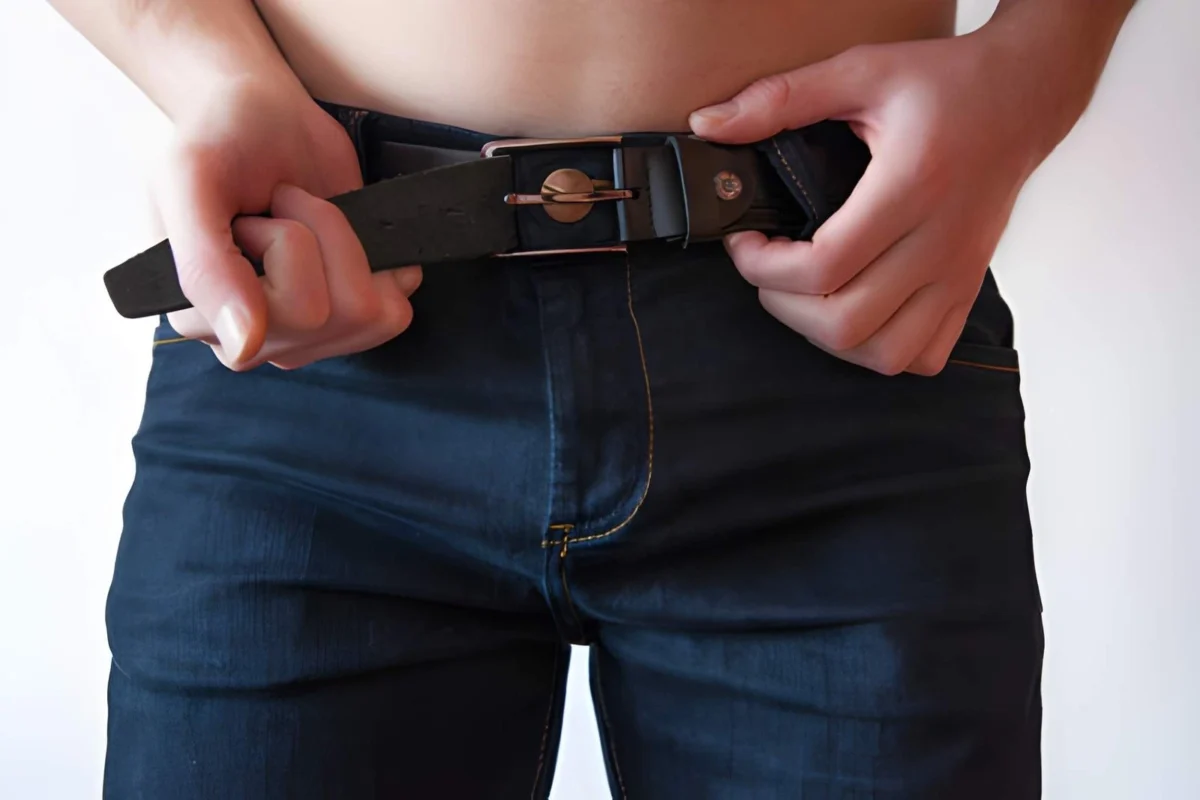

Most men who try a chastity belt for the first time run into the same wall: sizing charts that assume everyone’s body follows one blueprint. It doesn’t. Hip width, waist taper, thigh circumference — these vary wildly from person to person, and a fixed-size belt either digs in or slides around. That’s exactly why adjustable chastity belt for men designs have taken over the market — they bend to the body instead of forcing the body to bend to them.
Why One-Size Frames Fail So Often
A rigid belt made for a 34-inch waist will not magically fit on a 38-inch waist simply because the company states that “one size fits most.” Bone structure alone throws things off. Someone with wide hip bones and a narrow waist needs totally different curvature than someone built straighter up and down.
Pressure points show up fast with fixed frames — usually at the hip bones or the base of the spine. Inappropriate fit in a metallic material could cause imprints after 2-3 hours of wearing. The adjustment chastity belt for men design avoids this problem since the waistband and base ring have different movements.
Functioning of the Adjustment Mechanism
The waistbands of most adjustable belts feature segments, similar to interlocking plates or ratchet-type closing, like a weight-lifting belt but more accurate. Some models offer up to 6 centimeters of expansion or contraction on the hip band alone.
The base ring (the part that sits behind the testicles) usually comes in swappable sizes too, often ranging from 45mm to 60mm in small increments. That’s the piece that determines comfort during sitting, walking, and sleeping — not the cage itself. Get the ring wrong and nothing else about the fit matters.
| Component | Fixed Belt | Adjustable Belt |
| Waistband | Single molded size | Expands via clips, screws, or notches |
| Base ring | One diameter only | Interchangeable rings, 4-6 sizes |
| Weight distribution | Concentrated at hips | Spread across waist and lower back |
| Long-term wear comfort | Drops after 4+ hours | Holds steady across full-day wear |
Body Type Considerations That Actually Matter
Someone with a larger frame needs a longer waistband arc and wider hip clearance — obvious enough. But there’s a subtler issue: men with a shorter torso often need the front closure repositioned lower, or the cage angle shifts uncomfortably against the pubic bone.
Athletic builds with lower body fat percentages tend to feel hardware edges more acutely. Padding inserts or silicone-lined bands solve this in most adjustable models. However, for larger men, there is an advantage in using wide waistbands that disperse weight as opposed to slicing through the skin.
Here is a brief list of what counts for the most based on body type:
- Narrow hips, straight waist: needs a shorter arc and tighter ring tolerance
- Wide hips, curvier taper: benefits from multi-point adjustment, not just one hinge
- Broader midsection: wider band surface reduces pinching significantly
- Very lean or muscular builds: silicone padding cuts down on hardware contact
Materials Play a Bigger Role Than People Expect
Stainless steel holds shape but doesn’t flex — so the adjustment has to come from hardware, not the material. Silicone and hybrid designs, on the other hand, can flex slightly with the body itself, adding a second layer of comfort beyond mechanical adjustment.
Titanium options are lighter, which matters more than people assume during 8+ hours of wear. Every gram adds up when it’s hanging off the same points for a full day.
Getting the Adjustment Right the First Time
Getting the measurement right before you buy will save you a lot of time and effort down the road. Instead of using a ruler and making a guess, use the tape measure to measure your waist accurately.
Important things to check before buying:
- Base ring circumference measured while flaccid, not estimated
- Waistband length measured at the exact height the belt will sit, not at navel level
- Any scarring, hip asymmetry, or prior injury that could affect standard sizing
Adjustable frames still need a starting point. Guesswork just gets corrected faster than with fixed belts.
Fit isn’t a luxury feature here — it’s the entire function of the product. If the belt moves, pinches, or loosens, it is not doing its work regardless of how well it may be designed. The reason why there are adjustable chastity belt for men is that people come in different sizes, and the best ones assume that from the beginning.
FAQs
Do adjustable chastity belts work for larger body types?
Yes — most adjustable models extend well beyond standard waistband limits, some up to 44 inches or more with extender links.
How often should base ring size be reassessed?
Reassess after any significant weight change of 10+ pounds, since ring fit shifts with body composition.
Can adjustable belts be worn during exercise?
Many are designed for it, though silicone-lined models handle movement and sweat better than raw metal ones.
Metal or Silicone: Which one is best for your sensitive skin?
Silicone hybrids will be more comfortable and have fewer problems in terms of irritation because of metal allergy or sensitive skin, especially for men.
What takes time to get right: the adjustment?
Most men find the right position in about 1-2 weeks.
Read more: Types of Book Editing: A Complete Guide for Authors
How Everyday Driving Has Changed Over the Last Decade
Common Grammar Mistakes in Sports Writing and How to Avoid Them

Leave a Comment