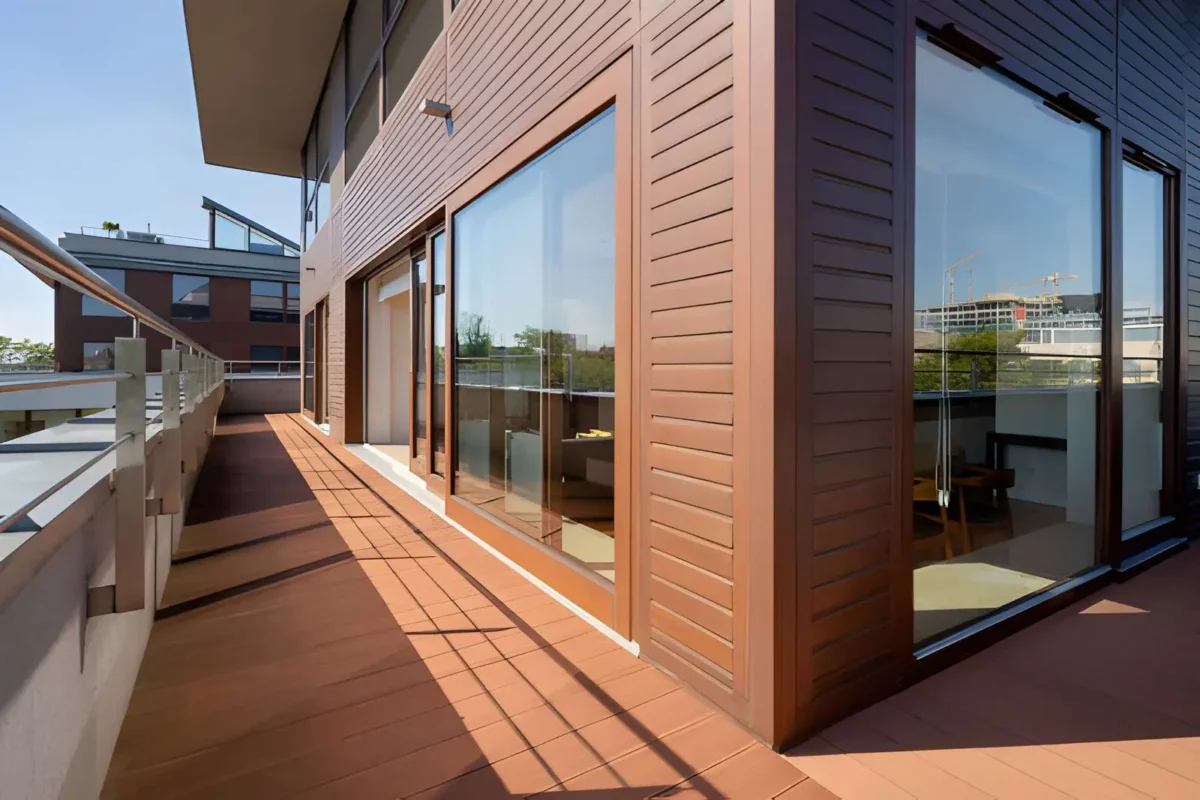

The Rise of Sustainable Outdoor Living
Today’s consumers of residential construction products want them to be both long-lasting and good-looking, but also environmentally friendly. New and improved materials that can withstand demands and lower maintenance needs are more and more supplanting the traditional natural timber, which now makes up the base of the outdoor living room expansion.
Wood Plastic Composite (WPC) products are one of the fastest growing options for landscaping projects both at homes and in offices. WPC materials are made from a mix of recycled wood fibers and high-quality polymers and offer all the beauty of wood with added durability to weather, wood moisture, insects and wood decay.
Because of these attributes, WPC is a great choice for decks, balconies, terraces, garden walkways, fencing, pergolas and exterior wall finishes.
Why WPC Materials Are Getting Popular
WPC products stand up to harsh environments; they are not made in the same way as conventional wood products. They are not as demanding when it comes to regular staining, painting and sealing, making them an efficient choice for busy homeowners and property managers.
Several of the main advantages are:
Very water and humid resistant
Defect protection against termites and insect damage
Less chances of cracking or splintering or warping
Low maintenance requirements
Long service life
Attractive natural wood look
Improved weather resistance
The use of sustainable construction materials: Kabupaten Bogor, PT Karya Sumadi, and PT Lenmar Bioenergi
This makes the WPC products suitable for various weather conditions, such as humid coastal areas to areas where there is strong sunshine or more seasonal temperature fluctuations.
Designing out but Beautiful Spaces
Garden spaces have evolved in significance in contemporary design. A well-planned deck or patio can provide an extra space to relax, entertain visitors and family, or enjoy some outdoor time.
This WPC decking provides homeowners with the look of natural wood with the elimination of several issues that occur with wood decking. It is also good for rooftop terraces, courtyards and garden pathways because it resists slip and is dimensionally stable.
WPC decking comes in different colors, textures, and finishes to fit any part of the design of the home, including contemporary and traditional. Seamless transitions can be created easily between indoor and outdoor living spaces, and designers can not only create a cohesive aesthetic throughout the property, but also easily create entries and exits from the home’s center, which enhance both safety and shelter function.
Growing importance of composite cladding
The wall cladding materials are used both as decoration and protection. Cladding is not only useful when it comes to boosting the look of a building, but it is also extra protection from wind, rain and temperature fluctuations.
Now, modern composite systems are increasingly popular, knowing that the composite materials are very durable, giving less maintenance. Composite panels do not require as much maintenance as painted wood does and will maintain the appearance for many years.
By turning to a reputable composite cladding supplier, builders, architects, and homeowners alike can gain access to a product which has great structural performance while also supporting modern design. Quality composite cladding helps to improve energy efficiency, reduce exposure of building exteriors to the weather and add long-term value to property.
These systems are often found in projects in the residential market, apartment buildings, hotels, office developments, schools, as well as retail and hospitality projects where looks and longevity are both essential requirements.
The Role of a Quality WPC Decking Manufacturer
When it comes to any type of decking project, the materials that are being installed will make all the difference. A good wpc decking manufacturer emphasizes accuracy molding, stable material, and product testing to boost the stability of product performance.
The target of the modern production process is to manufacture decking boards that have a fixed size for all the boards and stable color production, while also maintaining stable structural properties. You’ll also find improved resistance to fading, moisture absorption and daily wear thanks to advanced extrusion technologies.
The latest trends are dominated by manufacturers that invest in research and product development by introducing upgraded surface textures, invisible fastening mechanisms and more effective protection coatings, which prolong the lifespan of products as well as making them easier to hook up.
These innovations benefit contractors to build more efficiently, and give homeowners peace of mind about the investment they made that is going to last them for many years.
Promoting Environmentally Responsible Construction
Sustainability has been a major factor in contemporary architecture. WPC products help promote the environmental responsibilities of construction through the use of recycled wood fibres and recyclable plastics in construction materials.
The application of composite materials can be seen to decrease the need for natural hardwood, and ensure that recycled materials that otherwise could be considered as waste are put to good use.
Additionally, long product life helps waste reduction and sustainability because less material will be going to waste as the result of building replacement. WPC products require less maintenance chemicals, stains, paints and preservatives, which also helps to reduce the environmental impact of maintenance.
Increasingly, architects and building developers are adopting composite products as part of an overall “green” building initiative that focuses on all aspects of building performance and use of natural resources.
Selecting Materials that Last
When it comes to building materials, there is more to consider than cost. Homeowners should also consider the maintenance needs, durability, and weather resistance, as well as the long-term value of the roof.
While natural timber lends a classic look, it might need frequent activities like sanding, staining, sealing and fixing. This maintenance requirement is a major benefit of composite materials, which do not require such maintenance, while retaining fine looks for years for using.
While considering decking and exterior cladding options, you should consider:
Material quality
UV resistance
Moisture performance
Surface texture
Installation method
Structural strength
Colors and finishes for which items are available
Technical support and guidance from the manufacturer
Thoroughly considering these aspects can make the difference between a good and a great finished product.
Conclusion
When it comes to home improvement, one of the major focuses of modernity is on the marriage of aesthetically pleasing components and durability and sustainability. WPC decking & WPC composite cladding are proving to be viable solutions, expected to deliver the required performance to the satisfaction of expectations, and providing very good long term performance value.
Composites add value for the long haul, which makes them ideal for an attractive outdoor living space, a building’s façade, or a “green” construction project.
With a focus on sustainable and resilient construction, high-quality WPC solutions are poised to continue influencing the future of residential and commercial buildings for years to come.
Also Read-







Leave a Comment