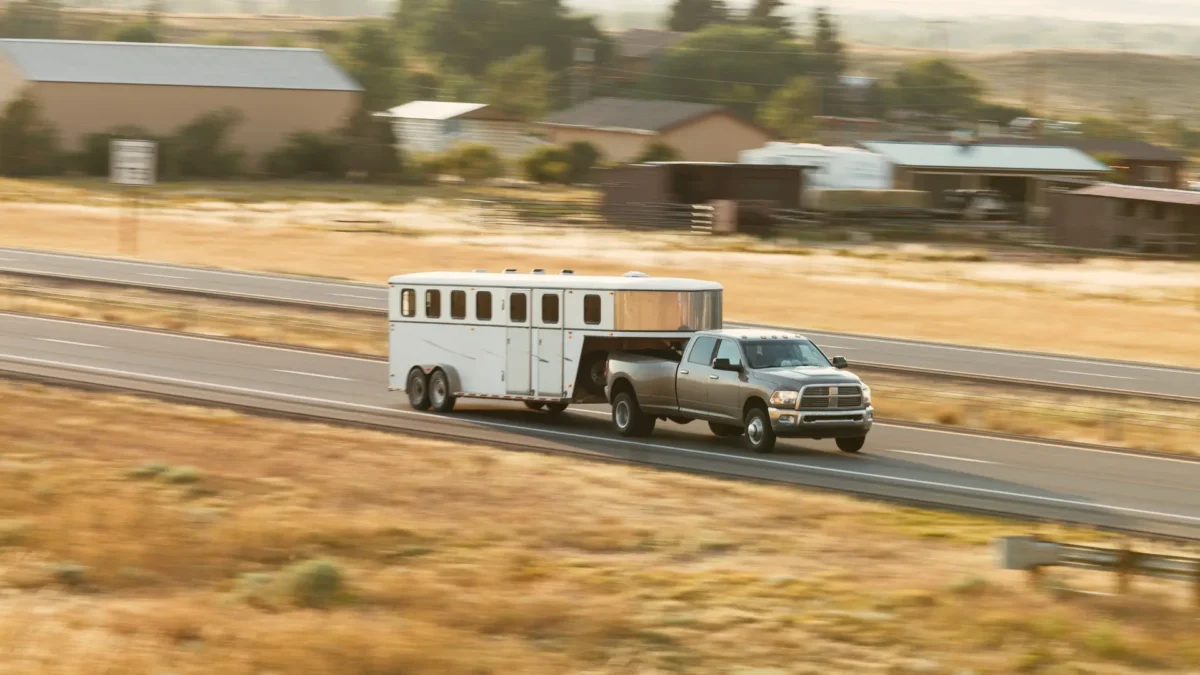

Every livestock producer understands this truth at a gut level: moving animals isn’t just a logistics task. It’s a responsibility, one that carries real consequences when something goes wrong. Choose the wrong trailer, and you’re looking at injured animals, costly delays, or a situation that spirals far beyond what any pre-trip checklist could have prevented.
According to the Illinois Department of Transportation’s 2024 Crash Facts report, tractor-trailer crashes account for 3.7% of total crashes, but their consequences are disproportionately severe. That number should stop you in your tracks. Choosing the right trailer isn’t a nice-to-have. It’s the single most foundational decision you’ll make for every haul ahead of you.
Choosing a Livestock Transport Trailer That Prioritizes Safety
Here’s what most people get wrong: they treat trailer selection like a purchase decision rather than a safety decision. The right trailer does far more than move animals from one location to another. It protects them across every mile, every road condition, and every unexpected delay. Three factors separate a genuinely reliable livestock trailer from a risky one: build quality, sizing, and hitch configuration.
If you’ve been searching online using terms like cattle trailer for sale near me, the following list will help you find the best dealers near you.
Livestock transport trailer safety begins with getting these foundational choices right, before you ever hook up and head down the road.
Structural Integrity and Build Quality
Think of the floor, frame, and surface materials of your trailer as non-negotiable. Full stop. Non-slip flooring dramatically reduces fall risk during transit.
Corrosion-resistant materials extend your trailer’s working lifespan and keep reliability consistent over years of hard use. Proper ventilation? That’s what keeps animals calm and prevents heat stress on those long summer hauls when temperatures inside a poorly designed trailer climb fast.
Here’s a number worth knowing: carbon steel trailers typically rust out and require refurbishment within 7 to 10 years. Upgrading to aluminum or stainless steel alternatives delivers stronger long-term ROI and meaningfully reduces safety risks, a finding supported by Beef Central, April 2025.
A rugged, corrosion-resistant build lays the foundation for a safe haul, but even the sturdiest trailer can put animals at risk if there isn’t adequate room for them to stand and balance safely throughout the journey.
Proper Sizing for Different Animals
Space requirements shift considerably depending on the species you’re hauling. Cattle generally need 14–20 square feet per head, while hogs and sheep require less room. Overloading a trailer doesn’t just cause animal stress and injuries; it creates dangerous weight imbalances that compromise your stability on the road.
Custom layouts with removable dividers handle mixed loads effectively. Each group of animals gets the space they need without wasting trailer capacity. It’s a practical solution that pays off in both animal welfare and operational efficiency.
Gooseneck vs. Bumper Pull for Safe Livestock Hauling
Once you’ve matched your trailer’s space to your animals’ needs, hitch configuration becomes your next critical decision. Safe livestock hauling requires understanding the real tradeoffs here, not just going with what’s most familiar.
Gooseneck trailers offer superior stability for heavier loads and distribute weight over the truck’s rear axle, making them the right choice for large cattle hauls. Bumper pull trailers are easier to maneuver and work well for smaller loads or tighter farm roads where flexibility matters more than raw capacity.
Selecting the right trailer, though, is only half the equation. How you prepare, load, drive, and maintain it determines whether every single trip ends safely.
Key Livestock Trailer Safety Tips to Implement
Following proven livestock trailer safety tips throughout the entire transport process, not just at the starting point, is what separates consistently safe haulers from those who are quietly relying on luck.
Pre-Trip Inspection Checklist
Before every trip, inspect these areas without exception: floor condition and latches, tire pressure and tread, hitch and safety chains, brake lights and electrical connections, and wheel bearings. Catching a worn floor panel or a faulty latch before you hit the highway takes five minutes. It can prevent disasters that would take five months to recover from, financially and emotionally.
Clearing your pre-trip checklist confirms your equipment is ready. But even a perfectly maintained trailer can become a hazard if animals aren’t loaded with proper weight distribution in mind.
Optimal Weight Distribution and Load Securing
Always load heavier animals forward and balance the load evenly across axles. Use non-slip mats, interior dividers, and tie-downs to prevent shifting during transit. Animal movement during braking or cornering remains one of the leading causes of trailer instability on the road, and it’s entirely preventable with the right preparation.
With your load balanced and secured, the responsibility shifts to the driver. Even the best-loaded trailer can’t compensate for aggressive or careless driving.
Smooth Driving Practices
Maintain safe speeds, leave generous braking distances, and avoid sudden lane changes. Weather-aware driving matters far more than most people acknowledge; wet roads and wind significantly affect how a loaded trailer handles, often in ways that surprise even experienced haulers. Pull over periodically to visually check your animals and equipment, particularly on longer hauls.
Safe driving gets your animals home. What you do after the trip determines whether your trailer stays just as reliable for the next one.
Post-Trip Maintenance
After every haul, clean the trailer thoroughly. Waste and moisture accelerate corrosion faster than almost anything else. Inspect the floor, hinges, latches, and tires for wear. Store the trailer in a covered, dry location whenever possible.
Schedule a professional service at least twice a year for commercial operations. These aren’t optional extras; they’re the habits that keep your investment working safely year after year.
Advanced Innovations in Livestock Trailer Safety
Mastering the fundamentals is essential. But today’s most forward-thinking operations are also integrating cutting-edge technologies that elevate animal welfare to an entirely new standard.
Smart Sensor and Telemetry Integration
Motion sensors can now detect unusual weight shifts during transit, alerting drivers before a situation becomes dangerous. Temperature monitoring systems flag overheating inside the trailer.
Camera systems provide real-time visibility into the trailer’s interior that would have been unimaginable a decade ago. These tools are no longer reserved for large commercial fleets; they’re increasingly affordable for individual producers who take safety seriously.
Real-time data gives you eyes on conditions you can’t always see. Pair that intelligence with a flexible interior, and you can also physically adapt your trailer to every load you’re running.
Modular Interiors for Custom Load Configurations
Removable gates, adjustable partitions, and flexible dividers allow haulers to reconfigure their trailer for different species or load sizes without purchasing a second unit. This adaptability improves both animal safety and operational efficiency simultaneously, two outcomes that rarely conflict when your equipment is designed thoughtfully from the start.
Eco-Friendly Design Features
Lightweight aluminum alloys reduce overall trailer weight, improving fuel efficiency and reducing stress on towing vehicles across the board. Energy-efficient ventilation systems regulate interior temperatures without excess mechanical complexity, which translates directly into fewer parts that can fail mid-haul. Simpler systems break down less often. That’s not a coincidence, it’s smart engineering.
Practical Strategies for Safe Livestock Transport Operations
Even the most technologically advanced trailer won’t reach its full safety potential without the right operational practices driving the entire process.
Training for Handlers and Drivers
Calm, deliberate loading techniques reduce animal stress and injury risk more than any piece of equipment can on its own. Low-sloped ramps and properly designed chutes make loading and unloading safer for both animals and handlers.
Drivers should also understand how a loaded trailer handles differently than an empty one, particularly during braking, where the difference in stopping distance can be jarring if you’re not prepared for it.
Routine Maintenance and Professional Check-Ups
Schedule professional inspections at least twice a year for trailers used in commercial choosing livestock transport trailer operations. Pre-trip servicing, seasonal checks, and immediate attention to any floor or structural damage keep your trailer performing at its absolute safest. Consistency here isn’t optional; it’s operational discipline.
Local Trailer Sourcing and Customization
Finding a trailer that genuinely fits your specific animals, operation size, and terrain can make a measurable difference in daily safety. Local sourcing also means easier access to service, parts, and customization support when you need it, which you eventually will.
Livestock Transport Safety
The right trailer doesn’t just make hauling easier; it actively protects your animals, your investment, and every other driver sharing the road with you. From structural build quality and proper sizing to post-trip maintenance and smart technology, every detail feeds directly into livestock transport trailer safety.
Don’t let trailer selection become an afterthought buried under the pressure of your daily operation. Apply these livestock trailer safety tips with consistency, invest in equipment that was designed with animal welfare at its core, and your operation will be safer, more reliable, and far better positioned for every haul ahead.
Frequently Asked Questions
What features make the best livestock trailer for safety?
The best livestock trailer for safety combines non-slip flooring, corrosion-resistant materials, proper ventilation, adequate animal spacing, secure latching systems, and a compatible hitch configuration for your typical load size and road conditions.
How much space per head is required for safe cattle transport?
Cattle generally need between 14 and 20 square feet per head, depending on their size and weight. Overcrowding causes stress, injury, and dangerous weight imbalances that affect trailer stability during transit.
Why is weight distribution critical in livestock trailers?
Uneven weight distribution shifts the trailer’s center of gravity, making it harder to steer and stop safely. Heavier animals loaded forward over the axles help maintain stability and reduce sway.
Also Read
- Innovative Technologies in Metalworking Equipment
- Why You Need a Police Report After a Car Accident
- 2222 Angel Number Meaning: Unlocking Its Spiritual, Love, and Life Guidance





Leave a Comment