

Branding matters in an increasingly competitive construction market because construction involves high risks and large sums of money. Before a foundation is poured, clients must judge things they cannot see right away, such as reliability, financial strength, site safety, and day-to-day management. On paper, many technical bids look alike, so a company’s brand often becomes the main way clients judge risk. It answers the client’s biggest question: which contractor can be trusted to deliver a complex, multi-million-dollar physical asset without causing legal disputes, budget overruns, or serious schedule delays?
For many years, commercial and residential contractors assumed that good work and word-of-mouth referrals were enough to keep projects coming in. Procurement has changed, private and public owners face more oversight, and buyers now carry out detailed online research before sending a Request for Proposal (RFP). A thoughtful brand strategy for construction companies connects technical skill with market perception, making a firm’s hard-earned performance clear to the people who make buying decisions.
When economic pressure reduces margins and unstable material prices cut into profits, contractors without a clear brand often have to compete mainly on price. Contractors that treat their brand as a long-term business asset can protect margins, gain an advantage during pre-qualification and tender reviews, and build a reputation that remains strong through changes in the economy.
Why Branding Matters in an Increasingly Competitive Construction Market
The global construction market is crowded with firms that offer similar services, such as commercial fit-outs, heavy civil earthmoving, general contracting, and structural engineering. When every bidder promises to deliver projects “on time, within budget, and to the highest quality,” these phrases stop helping one firm stand apart. They become background noise and can turn procurement into a race to the lowest price.
A mature brand breaks through this sameness by turning less visible strengths into clear market value. When clients recognize a contractor’s distinct identity, the discussion moves away from basic unit costs and toward project care, dependable planning, and reliable delivery.
Branding Is More Than a Logo, Slogan, or Website
In construction, branding is often mistaken for surface-level decoration: a stylized hardhat logo, a new color palette, and freshly printed business cards. The word “brand” once referred to ranchers marking cattle to show ownership. Today, a commercial brand is the full set of ideas, expectations, and feelings people connect with a business. It is more than what a company displays. It also includes what people say about the firm after its estimators and executives leave the meeting room.
Job-site banners, truck wraps, and project specification sheets are physical signs of a brand message. A real brand identity is built through internal actions: how superintendents work with trade subcontractors, how openly project managers share bad news about change orders, and whether punch-list closeouts match the promises made at the start. When daily operations match the outward message, the brand becomes a strong business advantage.
Branding Turns Technical Capability Into a Clear Market Position
Construction executives are often highly skilled technicians and logistics experts, but they may find it hard to explain their specialty in language clients can quickly understand. A commercial general contractor may have its own scheduling methods, advanced Building Information Modeling (BIM) workflows, or excellent mass-timber skills, yet describe itself only as a “full-service builder.” Failing to explain technical skill in a clear way gives away an advantage.
Strategic branding turns complex engineering skills into a direct market position. Instead of knowing “a little about a lot,” a well-branded firm can become a clear leader in a defined area, such as high-tolerance pharmaceutical cleanrooms, sustainable adaptive reuse, or fast retail developments. Clients handling high-stakes projects rarely want a generalist. They want a specialist with proven methods that reduce the risks of their particular project.
A Strong Brand Helps Construction Firms Win Trust Before the First Meeting
Investing in a major construction project can be stressful, both emotionally and financially. An institutional developer may be putting private equity into an industrial logistics hub, while a business owner may be building a new headquarters. Both want security, stability, and confidence that the project is in capable hands. Independent research shows that about 46% of consumers and corporate buyers will pay more to work with a brand they already trust.
A respected brand builds confidence before a formal introduction. Long before a pre-bid conference, committee members, architects, and procurement officers may review your project history, safety record, and public presence. A clear and authoritative profile tells stakeholders that choosing your firm is unlikely to harm their professional reputation. It supports the decision to shortlist you instead of an unfamiliar competitor.
Which Elements Create a Strong Construction Brand Identity?
Building a brand identity is much like building a skyscraper. Without a solid base and careful engineering, attractive finishes will fail quickly. A brand identity brings together market position, purpose, values, voice, and design rules in a clear system.
Each part should have a clear job, last over time, and work well on real job sites as well as in competitive boardrooms.
Define Your Company’s Position in the Construction Industry
Brand positioning means deciding what your firm will and will not do. It defines your place in the market by answering a few direct questions: Who do you build for? Which project types do you handle best? Which delivery models, such as Integrated Project Delivery, Design-Bid-Build, or CM-at-Risk, show your skills most clearly?
Firms that claim to build everything from luxury custom homes to utility-scale wastewater facilities rarely build a strong reputation in one area. Stating your place in the construction market clearly shows specialist knowledge. This focused position can make your firm the natural choice for clients with difficult, sector-specific needs.
Clarify Your Purpose, Values, and Reason for Being
Simon Sinek’s central idea-that clients do not buy only what you do, but also why you do it-has a strong place in construction. If a company says its only purpose is profit, it will struggle to inspire employees or build client loyalty. Commercial clients can tell when a contractor cares only about billable hours instead of the long-term quality of the finished building.
A firm’s purpose and values must appear in its daily actions. Statements such as “Uncompromising Field Safety,” “Radical Transparency,” and “Enduring Craftsmanship” cannot remain empty slogans. They must shape how superintendents run daily tailgate meetings and how executives deal with unexpected structural conflicts. Studies show that more than 60% of commercial brand relationships are based on shared values, so a clear company culture can provide a real advantage.
Set a Consistent Brand Personality and Tone of Voice
Brand personality guides how a company speaks and writes in every interaction. In construction, a useful tone combines practical professionalism with clear, friendly language. It removes vague corporate phrases while avoiding dense technical abbreviations that may confuse client-side finance committees.
Whether you are writing a multi-million-dollar proposal, answering a first website inquiry, or explaining a project delay, your tone should show calm authority, responsibility, and technical confidence. Using the same tone across teams creates a company voice that prospects see as dependable, capable, and easy to work with. That voice should carry through to the website as well, where a studio like Built For Studio can help match page copy and design to the way your team already communicates.
Build a Recognizable Visual Identity
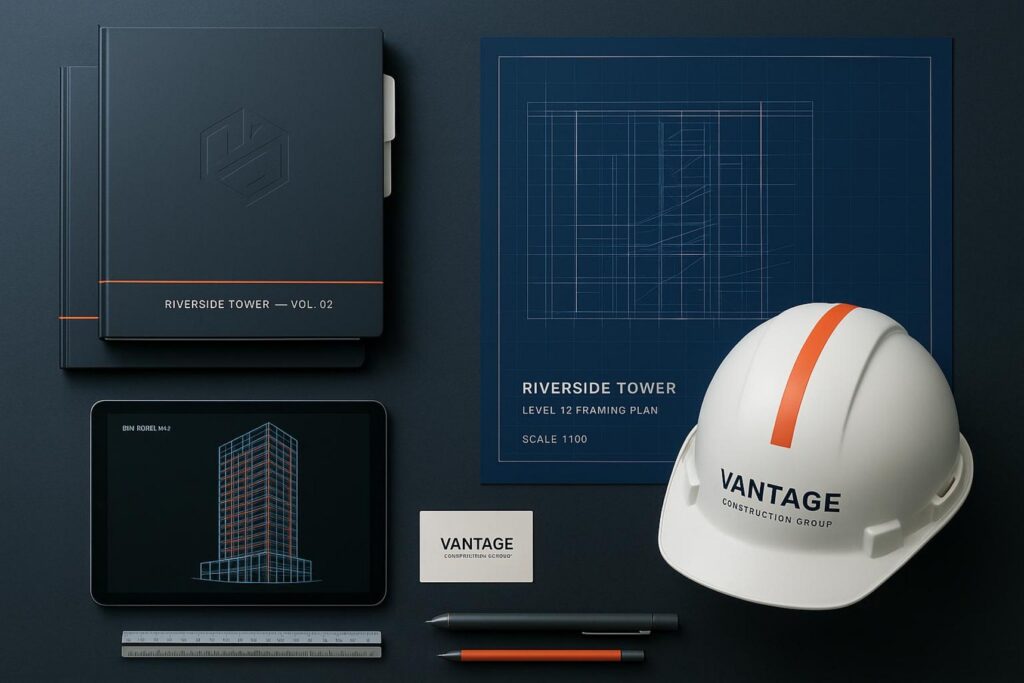
A visual identity is the system of symbols, typefaces, and colors that helps people identify a firm quickly. Construction brands must work across printed blueprints and demanding field settings, including high-visibility vests, crane banners, vehicle fleets, and perimeter hoardings.
Color choices affect how people view a brand. Deep blues and charcoal colors can suggest corporate stability and structural strength. Earth tones can point to sustainability and environmental care. High-contrast yellows and oranges can signal safety and active field work. When these colors are paired with clean typography and clear design rules, the visual identity can suggest a well-managed organization at a glance.
How Should Businesses Approach a Construction Branding Project?
A full rebrand or brand update needs the same careful planning as a critical-path construction schedule. Skipping the early work and moving straight to a new visual style usually produces shallow results.
A clear six-phase process helps the new brand identity reflect the company’s real abilities and support long-term business goals.
1. Audit the Current Brand and Competitor Landscape
Start with an objective review of your current brand materials and market position. Examine proposals, website analytics, tender completion rates, job-site signs, equipment liveries, and client feedback. Look for gaps between what your company can actually do and how people outside the business see it.
Review the competition at the same time. Study the websites, value propositions, and market positions of your five closest competitors. Note common phrases such as “building the future” and look for open areas where your particular skills can stand out.
2. Define the Core Identity and Target Audience
Bring senior leaders, field supervisors, and client-facing managers together for guided brand workshops. The goal is to define your “Brand Core,” including your main purpose, lasting values, and company mission. Decide what cannot be compromised in safety, workmanship, and client service.
Then create clear buyer profiles for the main decision-makers in your customer base. A commercial property developer judges risk differently from a hospital board, a corporate facilities manager, or an architect. Define each group’s concerns, financial goals, and reasons for choosing one contractor over another.
3. Position the Company Around a Specific Market Advantage
After defining your identity and client concerns, create one clear market position. This position should sit where three things meet: what your target market needs most, what competitors fail to provide, and what your company does better than others.
Your positioning statement should be different, credible, and useful in daily business decisions. It acts as an internal guide for growth and can shape future services, hiring decisions, equipment purchases, and business development goals.
4. Refresh Visual Branding and Messaging
With the market position set, create the visible parts of the brand. Develop a modern, flexible logo that remains clear on a phone screen and on a large tower crane. Set a balanced color palette, clear typeface rules, and a photography style that shows real construction work.
At the same time, create messaging guidelines. These should include your short company introduction, standard descriptions, value statements, and approved wording for proposals and capability documents. Building the visual and written parts together keeps them aligned.
5. Apply the Brand Across Every Client Touchpoint
A brand update cannot remain in one digital folder. It must appear across physical and digital operations. Update your main digital channels, including the website, LinkedIn, and search profiles, then replace old physical materials. Rebrand service vehicles, update field safety boards, order consistent high-visibility workwear, and replace faded signs at active job sites.
Pay close attention to documents used in important transactions. Update RFP templates, estimating formats, change-order notices, and project closeout binders so they match the new professional standard. Each contact with a client should support the company’s quality promise.
6. Train the Team To Deliver a Consistent Brand Experience
Your people deliver the brand promise, not the marketing department alone. Hold training sessions for the full organization, including estimating, procurement, project engineering, safety, and field management. Explain the business reason for the update and show how each role affects the company’s reputation.
Give employees practical tools, including email signature templates, communication guides, and good-quality workwear. When field crews are proud of their uniforms and estimators understand the company’s main value, consistent brand delivery becomes part of normal work.
What Business Results Can Construction Branding Improve?
A brand update is not just a cosmetic project or a possible marketing cost. It is a core business investment that can produce measurable commercial results over time. When planned and managed well, a strong brand can improve financial performance and operational stability.
The benefits can appear across the company, from competitive bids to the recruitment of senior field talent.
1. Stand Out When Clients Compare Similar Contractors
During tender reviews, committees often compare three to five qualified contractors with similar balance sheets, equipment access, and regional trade relationships. When the measurable qualifications look almost the same, the way clients feel and think about each brand can decide the result.
Contractors known for honesty, cooperative problem-solving, and reliable delivery stand out from unknown competitors. A recognized brand acts like an informal safety measure for the selection committee. It gives them confidence that your firm presents the lowest risk for their capital investment.
2. Increase Client Trust, Loyalty, and Referrals
Winning work through open competitive bidding takes time and resources. Greater stability comes from negotiated contracts, repeat clients, and preferred-contractor status with active developers. Research suggests that contractors with consistent, professional branding can increase revenue by 10% to 20%, often by getting more value from existing client relationships.
When an owner completes a difficult project on schedule, receives clear financial information, and has a good service experience, that owner is more likely to hire the contractor again. Over time, a strong brand turns past clients into active supporters who recommend the firm through their commercial real estate networks.
3. Align Marketing With Revenue and Growth Goals
Unfocused construction marketing often consists of disconnected activities, such as sponsoring local charity golf events, placing occasional ads in regional trade magazines, or ordering general print materials. These actions use money without clearly supporting revenue goals.
A clear branding plan connects each marketing activity to a larger business aim. If the five-year goal is to move away from low-margin public bidding and win negotiated private design-build contracts in life sciences, the brand plan should identify the exact visuals, sector case studies, and digital campaigns needed to reach those decision-makers.
4. Support Cost-Effective Growth and Higher-Value Work
A trusted brand can give a contractor more pricing power. Recent industry data shows that trade and construction companies completing major brand updates often achieve a 10% to 30% pricing increase over 12 to 18 months without losing market share. This happens because trusted firms win more full-price bids, face less resistance during negotiations, and attract clients with larger budgets.
Brand strength also helps with hiring. Skilled labor shortages make it harder to find excellent superintendents, project managers, and digital engineers. Many of these professionals prefer employers that appear modern, organized, and respected. A strong brand attracts better field and office talent, giving the company more capacity to complete complex, high-margin projects.

How Can Construction Companies Measure Brand Performance?
A brand plan should be judged by clear business measures. Treating a brand as an untouchable creative project makes it hard for leaders to see its return. By tracking business indicators over several years, leadership teams can adjust their market plans based on real data.
Quality teams check concrete strength at seven, 14, and 28 days. Brand managers should use the same regular approach to track visibility, conversion rates, and client opinions.
Track Qualified Inquiries, Proposal Invitations, and Tender Conversion Rates
A key commercial measure for a construction brand is its effect on the business development pipeline. Do not track only the total number of inquiries. Track the number that fit your ideal client profile and target profit margins.
Monitor your tender conversion rate, which is the share of submitted bids and RFPs that become awarded contracts. A stronger brand should gradually improve this rate, especially for negotiated and qualification-based tenders. Also measure your win rate on high-margin projects. Winning profitable work without lowering fees is a clear sign that brand value is growing.
Measure Website Visibility, Engagement, and Lead Quality
Digital analytics show how the market interacts with your company. Track organic search visibility for high-intent, sector-specific terms and see how many potential clients arrive while looking for a particular building solution rather than simply searching for your company name.
Review how visitors use your project case studies. Are they downloading technical papers, reading safety performance pages, and spending several minutes on detailed project stories? Strong activity on technical pages suggests that your digital brand is teaching and qualifying prospects before they contact your team.
Monitor Repeat Work, Referrals, and Client Retention
Long-lasting construction brands are often supported by repeat clients. Calculate the percentage of annual work that comes from returning customers. A healthy commercial contractor with a strong reputation may receive 60% to 80% of its yearly pipeline from existing clients and direct referrals.
Record the source of every new opportunity in your CRM. If more inquiries include comments such as “we saw your job-site banners,” “our architect recommended your team,” or “we saw your recent healthcare project,” you can link revenue growth to your investment in brand positioning.
Gather Feedback on Trust, Clarity, and Professionalism
Direct feedback from project owners, architects, and trade partners offers information that internal meetings cannot provide. Use structured surveys after project closeout and Net Promoter Score (NPS) reviews after final commissioning and punch-list completion.
Ask specific questions about operational clarity, field safety, project management response times, and overall professionalism. Honest feedback can reveal gaps in the brand experience early. It gives leadership the information needed to improve client service, protect the company’s reputation, and remain a strong competitor for years to come.
Read more: https://grammerway.com/5-signs-its-time-to-build-a-custom-home-instead-of-buying/
https://grammerway.com/common-questions-women-ask-before-a-mommy-makeover/

Leave a Comment