
Few issues are more frustrating on a cold night than a furnace that starts, stops within a few minutes, and never warms the house. That pattern, called short cycling, wastes energy, stresses components, and can point to problems ranging from restricted airflow to ignition faults. Knowing what short cycling looks like, whatf the equipment repeats this sequence several times an hour, a prompt Furnace repair service can keep small issues from escalating into more costly component failures. you can safely check at home, and what professionals test during a service visit helps homeowners respond quickly without guessing. This article explains the symptoms, the likely culprits, and the practical steps to prevent repeat breakdowns, so the system can run a full heat cycle and maintain an even temperature throughout the home.
- What Short Cycling Looks and Sounds Like
Short cycling shows up as frequent starts and stops: the thermostat calls for heat, the draft inducer motor spins, the hot surface ignitor glows, the burners light briefly, and then the system shuts down before the blower motor runs long enough to heat rooms. You may hear repeated clicking from the gas valve and see the furnace control board flash a diagnostic code. If the equipment repeats this sequence several times an hour, a prompt Furnace repair service can keep small issues from escalating into more costly component failures.
Local homeowners facing persistent heating disruptions often benefit from having a regional technician inspect their setup directly. If you need local assistance or professional system diagnostics in the area, Visit our Richmond location to speak with experienced specialists who can evaluate your unit’s heating performance and safely address underlying mechanical issues.
These repeated starts are hard on wear items. The ignitor experiences thermal shock each time it heats, the flame sensor can accumulate oxidation faster, and the control board may eventually lock out after multiple failed attempts, leaving the home without heat until the system is reset. Because short cycles also prevent the furnace from reaching a proper temperature rise across the heat exchanger, the air feels lukewarm at the registers and comfort suffers, even while the utility meter spins.
- Likely Causes Tied to Airflow, Ignition, and Safety Controls
Restricted airflow is one of the most common triggers. A clogged return air filter, closed supply registers, or a matted evaporator coil above the furnace increases static pressure and reduces airflow across the heat exchanger. As temperature spikes, the high-limit switch opens to protect the furnace, shutting off the burners and forcing a cool-down. The result is a brief heating burst followed by an abrupt stop. In some homes, furniture pushed against a return grille or a filter with an overly high MERV rating in a 1-inch slot can create the same overheating, limit-trip, short-cycle pattern.
Ignition and venting faults can cause equally short run times. A dirty flame sensor may fail to prove flame, prompting the control board to close the gas valve seconds after lighting. A cracked or weakened hot surface ignitor may glow but not ignite reliably. On high-efficiency furnaces, a blocked condensate drain or a partially obstructed PVC intake can keep the pressure switch from closing, interrupting the ignition sequence. A sluggish draft inducer motor or a sticking pressure switch can also halt a cycle. In each case, the furnace often tries again, flashes a code, and repeats the symptoms until a technician addresses the underlying cause.
- Safe Homeowner Checks Before Calling
Several quick checks are safe and worthwhile. Replace a dirty air filter with the correct size and orientation, and verify that return grilles and supply registers are fully open and not covered by rugs or furniture. Confirm the thermostat is set to Heat, the fan is on Auto, and the setpoint is above room temperature; replace thermostat batteries if present. Make sure the furnace’s service switch is on and the breaker is not tripped. In freezing weather, inspect outdoor intake and exhaust pipes for frost or debris. If the furnace has an access door switch, ensure the panel is fully latched. Avoid removing burner compartment covers or bypassing any safety switches. A common scenario: holiday decorations block a hallway return grille, the high limit trips, and the furnace short cycles until the obstruction is removed.
- What Technicians Measure and Why It Matters
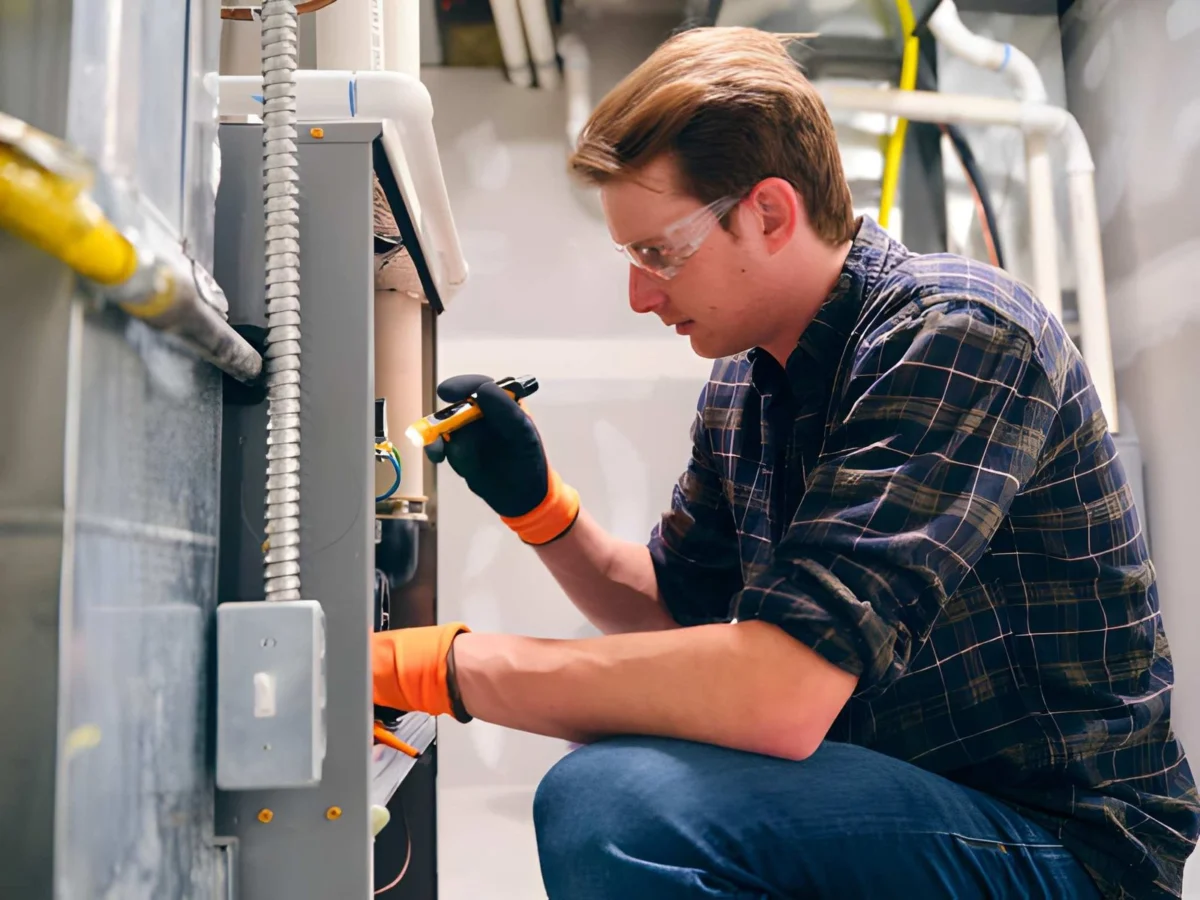
During a diagnosis, a technician goes beyond visual checks. They often read stored fault codes on the control board, measure static pressure in the duct system to spot airflow restrictions, and verify the temperature rise across the heat exchanger against the furnace nameplate. On the combustion side, they may check manifold gas pressure with a manometer, confirm ignitor resistance with a multimeter, and read flame sensor microamps to determine whether cleaning or replacement is needed. For high-efficiency units, inspecting and flushing the condensate trap can clear a partial blockage that was holding a pressure switch open. One realistic example: after a wet summer, algae grows in the condensate line; come heating season, the first extended run backs water into the pressure tubing, and the furnace starts short cycling until the drain is cleared and the tubing is reattached correctly.
Preventing a Repeat With Maintenance and Small Upgrades
Prevention focuses on airflow, ignition reliability, and clean drains. Replace filters on a schedule that matches dust load and filter type. There is a trade-off: higher MERV 1-inch filters capture finer particles but can raise static pressure; switching to a deeper media cabinet provides better filtration with less restriction. Keep supply registers and returns open to avoid overheating the heat exchanger, and don’t close vents in unused rooms, which can raise duct pressure and trigger limit trips. An annual tune-up that includes cleaning the flame sensor, inspecting the ignitor, confirming pressure switch operation, and flushing the condensate trap goes a long way. If a thermostat sits above a supply register or in direct sun, relocating it can prevent false temperature readings that contribute to short cycles. Sealing leaky ducts can also reduce run times and improve evenness room to room.
Understanding how heating loads and air distribution vary across different parts of a home can help prevent unnecessary strain on equipment. Read more about how balancing airflow and adjusting thermostat placement according to room usage patterns can improve indoor comfort and keep heating systems running smoothly.
Short cycling is a symptom, not a fixable setting. Quick, safe checks at home can restore airflow or correct a simple control setting, but repeated short cycles call for professional diagnostics to protect the heat exchanger, ignitor, and control board from unnecessary stress. The faster you find and fix the root cause, the less likely the system is to lock out on a cold night or suffer secondary damage. Address airflow, keep drains clear, and schedule periodic service so the furnace can complete full, steady heating cycles and keep the house consistently comfortable when temperatures drop.
Reda more: Where Social Proof Belongs on Ecommerce Sites: Placement, Format, and Trade-Offs
What to Look for on a CBD Product Label Before You Buy

Leave a Comment