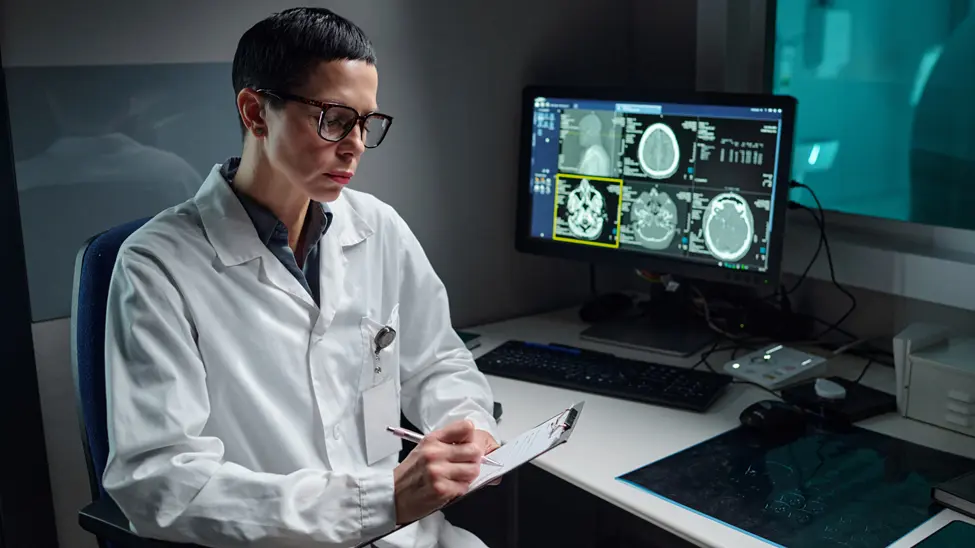

When something feels off in your body, doctors rarely have the luxury of seeing the full picture from the outside alone. That’s exactly why diagnostic imaging exists: it hands clinicians a direct, non-invasive view of what’s happening beneath the surface.
Whether it’s catching a hairline fracture before it worsens or flagging early-stage cancer before symptoms spiral, the role of diagnostic imaging in modern medicine is genuinely hard to overstate. And the good news? It’s more accessible now than it’s ever been.
Diagnostic Imaging in Healthcare – How It’s Reshaping Modern Medicine
Diagnostic imaging in healthcare isn’t exactly a new invention, but its evolution over the last decade has been nothing short of striking. Advanced imaging demand grew at a 5.7% CAGR between 2019 and 2024, outpacing routine imaging procedure growth of 2.6% during that same period (SEC archive analysis quoting Fortune Business Insights, 2025. That gap isn’t a coincidence.
Clinicians and patients are leaning harder on high-value imaging tools to drive better, faster decisions. Utah, specifically, has become a notable example of how accessible, patient-centered imaging models can take root.
How Modern Imaging Is Making Diagnostic Care More Accessible
Providers across the region are rethinking traditional care delivery, putting speed, affordability, and quality in the same room rather than treating them as trade-offs. taylor med mri illustrates this well. The model centers on board-certified radiology reporting, straightforward cash-pay pricing, and rapid appointment access, no insurance required, no physician referral needed. That kind of structure doesn’t just make imaging convenient. It makes it genuinely reachable for a far wider group of people who otherwise fall through the cracks of traditional healthcare systems.
Understanding *why* this matters starts with understanding the technologies themselves, because each modality serves a distinct purpose, and together they’ve fundamentally changed diagnostic precision.
A Practical Guide to the Main Types of Medical Imaging
The types of medical imaging used today range from bone-level fundamentals to molecular snapshots of living tissue. Knowing the difference between them helps you ask better questions and make more informed decisions about your own care.
X-Rays – Where Diagnostic Imaging Begins
X-rays remain the clinical starting point for evaluating bones, lungs, and structural abnormalities. Radiation passes through the body and produces images based on tissue density differences. Dense bone appears white; softer tissue shows in shades of gray.
Modern digital detectors have significantly reduced radiation exposure compared to older film-based systems. For patients who require repeat imaging over months or years, that improvement matters a great deal.
Ultrasound – Real-Time Imaging, Zero Radiation
Ultrasound uses sound waves rather than radiation to generate live images of organs, blood vessels, and developing fetuses. It’s a cornerstone of prenatal care, abdominal evaluation, and soft tissue assessment.
Portable ultrasound has pushed this technology well beyond hospital walls. AI-assisted interpretation tools are also accelerating how quickly results translate into clinical decisions, particularly in urgent care settings where time is critical.
CT Scans – Precision Across Multiple Angles
CT scans layer X-ray images captured from dozens of angles into detailed cross-sectional views of organs and internal structures. Trauma evaluations, complex abdominal cases, and pulmonary assessments all depend heavily on CT capabilities.
Low-dose CT technology has substantially improved safety profiles. 3D reconstruction has changed surgical planning in ways that flat imaging never could, giving surgeons depth, context, and confidence before the first incision.
MRI – The Gold Standard for Soft Tissue Detail
MRI uses magnetic fields and radio waves to produce exceptionally detailed soft-tissue images, with no radiation exposure at all. It’s the preferred modality for neurological, orthopedic, and oncological evaluations where fine structural detail is non-negotiable.
Functional MRI and open-bore configurations have expanded both the clinical scope and the patient population who can comfortably access this technology. Few tools in medical imaging match its clinical versatility.
PET Scans – Seeing How Cells Actually Behave
PET scans go beyond anatomy. By tracking radioactive tracers through the body, they reveal metabolic activity, how cells are functioning, not just what they look like structurally.
Hybrid systems like PET/CT and PET/MRI combine anatomical detail with functional data in a single scan session. That pairing has redefined how oncologists stage cancer and evaluate treatment response over time.
Why Diagnostic Imaging Genuinely Changes Outcomes
If there’s one thing imaging does exceptionally well, it’s finding problems before they escalate. Early detection creates options,for clinicians and for patients.
Earlier Diagnosis, Better Prognosis
Imaging has directly contributed to improved survival rates across cancer, stroke, and cardiovascular disease. An earlier diagnosis typically means less aggressive treatment, lower costs, and, most importantly, better odds.
There’s also compelling evidence that patient education around imaging improves the quality of scans themselves. In one study, teach-back education before contrast-enhanced MRI produced an image clarity score of 96.4 ± 0.5 versus 95.0 ± 0.4 in the control group, a statistically significant difference (P = 0.039). Informed patients, it turns out, genuinely get better scans.
Guiding Treatment Without Opening the Body
Image-guided procedures have replaced open surgery in a remarkable number of clinical scenarios. Targeted biopsies, catheter-based interventions, and ablation therapies all depend on real-time imaging to navigate precisely where they need to go.
The result? Shorter recovery times, fewer complications, and patients returning to normal life faster than traditional surgery would ever allow.
Tracking Disease Over Time
Chronic disease management often relies on repeat imaging to monitor how conditions evolve. Oncology patients follow scheduled scan protocols to determine whether a treatment plan is actually working, and those results directly shape clinical decisions in real time.
Imaging Modalities at a Glance
| Modality | Uses Radiation | Best For | Speed | Radiation Risk |
| X-Ray | Yes | Bones, lungs | Very fast | Low |
| Ultrasound | No | Soft tissue, prenatal | Fast | None |
| CT Scan | Yes | Trauma, organs | Fast | Moderate |
| MRI | No | Soft tissue, brain | Slower | None |
| PET Scan | Yes (tracer) | Cancer, metabolism | Moderate | Low–Moderate |
Common Questions About Diagnostic Imaging
Can imaging replace surgery?
In specific cases, yes, image-guided procedures like ablations or biopsies have replaced traditional open surgery. More often, though, imaging informs surgical decisions rather than eliminating them
What should you ask before a scan?
Ask why it’s recommended, what it involves, how long it takes, whether radiation is involved, when results will be available, and who exactly will interpret them.
Are repeated imaging tests risky?
Radiation-based scans carry cumulative exposure considerations. Clinicians weigh diagnostic value against that risk. MRI and ultrasound carry no radiation exposure, making them preferable for ongoing monitoring when clinically appropriate.
Who reads your images?
Board-certified radiologists interpret scans and produce formal reports. Some centers now deliver results directly to patients digitally, which is a meaningful step toward transparency.
Final Thoughts
Medical imaging has grown into something far more significant than a tool for reading broken bones. Today ,it sits at the center of detection, treatment, and long-term care management across virtually every medical specialty.
Understanding what’s available and why each modality exists puts you in a stronger position to advocate for your own health. Whether you’re navigating a routine evaluation or a complex diagnosis, the right scan at the right time genuinely changes what’s possible.
Also Read-Innovative Technologies in Metalworking Equipment







Leave a Comment