
Renovating a home, a bathroom, or a second property means rethinking spaces starting from the elements that will last the longest over time. Among these, flooring plays a decisive role because it is not just a functional surface, but a true design element capable of defining the style of interiors, influencing brightness, and creating continuity between different rooms.
Choosing natural stone flooring responds precisely to this need: combining aesthetics, durability, and material value. Travertine, marble, and Trani Biancone are solutions that help shape a clear identity for the home, with surfaces that are never anonymous and capable of complementing modern, rustic, country, or shabby chic furnishings. Thanks to its veining, color variations, and range of finishes, natural stone makes every space unique and gives renovation projects a sense of authenticity that is difficult to achieve with industrial materials.
Material selection in renovation
The first phase of an effective renovation concerns material selection. Flooring, wall coverings, sanitary fixtures, furnishings, and lighting must be considered together, as each element contributes to the final balance. In a bathroom, for example, the floor surface must withstand humidity, be easy to clean, and maintain its aesthetic appeal even after years of use. In a second home, it may be useful to choose durable materials that can handle periods of intensive use as well as extended vacancy.
The quality of surfaces therefore becomes central. A material chosen solely for its price or for a passing trend risks losing its appeal quickly, whereas well-selected natural stone retains both character and functionality. Travertine, marble, and Trani Biancone offer different textures and tones, but share a fundamental quality: they are authentic materials, quarried and processed to become an integral part of domestic architecture.
A stone floor can be installed with narrow joints, regular formats, or more irregular cuts, depending on the desired effect. Nearly invisible joints enhance a contemporary and orderly style, while more dynamic compositions evoke Mediterranean, rustic, or country atmospheres. The same material can therefore adapt to very different design approaches.
The advantages of natural stone in the home
Natural stone is valued for combining aesthetic appeal with technical performance. As a natural material, it brings a sense of solidity and authenticity into interiors. Each slab features its own color variations, veining, and details, transforming the floor into a living, non-repetitive surface that enriches even minimalist spaces.
Another key advantage is durability over time. Natural stone is suitable for high-traffic areas, both indoors and outdoors. When properly installed and treated, it can maintain its beauty for years and become a long-term investment. Its longevity is one of the reasons it is chosen not only for private homes but also for hospitality settings, villas, renovated farmhouses, and high-end spaces.
Maintenance is simpler than often assumed. Routine cleaning requires attention in selecting non-aggressive products, but does not involve complex procedures. With proper initial protection and consistent care, a natural stone floor remains elegant and functional. This is complemented by its environmental value: choosing a natural, long-lasting material reduces the need for frequent replacement, supporting a more sustainable use of resources.
The bathroom as a central design space
In bathroom renovations, flooring should not be considered a mere background element. The walking surface interacts with wall coverings, the shower tray, the sink, and furnishings. A light-colored stone can visually expand the space, increase brightness, and give the bathroom a clean and refined look. A more textured finish, on the other hand, can create a warmer and more enveloping atmosphere.
To achieve a coherent result, it is possible to choose natural stone flooring and wall coverings such as those produced by Musicco in Trani, known for its renowned local stone. Continuity between floors and walls allows for the creation of an elegant bathroom where the material itself becomes the focal point, without the need for excessive decoration.
Stone can also be used for custom shower trays, sinks, and vertical cladding. This approach creates a coordinated effect and is particularly effective in smaller bathrooms, where a limited selection of well-chosen materials helps avoid visual clutter. In a master bathroom, natural stone can become a distinctive feature, with larger surfaces and crafted details that elevate the overall space.
Trani Biancone and continuity between indoors and outdoors
Trani stone represents one of Italy’s most distinctive materials for those seeking natural solutions in renovation. Trani Biancone, in particular, stands out for its light, warm tones that adapt to a wide range of styles. In modern interiors, it enhances clean lines, floating furniture, and neutral palettes. In rustic or country homes, it pairs well with wood, iron, natural fabrics, and more traditional furnishings. In shabby chic settings, it helps create a soft and luminous atmosphere.
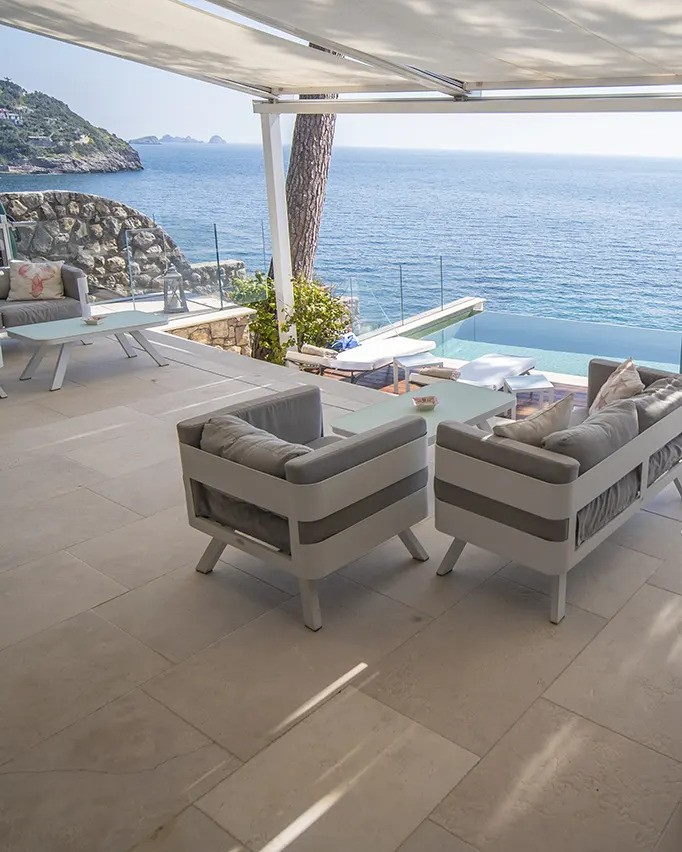
One of the key strengths of natural stone is the ability to create continuity between indoor and outdoor spaces. The same material can be used for a living room floor, a veranda, a patio, or an outdoor dining area. In a second home by the sea or in the countryside, this continuity makes transitions between spaces more fluid and gives the property a more harmonious identity.
Stone is also suitable for pool edges, outdoor pathways, and terraces. Finishes can be selected based on their intended use, favoring surfaces that are appropriate for outdoor foot traffic while maintaining visual coherence with interiors. The result is a home that feels designed as a whole, rather than a collection of separate spaces.
Furnishing with materials, not just furniture
A successful interior design project does not depend solely on the selection of sofas, tables, chairs, or accessories. Surfaces play an equally important role, as they shape the perception of space even before furnishings are introduced. Natural stone flooring can become the starting point for selecting colors, finishes, textiles, and lighting.
In a living area, for example, a light stone can be paired with natural wood furniture, sand-toned walls, and minimalist lighting. In a kitchen, the same surface can provide visual continuity while withstanding everyday use. In a second home, stone helps create practical, cool environments that align with the surrounding landscape, especially when aiming to evoke traditional materials and Mediterranean atmospheres.
Renovating with travertine, marble, or Trani Biancone means choosing a material capable of accompanying the home over time. Natural stone is sustainable, long-lasting, easy to clean, and aesthetically versatile. For this reason, it represents an effective choice not only for flooring, but also for wall coverings, bathrooms, sinks, shower trays, living areas, terraces, and outdoor spaces. A home designed with natural surfaces gains character, balance, and a refined beauty rooted in the quality of the material itself.
Read more: The Importance of Secondary 3 Combined Science TuitionBest High-Performance Keyboards for Gamers in Singapore
How to choose ergonomic and space-saving student desks for modern study environments

Leave a Comment