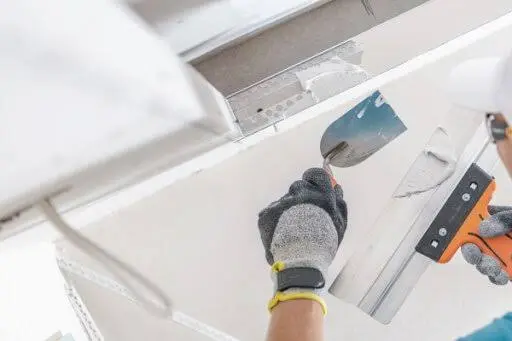

Drywall damage often appears as holes, cracks, dents, stains, or uneven wall surfaces. Small defects usually need localized repairs, and larger damaged sections require more extensive repair work. Here is more information about quick fixes for common drywall repair issues:
Patching Small Holes and Dents
Localized impact damage includes dents and other openings caused by furniture or everyday impacts. Small holes and impact dents often fall within localized repair rather than full panel replacement. The surrounding board still needs assessment; soft or crumbling drywall requires replacement instead of a surface patch.
A handyman addresses a damaged opening by cutting a drywall patch to match the size of the hole. A joint compound fills and smooths the repaired area. Feathering extends the repair into the surrounding surface, and sanding prepares the patch for its final finish. The repaired area receives paint-ready finishing after the patch has been properly smoothed.
Repairing Ceiling Damage
Ceiling damage includes cracks, water stains, and sagging panels. A handyman handles ceiling crack and water-stain patching, and re-hanging addresses panels that require renewed attachment. Water stains require attention to the moisture source before drywall repair begins. A drywall professional diagnoses the source first, then assesses the damaged material for patching or replacement. Water-damaged panels can require removal and replacement, after which the handyman tapes and muds the new drywall. Sagging panels need ceiling repair or re-hanging when the drywall no longer sits correctly.
Smoothing Cracks and Nail Pops
Small cracks often develop near doors and windows, and seasonal movement can contribute to recurring drywall cracking. A drywall repair professional fills repairable cracks and uses skim-coat finishing where broader surface smoothing is needed. More pronounced or recurring cracks need to be checked before applying another patch.
Nail pops appear as raised areas beneath painted drywall where fasteners create visible bumps. A handyman corrects the nail pop, and they re-skim the surrounding area to restore a level surface. Screw blowouts require similar correction before the damaged area receives its final finish. The repaired section needs to remain flush with the surrounding drywall rather than bulge outward or cave inward.
Restoring Textured Surfaces
Texture matching helps a repaired section blend with the surrounding wall or ceiling. The existing texture needs to be identified before the new finish is applied, and the repaired area needs to remain flush with the surrounding drywall. Common texture and finish types include:
- Orange peel: This texture resembles an orange rind with shallow dimples. Because it is easy to clean, it works well for high-traffic areas.
- Knockdown: This technique depends on the application process. A handyman uses multiple layers of plaster to create different patterns on the wall’s surface.
- Smooth: A handyman uses a finishing knife to remove texture from the wall. This creates a subtle appearance.
Schedule a Drywall Repair Today
A handyman begins drywall repair by assessing the condition and extent of the damage. The assessment determines the materials and finishing required, while the repair approach depends on the affected area. Professional drywall services include dust containment during sanding, which helps protect nearby areas from drywall dust. Contact a professional handyman service today to schedule an assessment for drywall damage and related home repairs.
Also Read
- https://grammerway.com/maximizing-returns-through-strategic-commercial-property-investment/
https://grammerway.com/exploring-the-bachelor-in-science-at-james-cook-university-your-pathway-to-a-scientific-career/
https://grammerway.com/transform-your-home-with-stylish-area-rugs-in-australia/





Leave a Comment