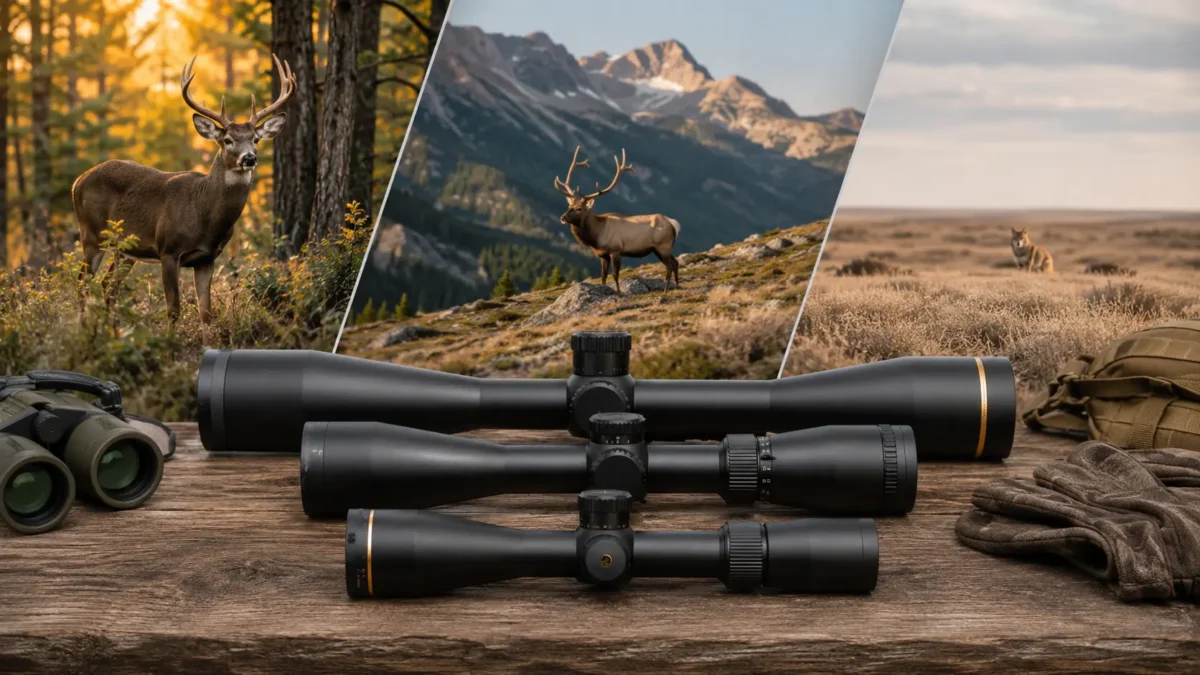

A scope that’s perfect for whitetail deer in dense timber might be a poor fit for pronghorn hunting across open prairie, and a setup dialed in for coyote calling won’t necessarily serve you well on an elk hunt in the mountains. While general scope buying advice covers the basics, thinking specifically about the game you’re pursuing helps narrow down the right magnification range, reticle style, and overall setup far more effectively than generic recommendations.
This kind of species-specific thinking is especially useful once you already understand the fundamentals of scope selection and are ready to fine-tune your choice. Many hunters find it helpful to look at how a dedicated hunting rifle scope manufacturer categorizes their product lines, since many organize scopes by intended use case rather than just by price point, which can point you toward options already suited to your specific type of hunting.
Whitetail Deer: Versatility Over Extremes
Whitetail deer hunting covers an enormous range of terrain and shot distances, from thick Midwest timber where shots might be 40 yards to Western river bottoms and agricultural edges where 300-yard shots are realistic. This variability is exactly why moderate, versatile scopes dominate the whitetail hunting market.
A 3-9×40 or similar variable scope remains a reliable standard for good reason: it handles close, fast shot opportunities in brush while still offering enough magnification for longer shots across open fields or food plots. Unless you know your specific hunting ground consistently produces very short or very long shots, a versatile mid-range scope generally serves whitetail hunters better than specializing too heavily in either direction.
Elk and Mountain Big Game: Durability and Low-Light Performance
Elk hunting often means covering significant ground in rugged terrain, frequently during the demanding conditions of early morning and late evening when elk are most active. This combination puts a premium on two specific qualities: rugged durability and strong low-light performance.
A few things worth prioritizing for elk and similar mountain big game hunting:
- Larger objective lens in the 44-50mm range to maximize light gathering during dawn and dusk movement periods
- Genuinely rugged construction that can handle the bumps and drops that come with covering rough terrain over multiple days
- Moderate to higher magnification range, often 4-16x or similar, to accommodate both closer timber shots and longer shots across open basins or ridgelines
- Reliable weatherproofing, since mountain hunts frequently involve sudden weather shifts that lowland hunts might not encounter as often
Weight also becomes a more significant factor here than in many other hunting contexts, since elk hunters are often covering miles on foot, making an oversized, heavy scope a real practical drawback rather than just a minor inconvenience.
Because elk hunts often push equipment through demanding conditions over consecutive days, it’s worth checking how a given hunting rifle scope manufacturer rates their products for durability, since specifications around shock resistance and sealing quality become more relevant here than they might for a hunter primarily still-hunting from a stand.
Turkey Hunting: A Different Kind of Optic Entirely
Turkey hunting deserves a brief mention here, mainly because it’s a case where a traditional magnified rifle scope often isn’t the ideal tool at all. Shots are typically close, under 40 yards, and pattern-based with a shotgun rather than precision rifle shooting, which shifts priorities toward a red dot or low-power optic with a clear, fast sight picture rather than magnification.
For hunters who do pursue turkey with a rifle in areas where that’s legal, a low-magnification scope with a wide field of view, similar to what works well for close-range whitetail hunting, tends to translate reasonably well to this fast-paced hunting style.
Varmint Hunting: Precision at the Cost of Portability
Varmint hunting, whether targeting prairie dogs, groundhogs, or similar small game, often involves stationary shooting positions and a focus on precision at distance rather than mobility through rough terrain. This shifts priorities significantly compared to big game hunting.
Higher magnification becomes far more valuable here, with many dedicated varmint scopes running 6-24x or higher, since precise shot placement on small targets at distance matters more than a wide field of view for tracking movement. Fine reticles with detailed holdover references also become more useful, since varmint hunters typically have time to carefully range and dial for each shot rather than reacting quickly to a fleeting opportunity.
Because varmint hunting is often done from a stable rest or bench rather than off-hand in the field, the weight considerations that matter so much for elk hunting become far less relevant here.
Predator Hunting: Speed and Low-Light Capability
Predator hunting, particularly calling coyotes or similar animals, often involves fast-developing shot opportunities combined with hunting during low-light hours around dawn, dusk, or even at night in areas where legal. This creates a somewhat different set of priorities than other hunting types.
A wider field of view at lower magnification helps track animals that often approach quickly and unpredictably in response to calling. Illuminated reticles become genuinely useful here, given how much predator hunting happens in marginal light conditions where a standard black reticle can become difficult to see clearly against dark fur or shadowed brush.
For hunters pursuing predators specifically during legal night hunting hours, specialized night vision or thermal optics represent an entirely different category worth researching separately, since standard daytime hunting scopes aren’t designed for those conditions regardless of how capable they are during daylight.
Open-Country Hunting: Pronghorn and Similar Species
Hunting in wide-open terrain, common with pronghorn and similar species, often means longer average shot distances and more time spent glassing before a shot presents itself. This favors higher magnification ranges and scopes with reliable turret tracking for hunters comfortable dialing for precise elevation holds at distance.
Because shots in open country are often more deliberate, with more time to range and prepare compared to a fast-breaking timber shot, hunters in this category can lean more heavily toward precision-focused features without sacrificing the reaction speed that timber hunting demands.
When One Scope Needs to Do It All
Not every hunter can justify owning a separate, specialized scope for each type of hunting they pursue. For hunters who need one setup to reasonably cover multiple hunting styles, a moderate variable scope in the 3-15x or similar range, paired with quality glass and a versatile reticle, tends to offer the best practical compromise, even if it isn’t perfectly optimized for any single scenario.
Companies like billingsoptics.com that specialize specifically in hunting optics often provide guidance on which of their models work best as versatile, do-it-all options versus which are purpose-built for a specific hunting style, which can be a useful starting point if you’re trying to consolidate your gear rather than build out separate setups for each type of hunt.
Final Thoughts
Thinking about your scope in terms of the specific game you hunt, rather than generic magnification or price comparisons alone, leads to a setup that genuinely fits how you hunt.
Whitetail hunters benefit from versatility, elk hunters need durability and low-light performance, varmint hunters prioritize precision magnification, and predator hunters need speed and illuminated reticle options. Matching these priorities to your actual hunting style turns scope selection from a guessing game into a genuinely informed decision.
Also Read







Leave a Comment