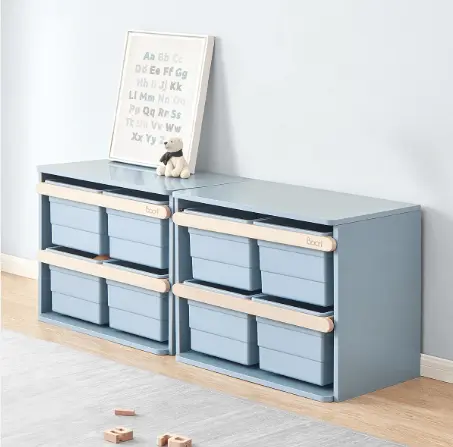

Effective kids storage in an Australian child’s bedroom in 2025 requires a different strategic approach than in previous years, because the Australian bedrooms where storage must work have become measurably smaller in the new-build housing stock that dominates Australian residential development. The storage strategies that worked reasonably well in a 12 square metre bedroom are inadequate in the 9 to 10 square metre bedrooms of current Australian new-build estates — requiring a more deliberate vertical-first, multi-function, and rotation-based approach to children’s bedroom storage that this September guide provides in full.
The 2025 Australian Bedroom Storage Problem
How has the Australian bedroom storage challenge changed in 2025?
Three converging 2026 factors have made Australian children’s bedroom storage more challenging than in previous years. First, new-build Australian bedroom dimensions have continued to compress — average children’s bedroom floor areas in new-build Australian estates have decreased by approximately 8 to 12 per cent since 2018, leaving less floor area for the storage pieces that must serve a children’s clothing, toy, book, and study material volume that has not decreased. Second, the back-to-school study space demand that has driven kids desk and loft bed purchases in September 2025 has consumed additional bedroom floor space, making the storage-per-square-metre calculation more important than when study happened at the kitchen table. Third, the Australian primary school child’s material possessions — particularly Lego, art materials, sports equipment, and digital devices — have grown in volume and complexity, requiring more organised and category-specific storage than the toy box and single chest of drawers that served previous generations adequately.
The Vertical-First Storage Strategy for Australian Bedrooms
How does the vertical-first storage approach work in a compact Australian children’s bedroom?
The vertical-first storage strategy for compact Australian children’s bedrooms uses the full height of the bedroom walls — from floor to ceiling — for storage rather than limiting furniture to the 80 to 120 cm height range that most freestanding Australian children’s furniture occupies. Practically, this means: tall wardrobes of 200 to 220 cm height that use the full Australian ceiling height for clothing storage; wall-mounted shelving at heights from 60 cm to 180 cm from the Australian floor for books, display items, and seasonal storage; over-door organisers on bedroom and wardrobe doors for small accessories and equipment; and elevated bed configurations — loft beds, mid-sleepers, and storage beds — that place the sleeping surface in the upper vertical zone and create functional or storage space in the floor-level zone. The vertical-first approach consistently doubles the effective storage capacity of a compact Australian children’s bedroom without adding any floor footprint.
| AU Storage Strategy | Floor Footprint | Storage Volume Added | Best For | 2025 Trend Direction |
| Under-bed drawers (integrated) | Zero extra | High: replaces separate chest | All AU compact bedrooms | Strongly growing |
| Wall-mounted shelving | Zero | High: full wall vertical use | Small AU bedrooms; any age | Strongly growing |
| Loft bed with storage below | Standard bed footprint | Very high: full under-platform zone | Single AU child; compact bedroom | Fastest growing |
| Tall wardrobe (200-220 cm) | Standard wardrobe footprint | High: doubles hanging and shelf capacity | All AU children’s bedrooms | Stable growth |
| Over-door organiser | Zero | Moderate: door surface only | Any AU bedroom; accessories focus | Growing |
| Traditional toy box | Large: 60-90 cm wide | Low: mixed storage creates chaos | Limited; rotation system more effective | Declining in AU |
| Open bin storage unit (low) | Moderate | Moderate: categorised access | AU playrooms; toddler bedrooms | Stable |
The Under-Bed Revolution in Australian Children’s Storage
Why has under-bed storage become the dominant Australian children’s bedroom storage upgrade in 2026?
Under-bed storage has become the dominant Australian children’s bedroom storage upgrade in 2025 because it addresses the most common compact Australian bedroom problem — insufficient floor space for both the bed and a separate chest of drawers — without requiring any additional floor footprint. An Australian kids bed with two or three integrated under-bed drawers provides the equivalent of a compact chest of drawers within the existing bed footprint, recovering the 0.7 to 1 square metre that a standalone chest would consume for the wardrobe, desk, or active play zone the compact Australian bedroom needs more urgently. The quality of the integrated under-bed drawer system — solid timber or quality plywood drawer boxes with ball-bearing metal slides rated for daily clothing loading — determines whether this storage upgrade genuinely delivers across the full service years or disappoints within two to three years of active use.
The Rotation System: The Storage Strategy Australian Parents Are Discovering in 2026
How does a toy and possession rotation system improve Australian children’s bedroom storage?
The rotation system — keeping only a portion of the Australian child’s total toy and material collection in the active bedroom storage, with the remainder in closed storage elsewhere in the Australian home and rotated periodically — has become one of the most widely discussed Australian children’s bedroom organisation strategies in 2026, driven by its visibility in AI-assisted organisation research. The rotation system works by reducing the active volume of items requiring organised storage in the Australian bedroom at any one time to a level the bedroom’s storage capacity can genuinely manage, rather than attempting to store the child’s entire accumulated possession volume in the bedroom simultaneously. For most Australian primary school children, keeping 40 to 60 per cent of the total toy collection in active bedroom storage and rotating the remainder every four to six weeks produces a consistently manageable and accessible bedroom storage environment across the primary school years.
Back-to-School Storage: The September Bedroom Audit
What storage audit should Australian families perform in September for the new school year?
The September back-to-school moment is the most practical annual prompt for the Australian children’s bedroom storage audit that keeps the storage system functional across the school year. The September audit involves four actions. First, remove and donate or store all items that have been outgrown, completed, or unused for more than three months — creating capacity in the existing storage before adding any new items. Second, assess whether the storage for school materials — exercise books, stationery, textbooks, and digital equipment — is adequate and organised for the new school year’s demands, and add desk storage if not. Third, assess whether the active toy and book collections are at a volume the bedroom’s storage system can genuinely manage, and move the excess to rotation storage elsewhere in the Australian home. Fourth, confirm all tall furniture is wall-anchored before the school year begins — the annual storage audit is the practical reminder to check anti-tip strap security.
Frequently Asked Questions
What is the most space-efficient toy storage for a compact Australian children’s bedroom in 2026?
Wall-mounted open shelving combined with under-bed rolling bins provides the most space-efficient toy storage for compact Australian children’s bedrooms in 2025. Wall-mounted shelving at 60 to 100 cm from the Australian floor holds frequently accessed toys and books in accessible open display without any floor footprint. Under-bed rolling bins provide closed category storage for larger items — Lego sets, art supplies, board games — without adding above-floor footprint. Together, these two zero-floor-footprint options provide the toy storage function that a standalone toy chest or storage unit would achieve with 0.5 to 0.8 square metres of additional floor space.
How should Australian parents prioritise bedroom storage purchases?
Australian parents should prioritise bedroom storage purchases in this order: first, the under-bed storage integrated into the kids bed, which provides the highest-value storage-per-floor-metre of any Australian bedroom storage piece; second, the wardrobe with adequate internal fittings for the specific Australian child’s current and near-future clothing volume; third, desk storage for school materials from approximately Year 1; and fourth, supplementary open bin or shelf storage for toys and books. The chest of drawers, often purchased first as a nursery piece, remains relevant throughout the primary school years when purchased in a quality configuration with adequate drawer count and quality slides.
Can Australian children’s bedroom storage be too much?
Yes. An Australian children’s bedroom with more storage capacity than the child’s current possessions require creates visual complexity and an organisational challenge that can be as overwhelming as too little storage for many Australian primary school children. The most effective Australian children’s bedroom storage matches the current active possession volume with a modest surplus for growth, rather than providing large unused capacity that encourages accumulation beyond what the Australian child can independently manage and maintain. The rotation system described above is the most practical tool for maintaining this balance across the primary school years without constantly purchasing additional storage.
Is an Australian children’s bedroom storage audit the same as decluttering?
A storage audit and decluttering are related but distinct activities for Australian families. Decluttering involves permanently removing items from the Australian household through donation, sale, or disposal. A storage audit involves assessing what is in the active bedroom storage and redistributing items between active storage, rotation storage elsewhere in the Australian home, and permanent removal — only some of which constitutes decluttering. For Australian families who want to maintain the full toy and book collection across the primary school years without decluttering, the rotation system achieves the functional benefits of a decluttered bedroom without permanently removing items the Australian child may want access to in future.
Final Thoughts
Effective Australian children’s bedroom storage in 2025 uses the vertical-first strategy, the under-bed storage upgrade, the rotation system for toy and possession management, and the September back-to-school audit that resets the storage system for each new school year. Australian families can browse current kids storage solutions at boori.com.au/collections/storage
Also Read
- easonal-activities-every-jackson-hole-visitor-should-experience/
- fezbet-jak-przejsc-weryfikacje-konta-krok-po-kroku/
- why-stainless-steel-watches-for-men-still-define-everyday-style/







Leave a Comment