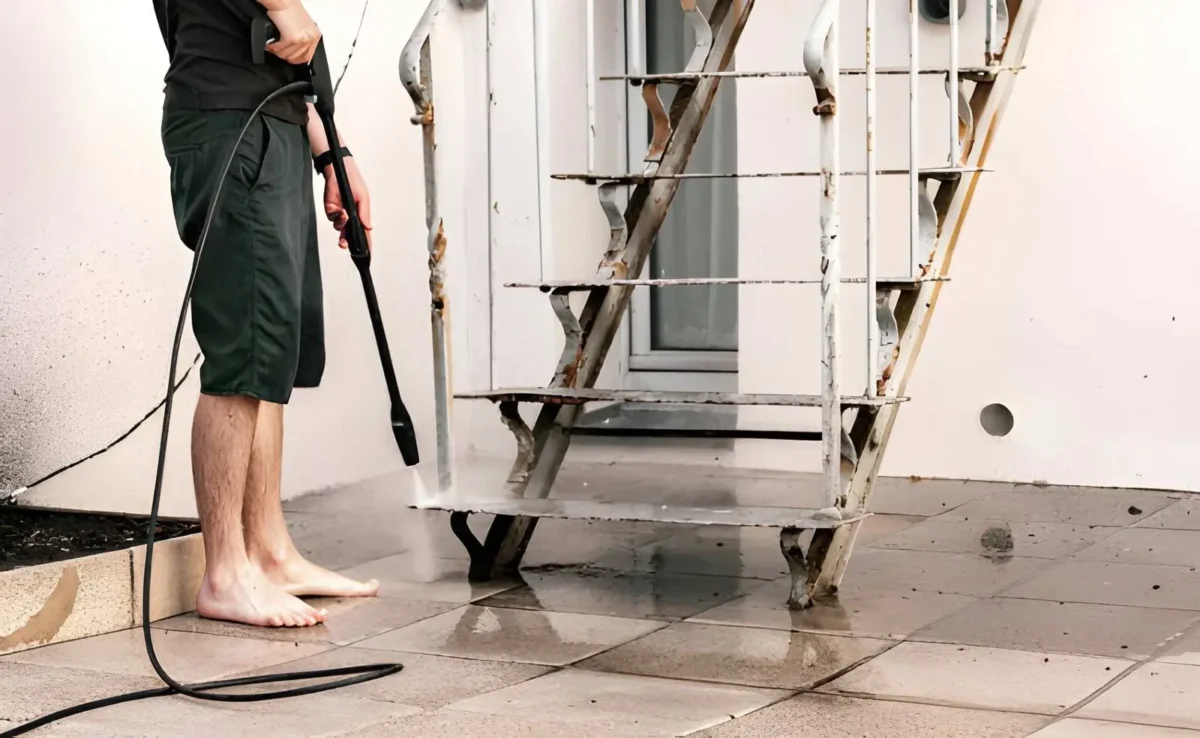

High-pressure cleaning can restore outdoor surfaces quickly, but the same force that removes years of dirt can also leave permanent damage behind. Gouged wood, etched concrete, stripped paint, and damaged siding are rarely the result of a defective surface. More often, they happen when cleaning pressure is treated as a one-size-fits-all solution.
Modern pressure washers make it possible to tackle a wide range of outdoor cleaning jobs, but effective results depend on matching the method to the material. Water pressure, spray angle, nozzle selection, distance, and cleaning time all influence how much force reaches the surface.
The most useful mindset is simple: cleaning safely is about control, not maximum power. By understanding what makes surfaces vulnerable and adjusting the approach before damage occurs, homeowners can remove stubborn grime while preserving the materials they are trying to maintain.
Why Surface Damage Happens During High-Pressure Outdoor Cleaning
Water leaving a pressure washer does not affect every material equally. A hard concrete driveway can tolerate a different approach than weathered wood, painted trim, or vinyl siding.
Damage usually occurs when too much energy is concentrated in one small area. That concentration can be caused by excessive pressure, a narrow spray pattern, holding the nozzle too close, or lingering in one spot for too long.
Surface condition matters as well. Older wood may be softer than new material, cracked concrete may be more vulnerable around damaged areas, and peeling paint can lift even under relatively moderate cleaning force.
Before starting, consider three questions:
- What is the surface made of?
- Is it already weathered, damaged, or deteriorating?
- What is the least aggressive method likely to remove the buildup?
Starting with those questions is more effective than discovering the limits of a surface through trial and error.
Understanding How Pressure, Distance, and Spray Angle Work Together
Cleaning Force Is About More Than the Number on the Machine
People often focus exclusively on pressure ratings, but the actual force reaching a surface changes as the operator changes position and technique.
Moving the spray closer concentrates the water’s energy. A narrow spray pattern focuses that energy into a smaller area, while a wider pattern distributes it more gently. The angle of the spray also affects whether water strikes directly or glances across the surface.
These variables work together. Reducing one source of intensity can often make a significant difference without compromising cleaning results.
A good starting point is to use a wider spray pattern from a greater distance and observe the results. Increase intensity gradually only if necessary.
Match the Cleaning Method to the Material Instead of Using One Universal Setting
Different Outdoor Surfaces Have Different Limits and Vulnerabilities
The safest approach is to categorize surfaces by their tolerance for concentrated water pressure.
| Surface | General Cleaning Approach | Main Risk |
| Concrete | Consistent passes with controlled pressure | Etching or visible striping |
| Wood | Gentle cleaning with continuous movement | Gouging and raised grain |
| Vinyl siding | Wide spray and careful water direction | Water intrusion behind panels |
| Painted surfaces | Conservative pressure and testing | Peeling or paint removal |
| Stone and masonry | Evaluate condition and mortar first | Damage to joints or loose material |
This comparison is a reminder that surface strength alone does not determine the right method. A hard material with cracks or deteriorating joints may require more caution than a newer surface that appears softer.
Test an Inconspicuous Area Before Cleaning the Entire Surface
A Small Test Can Reveal Problems Before They Become Expensive Repairs
Testing is one of the simplest precautions and one of the most frequently skipped.
Choose a section that is less visible and apply the planned technique using a conservative setting. Look for changes in texture, color, paint condition, or surface integrity before continuing.
This is especially important for:
- Older decks and fences
- Painted or stained surfaces
- Weathered siding
- Decorative stone
- Concrete with visible cracking or previous repairs
A test area also shows whether pressure alone is actually necessary. In many cases, a suitable cleaning solution and gentle rinsing can remove buildup without increasing mechanical force.
The National Park Service’s guidance on caring for historic masonry provides a useful broader lesson: aggressive cleaning methods can permanently alter building materials, which is why the least damaging effective approach is generally preferred.
Use Cleaning Solutions to Reduce the Need for Excessive Pressure
Dirt does not always need to be blasted away. Organic growth, surface grime, and certain stains often respond better when a compatible cleaning product is allowed to loosen the material before rinsing.
This is particularly helpful on wood and other surfaces where increasing pressure creates a higher risk of damage.
The sequence matters:
- Remove loose debris first.
- Apply an appropriate cleaner according to its instructions.
- Allow sufficient contact time without letting the product dry improperly.
- Rinse using the gentlest effective pressure and technique.
The goal is to let cleaning chemistry do part of the work rather than relying entirely on force.
When using any cleaning product, follow label instructions and consider where runoff will travel. The Environmental Protection Agency offers information on protecting waterways from stormwater pollution, an important consideration when outdoor cleaning produces contaminated runoff.
Keep the Spray Moving to Avoid Lines, Gouges, and Uneven Results
One of the clearest signs of poor technique is a surface with visible cleaning lines. These marks often appear when the spray remains in one area too long or when passes overlap inconsistently.
Think of the spray wand as a paintbrush. A smooth, steady motion produces more uniform coverage than repeatedly stopping and restarting over the same spot.
For larger surfaces:
- Work in manageable sections.
- Maintain a consistent distance.
- Overlap passes slightly.
- Avoid sudden stops while the spray is directed at the material.
- Step back periodically to inspect the overall appearance.
This approach may feel slower than aggressively attacking the dirtiest spots, but it usually prevents the need to correct uneven results later.
A Practical Decision Process for Choosing the Right Cleaning Intensity
Before beginning a high-pressure cleaning project, use a simple progression rather than choosing maximum force immediately.
Start gentle → test → evaluate → increase only when necessary.
For example, a homeowner cleaning a weathered deck might begin with a wide spray pattern and moderate distance. If dirt remains after a controlled pass, the next step could be adjusting the cleaning solution or slightly changing the technique—not automatically switching to the most concentrated spray.
This decision process reduces the chance of irreversible mistakes. It also makes the work more predictable because adjustments are based on what the surface actually needs.
Common Mistakes That Cause Damage During Pressure Washing
Using Maximum Pressure as the Default
More pressure is not automatically more effective. On vulnerable surfaces, it can turn a cleaning project into a repair project.
Holding the Nozzle Too Close to Remove One Stubborn Stain
A concentrated blast may remove the stain and leave a permanent mark behind. Treat the underlying stain when possible instead of escalating force immediately.
Ignoring Existing Surface Damage
Loose paint, cracked mortar, rotting wood, and deteriorated caulking can all be worsened by water pressure. Repair or avoid compromised areas when appropriate.
Spraying Water Upward Into Siding or Openings
Water can be forced behind siding panels or into vents and gaps. Spray direction is an important part of protecting the structure, not just improving cleaning results.
Best Practices for Protecting Outdoor Surfaces While Getting Them Clean
Experience tends to favor a conservative approach because surface damage is often permanent while a missed patch of dirt can always be cleaned later.
Follow these practical habits:
- Inspect surfaces for existing damage before starting.
- Sweep away loose debris to reduce unnecessary washing.
- Test a hidden area first.
- Begin with the least aggressive effective technique.
- Maintain consistent distance and movement.
- Use cleaning products appropriately when pressure alone is not the best solution.
- Protect nearby plants, electrical fixtures, and vulnerable materials.
- Check your results after surfaces dry before deciding whether another pass is needed.
A wet surface can hide subtle damage or remaining stains. Allowing it to dry gives a more accurate picture of the final result.
Frequently Asked Questions About Preventing Pressure Washing Damage
Can pressure washers damage concrete?
Yes. Excessive or poorly controlled pressure can etch concrete or create uneven cleaning patterns. Consistent movement and an appropriate technique are essential.
What is the safest way to pressure wash wood?
Start with the gentlest effective approach, test an inconspicuous area, maintain a reasonable distance, and keep the spray moving. Avoid concentrating water in one spot.
Why does a pressure washer leave visible lines?
Lines usually result from inconsistent distance, uneven overlap, or pausing the spray over one area. Steady, overlapping passes help produce a uniform finish.
Should I use more pressure for stubborn stains?
Not necessarily. A suitable cleaning product or additional treatment time may be safer and more effective than increasing pressure, particularly on delicate surfaces.
The Best Protection Against Surface Damage Is a More Controlled Cleaning Process
High-pressure outdoor cleaning works best when power is treated as one part of the process rather than the entire solution. The condition of the surface, the type of buildup, and the technique used all matter.
Concrete may tolerate a more robust approach, while wood and painted materials often require restraint. Distance, spray angle, and cleaning solutions can be adjusted before resorting to greater pressure.
That is the practical difference between simply removing dirt and cleaning a surface well. A successful job leaves the material cleaner without leaving evidence of the cleaning process behind. By starting conservatively and increasing intensity only when the surface truly requires it, homeowners can protect their outdoor spaces while still achieving meaningful results.
Also read-Innovative Technologies in Metalworking Equipment







Leave a Comment