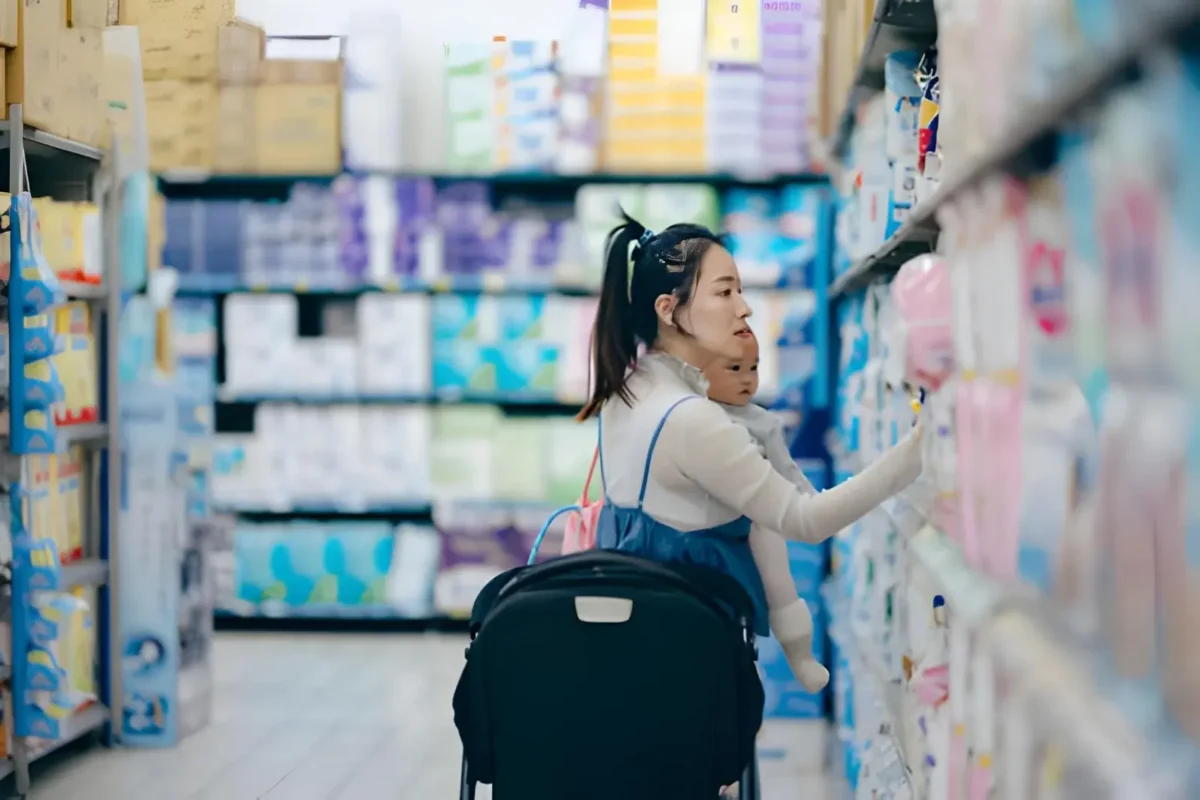

China is one of the world’s largest centers for disposable diaper production, and a large share of its output is exported rather than sold at home. For distributors, retailers and new private-label brands, that means plenty of choice, and plenty of ways to make an expensive mistake. Prices look similar on paper, but quality, documentation and reliability vary a lot from one factory to the next.
This guide walks through the process step by step, from defining what you need to placing your first container order.
Step 1: Define What You Actually Want to Sell
Before you contact a single factory, get clear on four things:
- Product type: tape diapers, pull-up pants, newborn sizes, night-time styles, or a mix.
- Market tier: value, mid-range or premium. A value-tier launch in an emerging market needs a very different spec from a premium brand for Europe.
- Branding model: your own private label (OEM), a factory-designed product with your brand on it (ODM), or an existing factory brand.
- Target volume: how many pieces you expect to sell in the first six months.
A factory can only quote accurately when you can answer these. Vague requests tend to produce vague (and misleading) quotes.
Step 2: Build a Shortlist
Chinese diaper factories are concentrated in a few regions, with Fujian, Guangdong, Zhejiang and Jiangsu among the best known. Some are large branded manufacturers, some are pure OEM producers, and some are machinery builders that also run private-label lines.
Rather than starting from a blank search, it helps to begin with a shortlist of leading Chinese baby diaper manufacturers and then check each one against your own requirements. One caution: treat any “top 10” list, including that one, as a starting point for due diligence, not a substitute for it. Some big global brands appear in rankings as quality benchmarks but do not take outside OEM orders, so confirm that a company actually offers the service you need.
Step 3: Verify Certifications and Documentation
This is where careless buyers get burned. Ask every shortlisted factory for:
- A current ISO 9001 certificate (quality management). Check that it has not expired.
- OEKO-TEX Standard 100 (Product Class I) for materials that touch baby skin. Ask for the certificate number so you can verify it with the issuer.
- Material safety documentation such as REACH compliance for the EU.
- Test reports for absorption, re-wet and tensile strength, ideally from batch testing rather than a one-off sample.
For the EU, note that standard baby diapers do not need a CE mark. The rule that applies is the General Product Safety Regulation (GPSR), so ask your supplier what documentation they can provide for it.
Step 4: Understand MOQ and Use Pilot Samples
Many diaper factories set high minimum order quantities, often tens of thousands of pieces per size and design, because changing a production line is costly. That is a big commitment if you have not yet tested the market.
Ways to reduce your risk:
- Ask whether the factory runs a pilot or trial order program with smaller quantities.
- Request samples of each size, and test them against a well-known brand as a control. Compare leakage, fit, softness and wetness feel.
- Test samples on real babies (with parents’ consent) rather than relying on lab figures alone.
- Compare the sample to the production batch on your first order. They should match.
Step 5: Compare Suppliers Beyond Unit Price
The lowest per-piece quote is not always the cheapest option. Returns, rework, delayed shipments and customer complaints can erase the saving quickly. When comparing quotes, look at:
- Whether the factory makes core materials in-house (pulp, nonwoven, absorbent core) or buys them in, which affects consistency and supply risk
- Production capacity and typical lead time
- Packaging flexibility, including custom bags and cartons
- Payment terms and what happens if a batch fails inspection
- Communication quality. A slow, vague pre-sales team rarely improves after you pay.
Step 6: Plan Packaging, Logistics and Compliance
Diapers are bulky and light, so freight cost is a real part of your landed price. Work out early:
- Cartons per container and how your packaging design affects that number
- Incoterms (FOB, CIF and others) and who handles customs clearance
- Labeling rules for your destination market, including language and size markings
- Whether you need a pre-shipment inspection by a third party
Common Mistakes to Avoid
- Choosing on price alone. A very low quote often means thinner absorbent cores or cheaper materials.
- Skipping certificate checks. Always verify numbers; don’t accept a photocopy at face value.
- Ordering large before sampling. Start small if you can.
- Ignoring the contract details. Define specs, tolerances, inspection rules and remedies in writing.
- Not testing against a control sample. A benchmark brand shows you quickly where a product falls short.
The Bottom Line
Wholesaling diapers from China can be very profitable, but only if you treat supplier selection as a process, not a price comparison. Define your product, shortlist carefully, verify documents, test samples, and look at total cost rather than the per-piece quote. Do that, and your first container is far more likely to be the start of a long relationship than a lesson learned the hard way.
Also Read
- https://grammerway.com/how-do-business-gas-cards-simplify-expense-reporting/
https://grammerway.com/what-to-expect-at-your-first-dental-visit-with-a-new-dentist/
https://grammerway.com/is-it-staff-augmentation-still-worth-it-now-that-ai-writes-code/





Leave a Comment