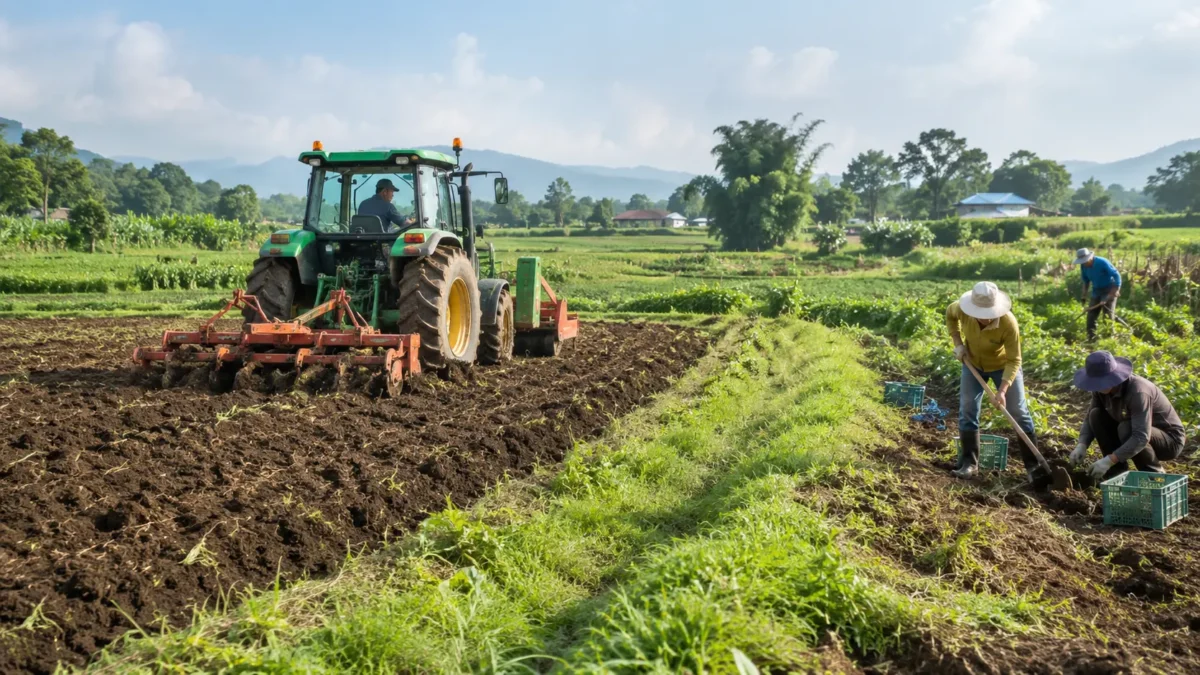

Agriculture has always depended on human skill and hard work, but many farms today face increasing pressure to complete more work with limited labor. Seasonal worker shortages, rising labor costs, larger cultivated areas, and tighter planting and harvesting windows can make traditional manual methods difficult to manage. Farm mechanization helps solve some of these challenges by allowing important jobs to be completed faster and with fewer workers.
Choosing machinery from a suitable agriculture equipment manufacturer can help farmers match tractor capacity with the actual work that needs to be completed. A properly selected tractor can support field preparation, crop maintenance, material transport, and other repetitive jobs, allowing available workers to focus their time on activities where human judgment and attention are most valuable.
Why Labor Availability Has Become an Important Farm Issue
Many agricultural activities require workers at very specific times.
Land preparation cannot always be delayed for several weeks, and planting often needs to begin when soil and weather conditions are suitable. Harvesting can also create sudden demand for additional labor.
When enough workers are not available, farms may struggle to complete these jobs on time. Mechanization does not eliminate the need for people. Instead, it changes how labor is used.
A tractor can allow one trained operator to perform work that might otherwise require several workers and considerably more time.
This makes labor planning easier, particularly during busy agricultural seasons.
Mechanization Helps Reduce Repetitive Manual Work
Some farming jobs involve physically demanding tasks that must be repeated across large areas.
Moving materials, preparing soil, mowing, cultivating, and transporting loads can require substantial time when completed manually.
Using machinery for these activities can reduce physical pressure on workers.
The available labor can then be directed toward tasks such as crop inspection, irrigation management, equipment preparation, livestock care, packing, or other work that cannot easily be mechanized.
The aim is not simply to replace manual labor. It is to use workers and machinery in ways that make the entire farm more productive.
Tractors Provide a Flexible Source of Farm Power
One reason tractors are so useful is their ability to perform different jobs with different implements. A single tractor may support several stages of agricultural work throughout the year.
Depending on the farm and equipment setup, it can help with:
- Land preparation
- Cultivation
- Mowing
- Planting support
- Spraying
- Material movement
- Trailer transport
- General farm maintenance
This flexibility can be particularly valuable for farms that cannot justify purchasing a separate machine for every activity.
A tractor that remains useful across several seasons can provide better equipment utilization and reduce dependence on large temporary workforces.
Farm Size Influences the Level of Mechanization Needed
Not every farm needs the same machinery.
A small operation may only need a compact tractor for light cultivation, mowing, and transport. A larger farm may require more powerful machinery to cover greater areas within limited time.
Farmers should therefore consider their cultivated area and workload before investing in equipment. They should ask how many hours are currently spent on major jobs and whether machinery could reduce those hours significantly.
Buying a machine that is too large can create unnecessary costs.
At the same time, equipment that is too small may fail to provide the expected labor savings because it takes too long to complete the work.
Mechanization Can Make Seasonal Planning Easier
Agricultural workloads are rarely evenly distributed throughout the year. Some weeks may be relatively quiet, while planting or harvesting periods can become extremely busy. Machinery helps farms deal with these peaks.
If soil preparation can be completed more quickly, workers have more time for planting and other responsibilities.
Similarly, using tractors for transport can reduce the number of workers needed to move supplies or harvested materials. This creates a more organized workflow.
Farm managers can assign people to different responsibilities without having every worker occupied with the same physically demanding activity.
Labor Savings Should Be Measured Carefully
Mechanization can reduce labor requirements, but farmers should evaluate where the greatest savings are actually possible.
A tractor may provide substantial benefits for repetitive fieldwork but limited value for jobs that require careful hand work.
Before purchasing machinery, farmers can identify which tasks currently require the most worker hours.
They can then estimate how equipment might change those requirements.
Useful questions include:
- How many workers perform the task?
- How many hours does it take?
- How often is the task repeated?
- Can machinery complete it safely?
- Will the equipment have other uses?
This simple analysis can help farmers avoid purchasing machines that provide little practical improvement.
Tractor and Implement Compatibility Affects Productivity
A tractor alone cannot perform every farm task. Its productivity depends heavily on the implements connected to it.
Plows, cultivators, rotary tillers, mowers, trailers, sprayers, and other attachments each have different power and operating requirements.
Farmers should plan these combinations carefully.
When comparing options from an agriculture equipment manufacturer, buyers should consider which implements they need to operate and whether the tractor’s power, hydraulic system, and configuration suit those tasks. A well-matched combination can help one operator complete more work efficiently without placing unnecessary strain on the machine.
Mechanization Can Improve Consistency of Field Work
Manual work can vary depending on worker experience, fatigue, and the amount of time available. Machinery can make certain repetitive operations more consistent.
For example, a properly operated tractor and implement can cover a field in a more organized pattern and maintain a steady working pace.
Consistency can also make planning easier because farmers gain a better idea of how much land can be covered within a day. This does not mean machinery automatically produces perfect results. Operators still need training, and equipment must be adjusted correctly.
However, mechanical assistance can reduce some of the variation associated with physically demanding repetitive work.
Training Becomes More Important as Farms Mechanize
A farm that uses more machinery may need fewer workers for certain jobs, but those workers require additional skills.
Operators should understand the tractor controls, basic maintenance, safe implement connection, and correct working procedures. Poor training can reduce many of the advantages of mechanization.
An inexperienced operator may use the wrong speed, damage an implement, waste fuel, or place unnecessary stress on the machine. Training should therefore be considered part of the investment.
A knowledgeable operator can often complete work more efficiently while also noticing early signs of mechanical problems.
Mechanization Can Help Farms Manage Growing Areas
Farm expansion creates new labor demands.
A farmer who adds more land may suddenly need to prepare, plant, maintain, and harvest a much larger area within the same seasonal periods.
Hiring additional workers is one solution, but it may not always be practical. Suitable machinery can allow existing teams to handle a larger workload.
However, expansion should be planned carefully.
Farmers should consider whether their current tractor has enough capacity for additional land and whether larger implements would provide meaningful time savings.
This helps ensure mechanization supports growth instead of simply adding equipment costs.
Transport Work Is Often an Overlooked Labor Expense
Not all farm labor is spent directly on crop production.
Workers may spend many hours moving feed, tools, seed, fertilizer, harvested crops, or other materials. A tractor and suitable trailer can reduce the time and labor required for these jobs.
This is particularly valuable on farms where fields, storage areas, and buildings are spread across a large property. Efficient transport can free workers for other activities.
Farmers should include these hidden labor hours when calculating the potential value of machinery.
Sometimes the greatest improvement comes from making routine movement easier rather than changing the main field operation.
Proper Maintenance Protects Labor Savings
Mechanization only saves labor when the machinery is available to work.
If a tractor frequently breaks down, workers may spend valuable time waiting for repairs or returning to slower methods. Preventive maintenance is therefore closely connected to productivity.
Routine checks should include engine fluids, filters, tires, hydraulic systems, visible hoses, and other important components.
Farmers should also keep basic service records.
Maintenance takes time, but planned servicing is usually easier to manage than an unexpected failure during a busy farming period.
Reliable machinery allows labor schedules to remain more predictable.
Fuel Costs Should Be Balanced Against Labor Benefits
Replacing manual work with machinery introduces fuel and maintenance expenses. Farmers should therefore compare both sides of the calculation.
A tractor may increase fuel costs while reducing the number of worker hours needed for a particular job.
Whether this creates a financial benefit depends on the task, operating hours, local labor costs, and equipment efficiency.
The objective should not be maximum mechanization at any cost.
Farmers should mechanize activities where machinery creates a clear improvement in time, workload, consistency, or productivity.
This balanced approach can provide better long-term results.
Smaller Farms Can Also Benefit From Selective Mechanization
Mechanization is not limited to very large agricultural businesses. Small farms can benefit when equipment is chosen carefully.
A compact tractor may help with mowing, cultivation, hauling, or general property maintenance without requiring the investment associated with larger machinery.
The key is selecting tasks where mechanical assistance provides real value. Small farmers should avoid copying the equipment choices of much larger operations.
Their best solution may be a smaller and more versatile machine that is used frequently rather than a high-powered tractor that spends most of the year unused.
People Remain Essential in Mechanized Agriculture
Even highly mechanized farms still depend on people.
Workers make decisions, monitor crops, maintain equipment, respond to changing weather, manage livestock, and solve unexpected problems.
Machinery should therefore be viewed as a tool that increases human capability. The strongest results usually come when skilled operators and suitable equipment work together.
Farmers who invest in machinery should also invest in training and clear work procedures. This combination helps ensure mechanization improves productivity without reducing attention to safety or quality.
Conclusion
Farm mechanization can help agricultural businesses manage labor shortages, reduce repetitive physical work, complete seasonal tasks more quickly, and make better use of available workers. Tractors are particularly valuable because they can support several different jobs when paired with suitable implements.
The best results come from selecting machinery according to actual farm size, workload, labor requirements, and future plans rather than mechanizing every activity simply because equipment is available. Proper operator training, implement compatibility, maintenance, and cost planning are equally important. Farmers and agricultural businesses interested in exploring tractor solutions that can support more efficient farm operations can find further information through Gengjiaagri.com.
Also Read
- Innovative Technologies in Metalworking Equipment
- 2222 Angel Number Meaning: Unlocking Its Spiritual, Love, and Life Guidance





Leave a Comment