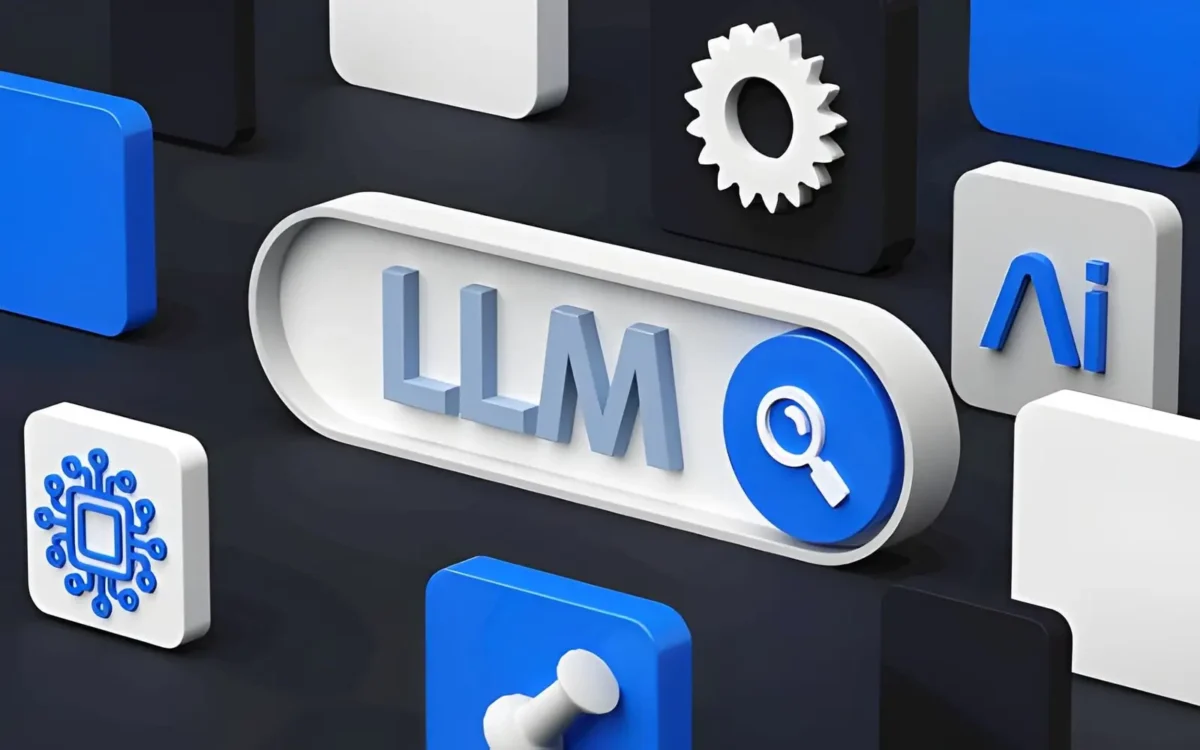

Search has changed. Not gradual, drastically. When someone types a question into ChatGPT, Gemini, or Perplexity, they’re not scrolling through ten blue links anymore. They’re reading a direct answer. And if your brand isn’t in that answer, you effectively don’t exist for that user.
This isn’t a future concern. It’s happening right now, in 2026, across millions of queries every day.
The brands winning those AI-generated responses aren’t just lucky. They’ve built the kind of digital authority that large language models trust. And that authority comes down to one thing: a deliberate, intelligent link building approach that goes far beyond traditional SEO.
Here’s how to get your brand into the conversation, literally.
What Are AI Mentions and Why Do They Matter for SEO in 2026?
An AI mention is when a large language model references, recommends, or cites your brand inside a generated response, with or without a hyperlink. Think of it as the AI equivalent of a word-of-mouth referral, except the “mouth” in question has been trained on billions of documents and is talking to millions of people simultaneously.
For brands, this is a visibility channel that traditional keyword rankings can’t fully capture. A page that ranks #4 on Google might get skipped. A brand that gets mentioned in an AI-generated response? That’s front and center.
The Difference Between Linked AI Mentions and Direct AI Citations
Not all AI mentions are equal. A linked AI mention appears when a platform like Perplexity cites a source with a clickable URL, directly driving referral traffic. A direct AI citation, by contrast, is when a model names your brand confidently without linking anywhere. Both matter, but they signal different things.
Linked mentions drive immediate traffic. Direct citations build brand entity recognition over time, training LLMs to associate your name with authority on a given topic. A smart LLM citation context strategy pursues both, because each reinforces the other in ways that compound over months, not weeks.
Driving Conversions Through Generative AI Searches (ChatGPT, Gemini, and Perplexity)
Users arriving from Generative Engine Optimization (GEO) channels convert differently. They’ve already received a vetted recommendation before they click. That pre-qualification shifts intent dramatically; these aren’t browsers, they’re buyers who’ve been pointed in your direction by an AI they trust.
Brands that earn mentions across ChatGPT, Gemini, and Perplexity are essentially getting free, high-intent endorsements at scale. The catch? You don’t buy that position. You build toward it through consistent authority signals, structured content, and the kind of trusted data sources that AI crawlers actually surface.This is exactly where professionals hire link building consultants fill the gap.
What Do AI Search Engines Actually Look For When Recommending Businesses?
If you’re picturing LLMs scanning for keyword-heavy landing pages, let go of that mental model. Modern AI systems don’t rank the way search engines did in 2015. They assess credibility, relevance, and entity coherence across the entire web.
They’re asking, in effect: Is this a real, respected brand? Does the broader web agree?
Authority and Trust Signals Over Keyword Density
Keyword density is essentially irrelevant to how LLMs decide what to recommend. What matters is the web of trust surrounding your brand. High-DR backlinks from recognized publications signal that real editorial humans have vouched for you. Semantic search relevance, meaning your content actually addresses questions the way real people ask them, matters far more than repeating a phrase fifteen times.
LLMs are trained on content from trusted data sources: established publications, educational institutions, and industry authorities. If your brand is cited within those ecosystems, it gets absorbed into the model’s understanding of what’s credible. That’s not keyword optimization. That’s reputation architecture.
Building Strong Brand Entity Recognition Across the Web
Entity-based link building is one of the most underused strategies in modern SEO, and it’s arguably the most important for AI visibility. An entity isn’t just a name; it’s a consistent, structured representation of who you are across the web. Your brand name, industry category, founder names, product descriptions, and geographic presence all form part of your entity profile.
When LLMs encounter your brand mentioned consistently across diverse, high-authority domains, they begin treating it as a high-authority brand footprint, something worth referencing. This is the core mechanic behind Retrieval-Augmented Generation (RAG) anchor signals: the AI retrieves your brand because the web has collectively agreed you’re worth retrieving.
Why Emerging Brands with Small Footprints Stay Invisible to LLMs
If your brand only appears on your own website, a couple of social profiles, and three directories, an LLM has almost no signal to work with. AI models don’t take risks on unknowns. They surface what they know, and “knowing” a brand means having encountered it across many reliable, contextually relevant sources.
Emerging brands with thin digital footprints essentially don’t exist in the LLM citation context. It’s not about being new. It’s about being uncorroborated. A startup with twenty high-quality editorial backlinks from respected publications will outperform a five-year-old business with hundreds of spammy directory links every single time.
AI crawler indexing, increasingly governed by protocols like llms.txt, prioritizes structured, trustworthy content. If your content is shallow, your links are low-quality, or your brand entity is scattered and inconsistent, you’re invisible by design. The fix isn’t a shortcut. It’s a systematic link building approach executed with precision.
Scaling AI Mentions for US Brands Through Strategic Link Building
The US market is uniquely competitive in AI search. American consumers are early adopters of tools like ChatGPT and Perplexity, which means US-facing brands face stiffer competition for AI real estate. But the opportunity is proportionally larger too.
Getting it right means understanding what link-building strategies actually require in this context, and it goes well beyond standard outreach.
Why the US Audience Trust Signals Demand High-DR Backlinks
American readers, and the AI models trained heavily on American web content, respond to authority markers from recognizable publications. A backlink from a niche US media outlet with DR 70+ carries far more AI signal weight than twenty links from obscure international directories.
Link building USA strategies focused on high-DR placements directly influence semantic search relevance for US queries. They tell AI models: this brand is vetted by sources American audiences already trust. That’s the trust transfer that gets you cited. For link-building United States campaigns specifically, publication reputation and editorial standards matter enormously.
Leveraging Expert Link Building Services USA to Build Entity Trust
Building entity trust at scale isn’t something most marketing teams can do in-house. It requires publisher relationships, editorial access, content expertise, and the kind of consistent outreach infrastructure that takes years to develop.
When you hire link building consultants who specialize in the US market, you’re not just buying backlinks. You’re buying systematic entity-building across publications that matter. The difference between a DR-60 link on a general blog and a DR-75 editorial placement on a topically relevant US platform isn’t just metrics; it’s the signal quality that AI systems use to decide whether you’re worth mentioning.
How the Link Building Approach is Done for AI Answer Optimization
Strategy without execution is just theory. Here’s how a well-designed link building approach actually plays out when the goal is AI mention acquisition, not just search rankings.
Step 1: Secure Dofollow Guest Posts on Reputable, High-Traffic Sites
Guest posts on high-authority, high-traffic platforms serve a dual purpose: they build semantic search relevance through editorial context, and they establish your brand within ecosystems that AI crawlers index deeply. The keyword is reputable. A guest post on a site that accepts anyone with a credit card adds almost no AI signal value.
Target publications with real editorial standards, genuine audiences, and domain authority that actually reflects traffic. These placements become part of the trusted data sources that LLMs draw from when constructing AI-generated responses. One strong placement beats ten weak ones, every time.
Step 2: Use Answer-First Formatting and Question-Based Subheadings
LLMs retrieve content that’s structured to answer questions efficiently. Content formatted with answer-first logic, where the core point appears immediately, before elaboration, aligns with how Retrieval-Augmented Generation (RAG) systems extract and surface information.
Question-based subheadings mirror how people actually query AI systems. This isn’t just good UX; it’s alignment with LLM citation context retrieval patterns. Generative Engine Optimization (GEO) is partly about making your content the most extractable, most answer-shaped version of the truth on a given topic. Format accordingly.
Step 3: Implement Schema Markup to Make Content Accessible to AI Crawlers
Schema markup is the difference between content that AI crawlers can index efficiently and content that gets overlooked. Structured data tells crawlers exactly what your content contains, who you are, what you do, where you operate, and what questions you answer.
For entity-based link building, schema is an essential infrastructure. It reinforces your brand entity with machine-readable clarity. Organization schema, FAQ schema, and Article schema are the starting points. Combined with high-quality backlinks and consistent content, schema markup dramatically improves your chances of appearing as a Perplexity or Gemini source citation when relevant queries are fired.
How to Track and Monitor the Sentiment of Your AI Mentions
Getting mentioned in AI responses is only half the battle. What those mentions say, and how they frame your brand, matters just as much as whether they happen at all.
Monitoring AI mentions requires a different toolkit than traditional rank tracking. Tools like Brand24, Mention, and emerging AI-specific monitoring platforms let you track when and where your brand surfaces across LLM outputs. More importantly, they capture the sentiment and context of those mentions, whether you’re being recommended enthusiastically, mentioned neutrally, or (worst case) cited as a cautionary example.
Sentiment within AI-generated responses is shaped by the source material. If the dominant content about your brand is negative, dispute-heavy, or thin, that’s what LLMs will reflect. Building a high-authority brand footprint means actively cultivating positive, substantive coverage across diverse, credible sources.
Watch for patterns: which publications generate AI citations most reliably? Which content formats get retrieved? These insights inform your link building agency USA strategy going forward, letting you double down on what’s actually moving the needle.
Link building services in the USA that include mention monitoring as part of their offering give you a significant advantage, because optimization without measurement is guesswork. Tracking AI mentions isn’t a vanity exercise. It’s a feedback loop that sharpens every future campaign. Brands that treat this as an ongoing intelligence function, rather than a one-time audit, consistently outperform those that don’t.
Guest Posting Solution (GPS) specializes in exactly this. As a trusted guest posting agency, GPS builds the kind of editorial link profile that earns AI mentions, through high-DR placements, topically relevant publishers, and content that’s structured for both human readers and AI crawlers alike.
Conclusion: Partnering with Guest Posting Solution (GPS) for the Future of Search
AI-driven search isn’t replacing SE, it’s raising the bar for what good SEO looks like. Getting your brand into LLM answers requires real authority, consistent entity signals, and a link building approach that’s built for how search actually works in 2026, not 2019.
If you’re serious about AI visibility, whether you need backlinks services in the USA or want to explore what link-building service USA looks like at a strategic level, GPS has the publisher network and the methodology to get you there.
You can also explore their best link building services for USA agencies and brands. Visit the page to see how their approach translates across markets.
The brands getting mentioned in AI answers today didn’t stumble into that position. They built it. The question is whether you start building yours now or spend another year wondering why the AI keeps recommending someone else.
FAQs
Is buying backlinks still worth it, or is it a waste of money in 2026?
It depends entirely on quality, not quantity. Cheap, bulk links from low-relevance sites do little beyond risking a penalty. But a handful of editorial placements on sites with real traffic and topical authority? That’s a different category altogether. Most experienced marketers will tell you the same thing: five strong links outperform fifty weak ones, every time.
What’s the difference between a brand mention and an actual AI citation?
A mention is your brand name appearing inside the generated text itself, sometimes pulled straight from the model’s training data. A citation is when the AI links out to a specific source it used to build that answer, usually through retrieval methods like RAG. You can have one without the other, and frankly, most strategies need to chase both rather than picking a lane.
How much does professional link building actually cost in the US market?
Pricing varies wildly depending on link quality, niche competitiveness, and publisher relationships, but expect anywhere from a few hundred dollars per placement for niche-relevant guest posts up to several thousand per month for retainer-based campaigns with high-DR publications.
Also Read
- How Bookkeeping Services Enhance Business Planning
- The Future of Storytelling: How Technology Is Helping Writers Create Faster
- The Professional Caregiving Solutions are Designed to Improve Quality of Life





Leave a Comment