
Firefighters, paramedics, law enforcement officers, and emergency dispatchers run toward situations that most people spend their lives trying to avoid. That reality takes a toll. Not always immediately, and not always visibly, but the cumulative weight of trauma, sleeplessness, and high-stakes decision-making reshapes how the brain processes stress over time. Understanding that process is the first step toward changing outcomes for the people who protect communities every day.
This article covers the mental health risks unique to first responders, the physiological reasons those risks are elevated, the warning signs that often go unrecognized, and the kinds of support structures that have shown real results. Whether you are a first responder yourself, a family member, a department administrator, or simply someone who wants to understand the issue better, the information here is worth knowing.
Why First Responders Face Elevated Mental Health Risk
The mental health risks facing first responders are not simply a matter of stress. Stress, in manageable doses, is something the human nervous system handles reasonably well. The problem is repeated, unpredictable, and often graphic exposure to trauma over years or decades. That kind of exposure activates the body’s stress response systems so frequently that those systems can become dysregulated, meaning they stop returning to baseline the way they should.
Research published by the Substance Abuse and Mental Health Services Administration (SAMHSA) estimates that between 30 and 40 percent of first responders develop behavioral health conditions such as depression or post-traumatic stress disorder, compared to 20 percent in the general population. Suicide rates among firefighters and law enforcement officers have consistently exceeded line-of-duty deaths in multiple reported years, a fact that underscores how serious the mental health dimension of this profession has become.
Several factors compound the risk. Shift work disrupts circadian rhythms, which are closely tied to mood regulation and emotional resilience. Physical injury, which is common in these professions, often overlaps with psychological injury. And the culture that has historically defined emergency services, one that prizes stoicism and self-reliance, can make it genuinely difficult for someone to admit they are struggling.
Common Mental Health Conditions in Emergency Services
Several distinct conditions appear at elevated rates among first responders, and they do not always look the way popular depictions suggest. Post-traumatic stress disorder, for example, does not always manifest as flashbacks or nightmares. It can appear as emotional numbness, difficulty concentrating, irritability, or a persistent sense that nothing feels quite real. Depression may present as exhaustion or cynicism rather than sadness. Anxiety may show up as hypervigilance, which in a first responder can be easy to dismiss as job-appropriate alertness.
| Condition | Common Symptoms in First Responders | Often Mistaken For |
| PTSD | Hypervigilance, emotional numbness, sleep disruption, irritability | Normal job stress or personality change |
| Depression | Fatigue, withdrawal, cynicism, reduced performance | Burnout or general tiredness |
| Anxiety Disorders | Constant alertness, physical tension, difficulty relaxing off-duty | Dedication or work ethic |
| Substance Use Disorder | Increased alcohol use, reliance on substances to sleep or unwind | Social drinking or coping |
| Moral Injury | Guilt, shame, questioning one’s purpose or values | General dissatisfaction with the job |
Moral injury deserves particular attention because it is less widely discussed but increasingly recognized as a distinct psychological wound. It occurs when a person witnesses, participates in, or fails to prevent an event that violates their moral code. For first responders, this might mean arriving too late to save someone, following orders they felt were wrong, or witnessing institutional failures that led to preventable harm. Moral injury is not the same as PTSD, though the two often co-occur, and it responds better to interventions that address meaning, values, and accountability rather than purely symptom-based treatments.
Barriers to Seeking Help
Understanding what prevents first responders from seeking mental health support is just as important as understanding the conditions themselves. The barriers are real, and many of them are structural rather than purely individual.
- Stigma within the workplace culture: Admitting psychological distress can feel like admitting weakness, which carries professional and social consequences in close-knit departments.
- Fear of career consequences: Many first responders worry that seeking mental health treatment could affect their fitness-for-duty status, their access to firearms, or their chances of promotion.
- Limited access to culturally competent providers: General-practice therapists may not understand the operational realities of emergency work, which can make sessions feel irrelevant or frustrating.
- Time and scheduling: Shift work makes standard appointment schedules difficult, and mental health care is rarely designed around a first responder’s working hours.
- Insurance gaps: Coverage for mental health treatment varies widely, and out-of-pocket costs can be a genuine obstacle, particularly for volunteer departments.
- Geographic isolation: First responders in rural areas may have few local options and limited telehealth infrastructure.
These barriers do not disappear through willpower alone. Addressing them requires deliberate systemic change, including confidential peer support programs, mental health days built into department policy, and providers who have specific training in first responder culture and trauma.
What Effective Support Looks Like
The evidence base for first responder mental health has grown substantially over the past decade. Certain approaches consistently show better outcomes than traditional models applied without modification.
Peer Support Programs
Peer support programs train fellow first responders to recognize signs of distress and initiate confidential conversations with colleagues. Because the peer supporter shares the same professional context, trust is established more quickly than it might be with an outside clinician. Studies from the Journal of Occupational and Environmental Medicine and similar publications have found that peer support significantly reduces the time between symptom onset and help-seeking. Critically, peer support is not a replacement for clinical care. It is a bridge that makes clinical care accessible.
Trauma-Informed Therapy Approaches
Cognitive Processing Therapy (CPT) and Eye Movement Desensitization and Reprocessing (EMDR) both have strong evidence bases for treating trauma-related conditions, and both have been adapted for use with first responder populations. The key adaptation is provider familiarity with occupational exposure. A therapist who understands what a shift looks like, what a mass casualty incident requires of a responder, and what departmental culture actually demands can frame treatment in ways that resonate rather than alienate.
Organizational and Administrative Change
Individual treatment matters, but so does the environment in which first responders work. Departments that have reduced mental health stigma most effectively tend to share a few characteristics: leadership openly discusses mental health as a legitimate occupational health concern, mandatory check-ins are built into critical incident response protocols, and mental health resources are promoted visibly rather than buried in policy documents. When a department chief talks about seeking support after a difficult call, it changes what junior members feel is permissible.
Resources and Organizations Making a Difference
A growing network of organizations focuses specifically on first responder mental health, providing services that general mental health infrastructure often cannot. Some operate nationally while others serve specific states or regions, allowing them to account for local department cultures, available funding, and geographic needs.
In California, one example of this specialized regional approach is First Responders of California (FRCA), which provides mental health and wellness services designed specifically for California’s first responder community, addressing the gap between general mental health resources and the particular needs of emergency personnel.
At the national level, the Firefighter Behavioral Health Alliance and the First Responder Support Network both provide training, resources, and program development support. The Department of Justice’s COPS Office has funded peer support training programs for law enforcement agencies across the country. These organizations represent a shift in how the emergency services sector thinks about psychological health, moving it from an afterthought to an operational priority.
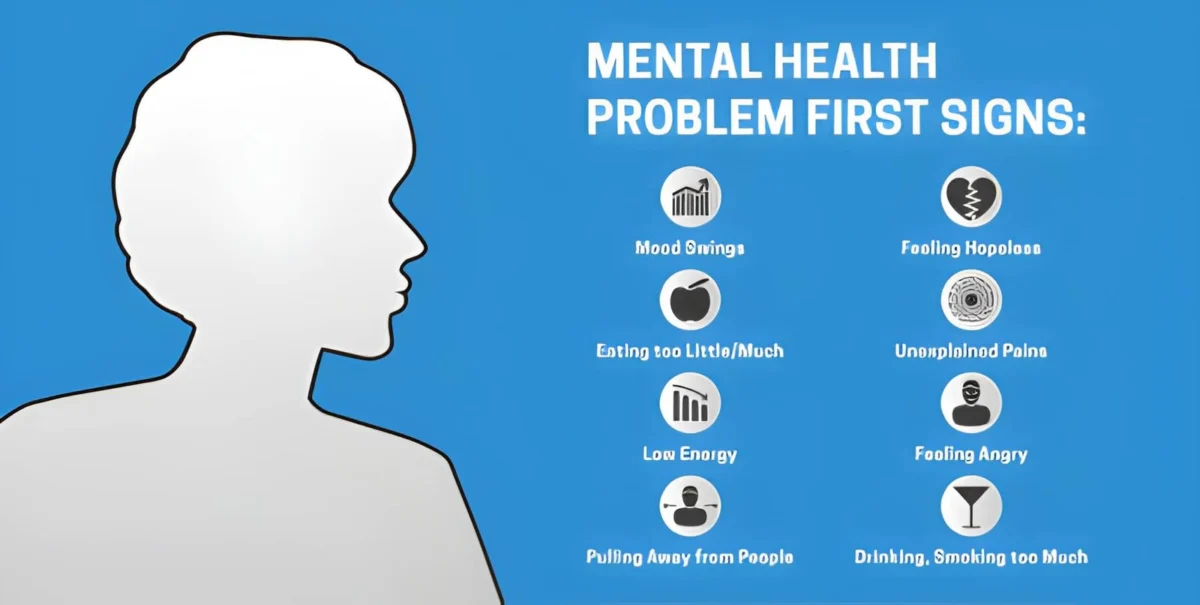
Warning Signs to Recognize in Yourself or a Colleague
Recognizing early warning signs is one of the most practical contributions anyone in or around the first responder community can make. Many crises are preceded by a period where intervention could have changed the outcome, but the signs were missed or dismissed.
- Noticeable withdrawal from colleagues, family, or activities that previously brought enjoyment.
- Increased alcohol consumption, particularly as a regular method of winding down after a shift.
- Expressions of hopelessness, worthlessness, or the feeling that others would be better off without them.
- Pronounced irritability or anger that seems disproportionate to the situation.
- Changes in sleep patterns, either persistent insomnia or sleeping significantly more than usual.
- Declining work performance or a visible loss of motivation that is out of character.
- Talking about past incidents repeatedly, or conversely, a sudden refusal to discuss anything related to work.
- Risk-taking behavior that is unusual for the individual.
If you notice these signs in a colleague, a direct and private conversation carries more weight than a referral to a hotline number on a break room bulletin board. Saying something simple, like asking whether they are doing okay and making it clear you have time to listen, can open a door that nothing else would. If you are a department administrator, building regular confidential wellness check-ins into existing processes normalizes help-seeking in a way that one-time awareness campaigns rarely achieve.
The mental health of first responders is not a peripheral concern. It sits at the center of whether communities receive effective emergency services, whether officers and paramedics can sustain careers without being permanently damaged by them, and whether the people who carry the weight of crisis can eventually put it down. Progress is being made. The infrastructure, the evidence base, and the cultural willingness to address this openly are all improving. Knowing the issue in depth is where meaningful contribution begins.
Read more: What Happens During Cocaine Withdrawal and Detox
Early Signs of Psychosis: What to Know and Do
Whippets and the Brain: What Heavy Use Really Does

Leave a Comment