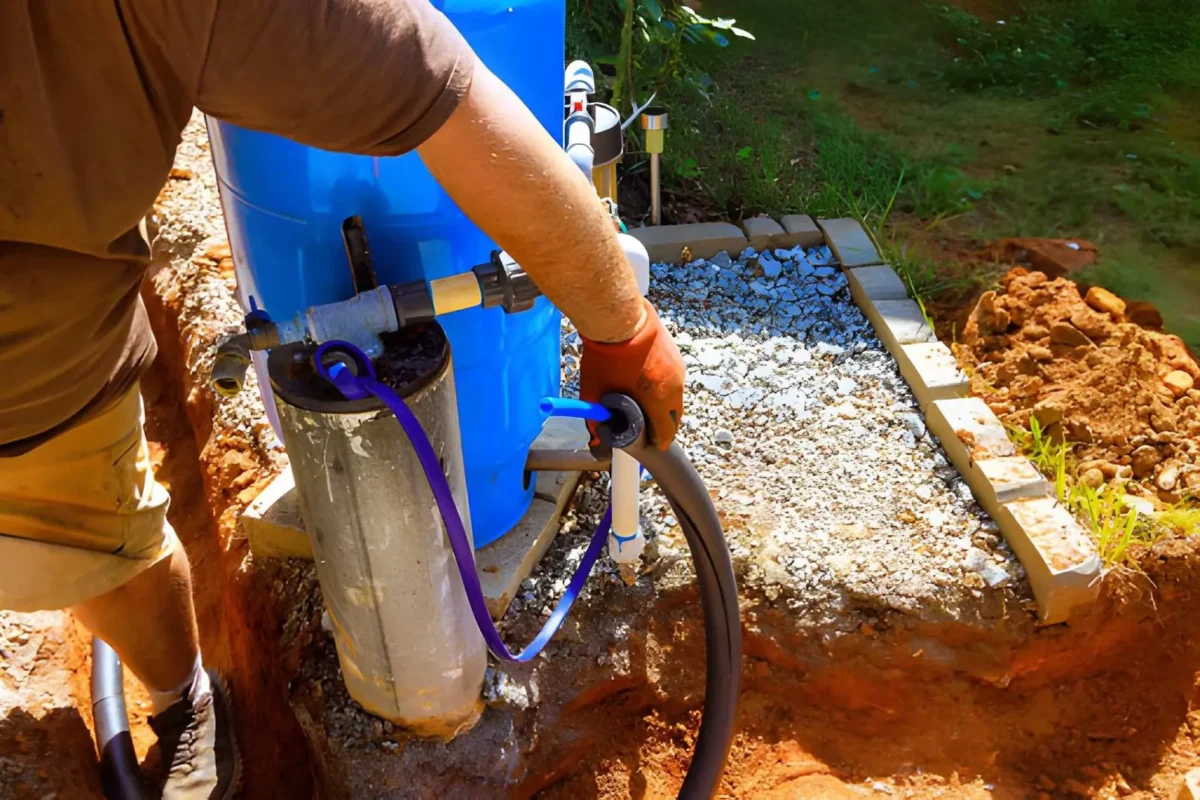

A private well gives homeowners direct access to groundwater without depending on a municipal water supply. For many properties, particularly those outside densely populated areas, a well is an essential part of everyday life.
The system can be easy to forget when everything is working properly. Turn on a faucet and water appears. Start the washing machine and the system responds automatically.
Behind that convenience, however, several components need to work together. The well, pump, pressure tank, pipes, electrical controls, and household plumbing all contribute to reliable water delivery.
Understanding the basics can help homeowners recognize problems early and keep their well systems working effectively.
Understand the Main Parts of Your Well System
The well itself provides access to groundwater, but water still needs to be transported into the home.
This is the job of the well pump.
Many deeper wells use submersible pumps installed below the water level. Other systems may use different pump configurations depending on the well depth and property requirements.
The pressure tank is another important component. It stores pressurized water and helps prevent the pump from switching on every time a small amount of water is used.
Pressure switches and electrical controls tell the pump when to operate.
These components work as a system, which means a problem that appears to involve the pump may sometimes originate elsewhere.
Pay Attention to Changes in Water Pressure
Changes in pressure are among the easiest problems for homeowners to notice.
Perhaps showers no longer feel as strong as they once did. Faucets may provide inconsistent flow, or pressure might fall significantly when several fixtures operate at the same time.
Low pressure can have several possible causes.
The pump may be experiencing difficulty, but problems can also involve the pressure tank, plumbing, filters, groundwater level, or increased household demand.
Do not automatically assume that installing a larger pump will solve the problem.
Correct diagnosis should come before equipment replacement.
Watch for Frequent Pump Cycling
A well pump should not continuously switch on and off during ordinary use.
Frequent short cycles can indicate a problem.
Pressure-tank issues are one possible cause. Problems with controls, leaks, or other parts of the system can also affect cycling.
Repeated starts can place additional strain on pump components and may shorten equipment life if the underlying problem continues.
If you notice that the pump is activating much more frequently than it used to, have the system checked rather than waiting for complete failure.
Listen for Unusual Sounds
Homeowners become accustomed to the normal sounds produced by their plumbing systems.
A new noise deserves attention.
Grinding, clicking, rattling, banging, or other unfamiliar sounds may indicate mechanical or pressure-related problems.
Not every sound means the pump is about to fail, but significant changes should not simply be ignored.
Try to determine when the noise occurs. Does it happen when a faucet opens, when the pump starts, or when several fixtures are being used?
This information can help when describing the problem to a professional.
Do Not Ignore Sputtering Faucets
Water should normally flow consistently from household faucets.
If faucets begin sputtering or releasing bursts of air with the water, the well system may require investigation.
Air can enter the plumbing for different reasons, including issues involving the pump or water level.
Occasional minor changes do not necessarily indicate a serious problem, but persistent sputtering deserves attention.
If it occurs alongside low pressure, unusual noises, or interruptions to the water supply, professional diagnosis becomes particularly important.
Check the Pressure Tank
The pressure tank plays an important role in reducing unnecessary pump operation and maintaining water pressure.
When the tank develops problems, homeowners may notice rapid pump cycling or inconsistent pressure.
Because the pump and tank work together, replacing the pump without checking the tank could leave the underlying issue unresolved.
Routine system assessments should therefore consider the pressure tank alongside the pump itself.
Homeowners should follow appropriate manufacturer guidance and avoid adjusting pressurized or electrical components without suitable knowledge.
Protect the Area Around the Well
Maintenance is not limited to mechanical equipment.
The area around the well should also be protected.
Keep potentially harmful substances away from the wellhead and pay attention to changes caused by landscaping, construction, drainage, or flooding.
The well cap and visible components should remain in good condition.
Damage around the wellhead can potentially allow contaminants to enter the system.
After flooding or other unusual events, additional inspection and water testing may be appropriate.
Remember Water Quality
Clear water is not necessarily evidence that everything is perfect.
Private well owners are responsible for monitoring their own water supply, making periodic testing an important part of well ownership.
Testing considerations can depend on local conditions and potential contaminants.
Changes in taste, smell, or appearance are reasons to investigate, but testing should not be limited only to situations where something seems obviously wrong.
Keep records of previous results. Comparing them over time can make significant changes easier to identify.
Know When to Call a Professional
Some basic observations can be made by homeowners, but well systems combine plumbing, electrical equipment, pressure controls, and underground components.
Recurring low pressure, frequent cycling, unexplained loss of water, unusual pump noises, or repeated plumbing problems should be properly diagnosed.
Problems involving the pump, pressure tank, electrical controls, or underground components can be difficult to diagnose without the right equipment and experience. Homeowners dealing with these issues can contact Sauk Plains Plumbing and Pumps for professional assistance with well pumps and related plumbing systems.
Getting the underlying cause identified is generally more useful than repeatedly treating individual symptoms.
Repair or Replace?
A malfunction does not automatically mean the entire pump needs replacement.
Some problems may be repairable.
However, replacement may become more sensible when equipment is aging, failures are becoming frequent, or repair costs continue to accumulate.
Changes to the property can also affect the decision.
A pump originally selected for a smaller household may no longer match water demand after additional bathrooms, appliances, or other fixtures are added.
A professional assessment can help determine whether repair or replacement is more appropriate.
Keep Basic Maintenance Records
Homeowners should keep records relating to their well system.
Useful information can include the pump model, installation date, service history, pressure-tank information, previous repairs, water-test results, and contact information for professionals who have worked on the system.
These records become particularly valuable when troubleshooting recurring problems.
They can also help a new technician understand what work has already been completed.
If the property is eventually sold, organized records may also be useful to the next owner.
Frequently Asked Questions
How do I know if my well pump is failing?
Possible warning signs include declining water pressure, sputtering faucets, frequent pump cycling, unusual noises, and interruptions to the water supply.
Why does my well pump keep turning on and off?
Frequent cycling can be associated with the pressure tank, controls, leaks, pump problems, or other system issues. The cause should be properly diagnosed.
What does a well pressure tank do?
The pressure tank stores water under pressure and helps reduce how frequently the pump needs to start during normal household water use.
Can a bigger well pump improve water pressure?
Not necessarily. Pump sizing should reflect well conditions and household requirements. Pressure problems can also originate from other components.
How often should private well water be tested?
Testing schedules depend on local recommendations, well conditions, and potential contaminants. Additional testing may be appropriate after flooding or noticeable changes in water quality.
Why is air coming from my faucets?
Persistent sputtering can indicate air entering the plumbing or another issue with the well system and should be investigated if it continues.
Should I repair or replace an old well pump?
The decision depends on the pump’s condition, age, repair history, performance, and whether it still meets household water requirements.
Can homeowners maintain a private well themselves?
Homeowners can monitor visible conditions, water quality, pressure, and changes in performance. Work involving pumps, electrical controls, pressure equipment, or underground components may require an experienced professional.
Also Read-Preparing Your Home for Changing Seasons: A Practical Homeowner’s Guide







Leave a Comment