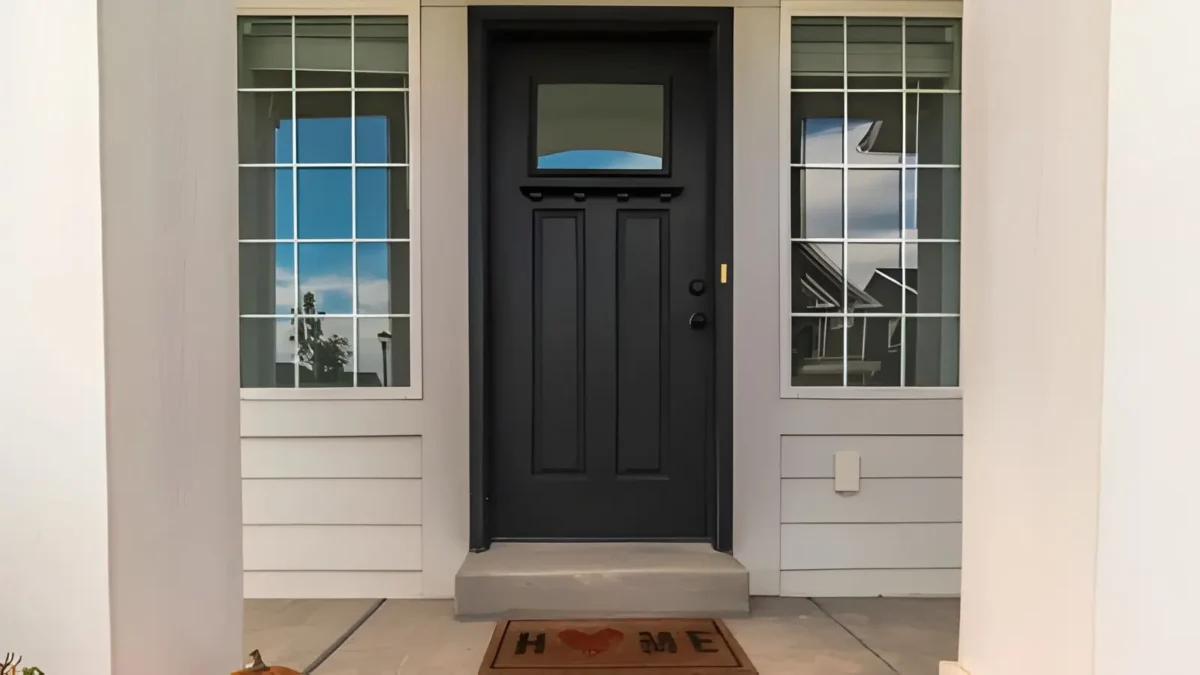

Most homeowners spend hours picking paint colors and zero minutes thinking about the front door until something goes very wrong. A draft that appears every January. A deadbolt that sticks on cold mornings. A door that just looks tired next to an otherwise sharp exterior. By that point, you’ve already been losing money and comfort for longer than you’d like to admit. Knowing the right moment to replace an entry door saves you from patching a problem that’s already past fixing. Here’s exactly what to look for, plus a simple framework to make the decision easier.
1. Visible Warping, Cracking, or Corner Separation
Run your hand down the edge of the door on a cold morning. If you can feel air moving, the door has shifted out of true. Warping is the most common structural failure in wood and low-grade composite doors, and it usually starts small. A corner pulls away from the frame. The slab bows slightly at the center. The latch no longer catches cleanly on the first try.
These aren’t cosmetic issues you can sand away. Once a door has warped past a quarter-inch of deviation, no amount of weatherstripping fully seals the gap. You’re looking at a replacement, not a repair. Steel and fiberglass doors warp far less because they don’t absorb seasonal moisture the way solid wood does, which is worth keeping in mind when you choose the next one.
2. You’re Spending More on Heating Without a Clear Reason
A sudden jump in your winter energy bill, without a change in thermostat habits, often points back to the building envelope. Doors are a common and overlooked culprit. Research by the Home Improvement Research Institute found that more than eight in ten homeowners have adopted energy retrofits in the past five years, with replacing doors and windows among the leading project categories. Most of them acted because rising utility costs forced the conversation.
Here’s the scenario that plays out in colder markets. A Minneapolis homeowner notices frost forming on the inside of the door frame each February. They add a draft snake. They caulk around the trim. The frost comes back. What they’re dealing with isn’t a sealing problem. It’s a door with a failed foam core, which no surface fix can address. About 21% of homeowners surveyed by HIRI reported they were planning to install energy-efficient doors or windows within the next 12 months, and that number tends to spike after the first brutal cold season following a move into an older home. If your door pre-dates 2000, assume its insulating core has degraded. A modern insulated steel or fiberglass replacement is not optional at that point. It’s overdue.
3. Security Feels Like a Concern, Not a Given
A door that rattles, a frame that flexes when pushed from outside, or a lock set that’s been repaired rather than replaced: any of these should prompt a replacement conversation. Door security isn’t just about the lock grade. It’s about the integrity of the frame, the hinge strength, and the panel thickness working together.
Single-point locking systems on older doors are far easier to defeat than modern multi-point locking mechanisms. If your door is already showing frame wear around the strike plate, the wood behind that plate has likely compressed enough to reduce kick-in resistance significantly. That’s the weak point, and a fresh paint job does nothing to fix it.
Steel doors with reinforced frames are the most cost-effective security upgrade available in this category. They’re also heavy enough that a reinstall requires professional fitting to get the alignment right, which brings us to the broader point: a door replacement is not a solo weekend project if you want it done correctly.
4. Use the SITE Test Before You Decide
Before committing to a full replacement, run your current door through what I call the SITE Test. It takes about ten minutes and gives you a clear picture of where your door actually stands.
- Security: Does the frame hold firm under lateral pressure? Does the deadbolt engage cleanly without lifting the handle?
- Insulation: Can you feel a temperature difference between the center of the door panel and the perimeter? Cold edges with a warm center indicate foam core failure.
- Threshold: Slide a piece of paper under the closed door. If it slides freely, the threshold seal is gone.
- Exterior finish: Is the finish peeling, bubbling, or significantly faded? Finish failure accelerates core degradation in wood and some composite doors.
If your door fails two or more of these checks, repair is unlikely to be cost-effective. A door that fails all four is genuinely hurting your home’s security, energy performance, and curb appeal at once.
5. Curb Appeal Has Taken a Hit
Buyers form opinions about a home in under ten seconds of pulling into the driveway, and the front door is usually the focal point of that first read. An outdated, faded, or mismatched door signals deferred maintenance even when the interior is immaculate.
The financial case for acting on this is well established. According to the 2024 Cost vs. Value Report, steel entry doors deliver an exceptional 188% ROI, while a grand fiberglass entryway with sidelights and decorative glass returns approximately 97%. Those are returns that most interior remodels can’t touch. The difference is that curb appeal improvements are the first thing a buyer prices into their offer, consciously or not.
If you’re not planning to sell soon, the aesthetic argument still holds. A door that looks sharp against a well-maintained exterior is something you see every single day. That’s value you collect immediately, not at closing.
6. The Door Is More Than 20 Years Old
Age alone isn’t disqualifying, but it does shift the probability math. Doors manufactured before 2005 predate significant improvements in weatherstripping design, foam core technology, and hinge engineering. A 20-plus-year-old door that passes the SITE Test is a lucky exception. Most don’t.
The financial incentive to act has also improved. The IRS Energy Efficient Home Improvement Credit covers qualifying exterior doors that meet ENERGY STAR requirements, with a credit limit of $250 per door and $500 total, according to current IRS guidance. That reduces your out-of-pocket cost on a new installation and makes the decision easier to justify on the same tax return year you complete the project.
If you’re in a colder market, the payback period on an insulated replacement shortens considerably. For homeowners pursuing door installation in Minneapolis, where winter temperatures routinely drop into single digits, a well-fitted insulated steel or fiberglass door can start paying for itself in heating cost reduction within the first full season.
The Right Time Is Before It Becomes Urgent
A front door that’s failing rarely fails all at once. It erodes gradually: a little more draft each winter, a little more friction on the deadbolt, a finish that looks a little worse each spring. The homeowners who get the best outcome are the ones who run the SITE Test now, while replacement is a planned project with room to choose the right product and installer, rather than an emergency repair driven by a broken frame or a frozen latch at 7 a.m. in January.
So: when did you last actually look at your front door as if you were seeing it for the first time? That answer tells you a lot about where you stand.
| Door Material | Typical ROI at Resale* | Best For | Cold-Climate Performance |
| Steel (insulated) | 188% | Security + value | Excellent |
| Fiberglass | 97% | Aesthetics + durability | Very good |
| Wood | ~55% | Character homes | Moderate (needs sealing) |
*Source: 2024 Cost vs. Value Report, as cited by the Journal of Light Construction. ROI figures vary by region and market conditions.
“Replacing windows and doors with energy-efficient options are one of the leading project categories” among homeowners who have undertaken energy retrofits in the past five years.
Home Improvement Research Institute, Government Incentives & Energy Retrofit Study, as reported by HIRI.org (2026). For tax credit guidance on qualifying ENERGY STAR door replacements, the IRS Energy Efficient Home Improvement Credit page outlines the current credit limits and qualifying requirements directly.
Also Read-Innovative Technologies in Metalworking Equipment







Leave a Comment