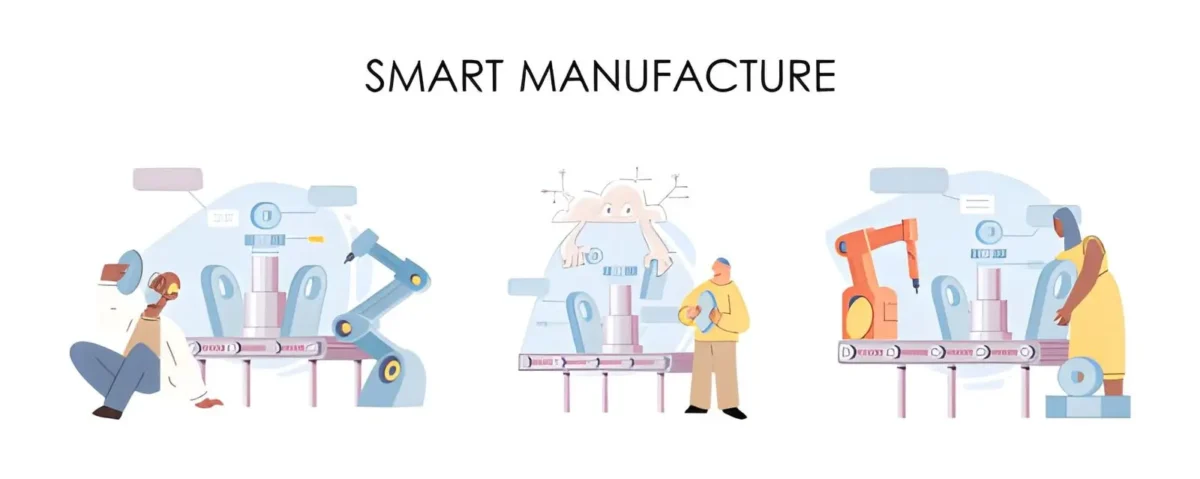

Manufacturing has always evolved, but the pace has shifted. Digital tools now sit at the heart of how factories run, reshaping basically everything. And with rising energy costs and tighter margins, it means businesses can’t afford slow or rigid systems. Smart manufacturing answers this challenge by using data and connectivity to make production more responsive and efficient. But what is it made of?
1. Data acquisition
Every smart factory starts with visibility. If you can’t see what’s happening on the line, you can’t improve it. Data acquisition is about collecting accurate, timely information from systems across the plant. That might include cycle times, equipment health, energy use, product quality, or environmental conditions such as temperature and humidity. Together they create a clear picture of how production runs without assumptions.
However, relevance of this data is important. Collecting everything “just in case” can dilute focus. Prioritise data that links directly to performance, cost, safety, and sustainability goals. This makes it far easier to spot deviations early and trace quality issues back to their source.
2. Data analysis
Raw data only earns its keep when it’s understood. Advanced analytics, combined with AI and machine learning, can sift through vast datasets to uncover patterns that humans would struggle to see in record time. Even small shifts in vibration, temperature, or throughput can signal future problems long before they cause downtime, allowing teams to act early and plan maintenance around production schedules.
It also drives continuous improvement. Quality data helps pinpoint where defects are introduced, reducing scrap and rework, and energy analysis highlights inefficiencies that inflate costs and carbon footprints. Crucially, modern analysis tools present insights in ways people can use. Dashboards, alerts, and visual reports translate complex calculations into clear actions for operators and managers alike. This sets up faster decisions on the shop floor and more confident planning at board level.
3. Connected automation
Once insight is flowing, action must follow. Thanks to connected automation, machines talk to each other, so adjustments happen in real time, making the entire factory responsive instead of reactive.
This connectivity is all about coordination. When automation is properly set up and industrial controls, managing how equipment behaves, do its job, it reduces friction rather than adding complexity, because each part of the system understands what the others are doing and why.
The real shift is human, however. Connected automation frees skilled teams from constant manual intervention. Time once spent resetting machines or chasing faults can go into improvement, training, and innovation. It’s important to note that automation doesn’t replace expertise rather than amplifying it, allowing people to focus on judgement and creativity while systems handle speed and consistency.
Is smart manufacturing sustainable?
Efficiency and sustainability used to be framed as competing priorities, but smart manufacturing blurs that line again. When processes are visible and optimised, waste becomes harder to hide. The same tools that protect margins also reduce environmental impact.
Energy management is a clear example. Detailed monitoring shows exactly where power is consumed and when peaks occur. Automation can then smooth demand, shut down idle assets, or adjust output without disrupting delivery. The result is lower energy bills and a smaller carbon footprint, achieved simply through better control. Supply chains benefit too, as smarter production planning reduces overproduction and excess inventory, cutting material waste and storage emissions.
Perhaps most importantly, smart manufacturing supports long‑term resilience. Systems designed to adapt cope better with shocks, whether that’s volatile energy prices, labour shortages, or shifting demand.
Also Read-Innovative Technologies in Metalworking Equipment






Leave a Comment