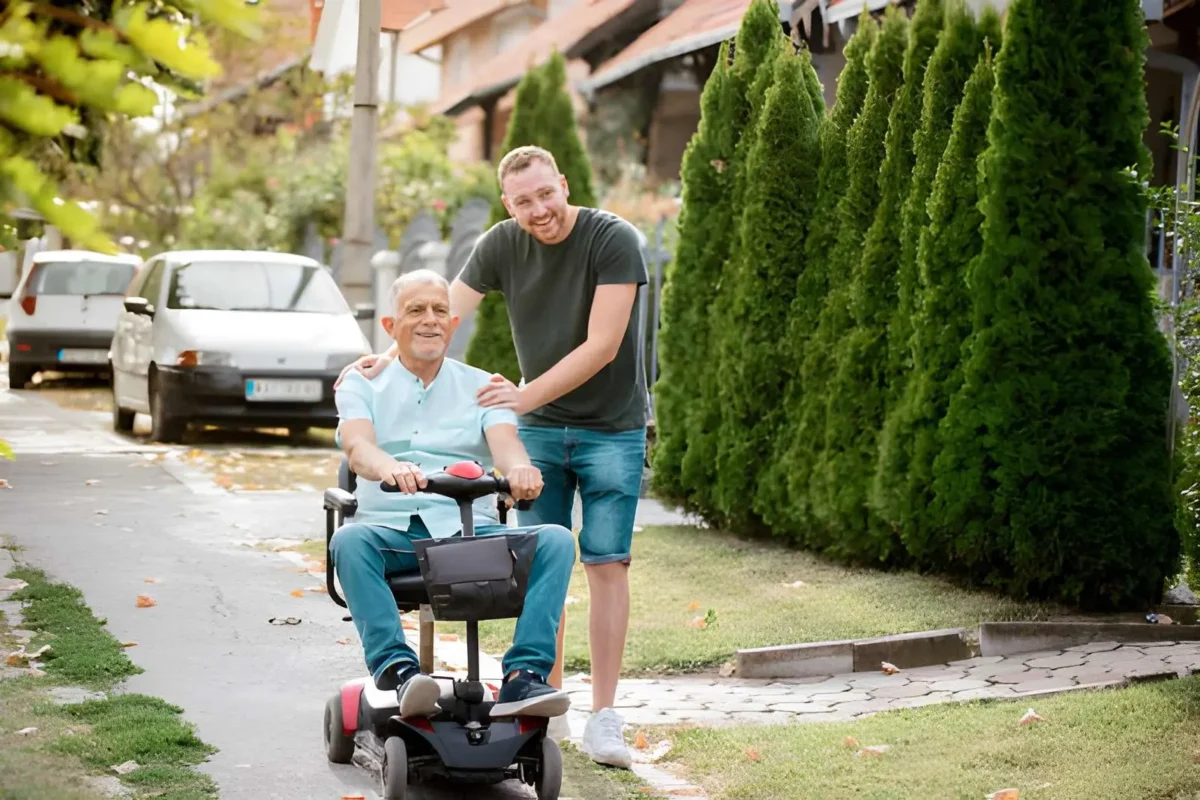

When elderly and post-surgery patients are allowed to walk, stand, or move around their houses, daily routines that need moving, standing or walking on their feet, may become more difficult. Falls and injuries can be more commonly experienced by people with a decreased balance, muscle weakness, joint stiffness, or those that are unable to recover following medical operations. Following safe solutions and knowledge about mobility challenges is important to people aged and caregivers to remain independent and enhance their quality of life.
Mobility aids, including wheelchairs, walkers, rollator, and canes are important in assisting people to move safely, as well as confidently. These are not mere support devices; they are very pragmatic devices that enhance independence, prevent falls, enable elderly persons to engage in daily activities at home and in the outside world.
Programs such as whlicks mobility aids for seniors assist families in understanding the various forms of mobility aids equipment and the way they can be employed in daily life safely.
Comprehending 4 D Mobility Obstacles.
Mobility may arise either as a result of age or may arise abruptly as a result of injury, illness, or surgery. Among the most prevalent challenges, it is possible to single out:
Balance Issues
The balance system of the body may become unresponsive as individuals grow old. Due to weak muscles and slower reflexes, it might become more difficult to stabilize as one walks or stands up.
Joint Pain and Arthritis
Pain, stiffness, and a lack of range of motion are common with such conditions as arthritis. This may complicate such activities as climbing the stairs, walking long distances, or sitting up.
Muscle Weakness
Muscle strength can worsen following surgery or in the case of prolonged inactivity. Lack of muscles makes one less stable and more prone to tripping or falling.
Reduced Endurance
There are some seniors who fatigue faster when engaging in activities. Lack of stamina could pose a challenge when walking without support.
Early discovery of these difficulties assists the caregivers and the families in taking precautions to mitigate the risks and increase the mobility in their day-to-day activities.
The Importance of Fall Prevention.
Among people of older age, falls are one of the most widespread causes of injuries. A simple fall can cause severe complications including fractures, head traumas, or lack of confidence in walking.
Fall prevention is thus a major consideration in ensuring long term independence. Significant prevention of falls strategies are:
Maintaining a good living environment.
Fitting handrails in the stairs and bathrooms.
Putting down non-slip mat in the kitchens and bathrooms.
Wearing orthoses
utilizing supportive shoes.
Proper mobility helps where necessary.
Mobility aids are physical aids that enhance stability and confidence that allow movements in everyday life to be safer.
Selecting the appropriate Mobility Aid.
Not all mobility aids can fit any person. The correct device will be based on the level of mobility, strength, balance, and the daily surroundings of the user.
Mobility aids are of commonly used types as listed below and their usefulness.
Walkers: Stability When Short Distance.
One of the most secure mobility aids is the walkers. They are usually lightweight with the support on both sides of the body in the form of four legs.
Benefits of Walkers
Be very supportive and supportive.
Useful to individuals who are post-surgical.
Appropriate to those individuals who require weight support.
Walkers are frequently prescribed to individuals who have to be at their best with respect to standing or walking a short distance. They are usually applied in the rehabilitation of hips or knee surgery.
Traditional walkers, however, have to be pushed up with each step which could involve upper body strength.
Rollators: Greater Mobility With More Flexibility.
The rollators are the same walkers with wheels, handlebars and a seat. This design enables the users move with much ease without lifting the frame.
Advantages of Rollators
Easier to push while walking
Offer enhanced outdoor mobility.
Seat is inbuilt, which enables one to take a rest when necessary.
Frequently have storage baskets on them.
Rollators are usually prescribed to the patients that are able to walk on their own but require more balance.
Since they are easier to move as compared to the regular walkers, users must be comfortable with operating the brakes and keeping steady.
Canes: Light Aids in Daily Walking.
One of the mobility aids that are the most common and used is the canes. They offer minor assistance and aid in redistribution of weight in case of an injured or aching joint.
When Canes Are Helpful
Mild balance problems
Knee or hip pain
Minor injuries and their healing.
Canes are convenient and suitable on a short trip, errands or a walk. But, they are not as stable as walkers or rollators, and thus should be used with people whose needs are minimally dependent.
Effective and comfortable adjustment includes proper height adjustment.
Wheelchairs: Assistive Limited Mobility.
Wheelchairs offer movement to people who are unable to walk long distances safely, or require complete assistance in the process of recovery.
Temporary usage of wheelchairs can be temporary like in the case of post-surgery or permanent as in the case of people with severe mobility impairment.
Benefits of Wheelchairs
Reduce strain and fatigue
Permit the safe transportation of greater distance.
Graduate social and outdoor activities.
The wheelchairs may be either manual or powered as per the physical strength and mobility requirements of the user.
Caregivers are usually significant in the process of wheelchair mobility and offering safe transfers among the chairs, beds, or other vehicles.
Making the Home Mobility Friendly.
Mobility aids are the most effective with a safe living environment. Even minor modifications around the house can help much to prevent falls.
Helpful Home Modifications
Clear pathways
Get rid of clutter, loose carpets and other unwanted furniture that may hinder movement.
Install grab bars
Additional hand support is made on bathrooms and staircases.
Improve lighting
Proper lighting will minimize the chances of falling down the corridors and on staircases.
Use stable seating
Armrested chairs are easy to sit and get on because it is safe to stand and sit.
Such modifications facilitate movement and assist the elderly to utilize mobility aids.
The Importance of Caregivers in Mobility Safety.
The caregivers tend to support the seniors in the walking, transferring and using mobility equipment. Their assistance is crucial towards safety and trust.
Noteworthy responsibilities of the caregiver can involve:
Mobility aids should be put in place.
Observing the walking pattern and balance shift.
Promoting frequent movement and usually light exercise.
Assisting to keep the place clean.
The caregivers can also work with individuals to learn how to manage mobility aids when performing their daily activities.
Promoting self-esteem and self reliance.
The fear of losing independence is one of the greatest emotional problems which the elderly experience when they cannot move freely. Mobility aids are not seen as a disadvantage, but as something that helps to remain independent.
Using the proper support equipment, the elderly can:
Maneuver in their households.
Enjoy outdoor walks
Get involved in family and social life.
Be able to remain positive in everyday activities.
Availability of trustworthy information on mobility solutions, including visit site resources and guides, assists families to learn about the available options and settle on solutions that most effectively assist their loved ones.
Final Thoughts
Mobility issues are an inherent aspect of the aging or the healing process after medical treatments, yet, they are not necessarily restricting the independence or quality of life. When equipped correctly with mobility aids, safe environments at home, and support of the caregiver, the seniors will be able to move with safety and confidence.
Several mobility aids like walkers, rollators, canes, and wheelchairs provide feasible care to various mobility requirements. Due to the awareness of these possibilities and paying attention to the prevention of falls, families may make the environment of older adults safer and more habitable.
Being mobile is not necessarily related to movement, it is connected to being independent, dignified, and capable of participating in daily life.
Also Read-India’s Economic Survey 2026 Signals A Boom In Aviation And Aircraft Maintenance Technician Jobs







Leave a Comment