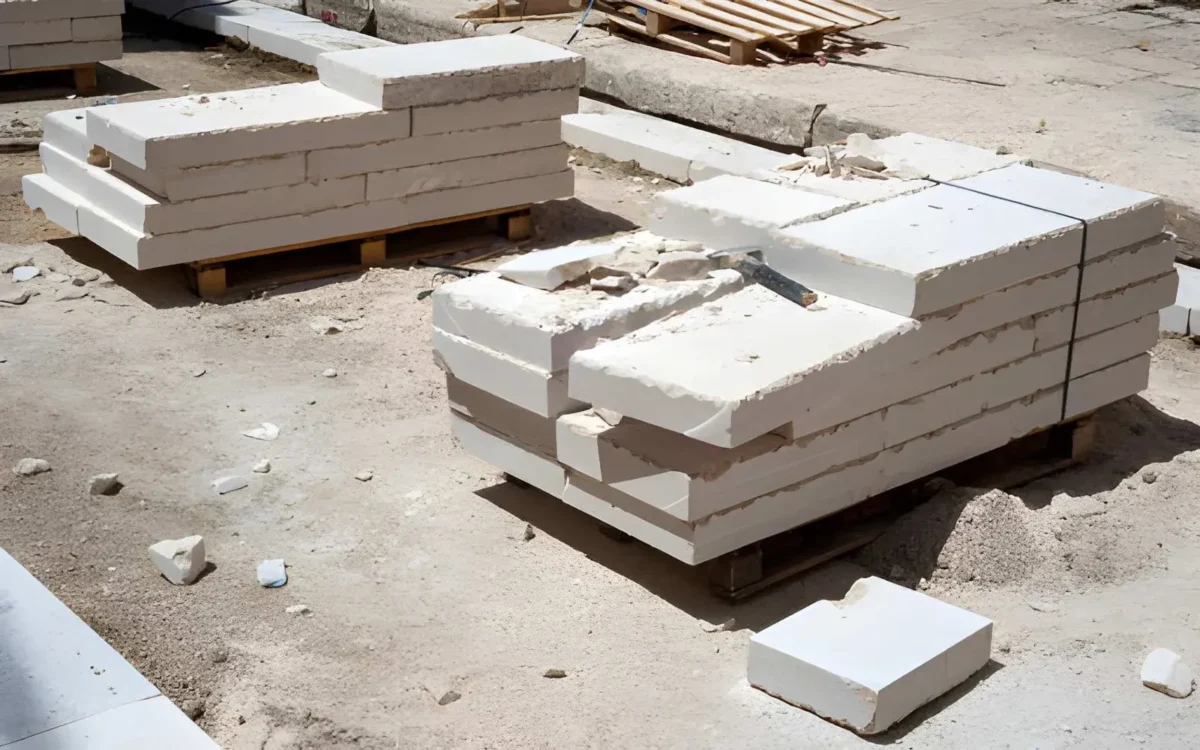

If you are planning a new walkway, patio, or foundation, you have probably spent time comparing materials. Two options come up more than any others: limestone and concrete. Both are popular, both are proven, and both can handle serious weight. But they behave very differently over time, and the choice you make now will affect your maintenance schedule, your budget, and how your property looks twenty years from now.
This breakdown compares the two materials on cost, durability, appearance, and long-term upkeep so you can decide which one fits your project.
First, a Quick Clarification
These two materials are not always rivals. In many projects, crushed limestone actually sits underneath a concrete slab as part of the base layer. So the real question is often not “which one?” but “where does each material belong?”
Still, for surface-level projects like walkways, garden paths, and decorative ground cover, limestone and concrete compete directly. And for foundations, the comparison matters even more, because the material you choose affects drainage, cracking, and structural performance for decades.
Cost Comparison
Upfront Material Costs
Concrete is generally more expensive per square foot than crushed limestone. Poured concrete typically runs higher because of the labor involved: forming, mixing or trucking, finishing, and curing. You are paying for skilled work, not just raw material.
Crushed limestone, by contrast, is one of the most affordable hardscaping materials available. Because it is quarried locally in most regions, transportation costs stay low. If you live within a reasonable distance of a quarry, the savings can be significant, especially for larger projects where you are buying by the ton.
Installation Costs
Here is where the gap widens. A concrete walkway usually requires professional installation. The forms have to be set correctly, the pour has to happen in the right weather, and the finishing work takes skill. A bad concrete job is expensive to fix.
Limestone walkways are far more forgiving. Many homeowners install them themselves with basic tools: a shovel, a rake, a hand tamper or plate compactor, and some landscape edging. That DIY-friendly nature can cut your total project cost dramatically.
Long-Term Costs
Concrete does not always age gracefully. Cracks happen. Freeze-thaw cycles push slabs out of level. Sealing helps, but it is a recurring expense. Repairs, when needed, are noticeable and rarely blend perfectly.
Limestone surfaces can be topped up. If a walkway settles or thins out over the years, you add more stone, compact it, and move on. There is no patching, no visible repair line, and no contractor required.
Durability Breakdown
How Concrete Performs
Concrete is strong in compression, which is why it works so well for foundations and driveways. A properly poured slab can last 30 years or more. But concrete has a known weakness: it cracks. Ground movement, freeze-thaw cycles, tree roots, and poor drainage all take their toll. Control joints help manage where cracks appear, but they do not prevent them.
Concrete is also rigid. It does not flex with the ground beneath it. In regions with cold winters and expansive soils, that rigility becomes a liability over time.
How Limestone Performs
Crushed limestone earns its reputation in a different way. It compacts into a dense, stable surface that locks together under weight. Because it is a granular material, it can shift slightly with the ground without failing. It drains well, which matters enormously for foundations, since water pooling against a structure causes far more damage than most homeowners realize.
Limestone also handles freeze-thaw cycles better than many expect. Water moves through it rather than getting trapped, so the heaving that destroys rigid surfaces is much less of a threat.
For foundations specifically, compacted limestone screening is a standard base material for a reason. It provides uniform support, promotes drainage, and costs a fraction of what a full concrete approach would.
Appearance and Design
Concrete gives you a clean, uniform look. It can be stamped, stained, or colored to mimic stone, though those upgrades add cost. Some homeowners love the crisp geometry of concrete. Others find it plain, and stamped finishes can look dated as trends change.
Limestone offers a natural, warm appearance in tones of gray, tan, and white. It fits informal gardens, rural properties, and traditional landscapes especially well. A limestone path softens over time as the edges settle and vegetation creeps in, and many people find that aged look more attractive, not less.
There is also the question of permeability. A limestone walkway lets rainwater soak into the ground below it. A concrete slab sheds water, which means you need to plan where that water goes. In areas with stormwater restrictions or drainage concerns, that difference alone can decide the project.
Maintenance Requirements
Concrete needs periodic sealing, crack monitoring, and occasional repair. The maintenance is not constant, but when it comes, it tends to be a project.
Limestone needs occasional raking, topping up, and re-compaction. Weeds can appear in loose stone, though landscape fabric underneath reduces that problem considerably. The maintenance is lighter but more frequent, and it never requires special equipment or a professional visit.
Which Should You Choose?
Choose concrete when you need a perfectly smooth, level, rigid surface: a garage floor, a structural slab, or a modern architectural look where crisp lines matter.
Choose limestone when you want affordability, natural appearance, excellent drainage, and a surface you can maintain yourself. It is especially well suited to garden paths, walkways, driveway bases, and the compacted layers beneath patios and foundations.
For many projects, the honest answer is both. A compacted limestone base topped with concrete gives you the drainage and stability of stone with the finished surface of concrete. That combination is how most long-lasting slabs are actually built.
The Bottom Line
Neither material is universally better. Concrete wins on rigidity and finished surface quality. Limestone wins on cost, drainage, repairability, and ease of installation. Look at your climate, your soil, your budget, and how much maintenance you are willing to take on. A walkway built with the right material for its conditions will outlast one built on price or appearance alone, no matter which one you pick.
Also Read
- https://grammerway.com/transform-your-home-with-stylish-area-rugs-in-australia/
- https://grammerway.com/private-yacht-charter-dubai-or-shared-cruise-how-to-pick-the-right-format/
- https://grammerway.com/a-practical-look-at-long-term-outdoor-readiness/







Leave a Comment