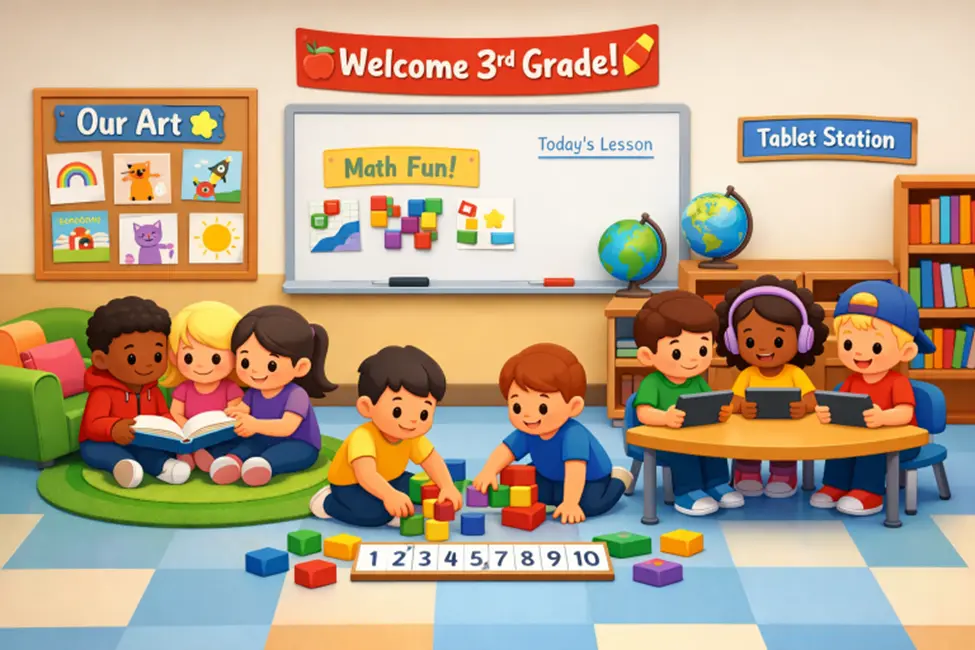

Creating an engaging environment for third-grade students requires both creativity and intention. Children at this age are curious, eager to learn, and developing key skills for lifelong learning, but they can also be easily distracted. Educators must continually adapt and introduce interactive lesson elements to spark excitement and maintain focus in the classroom. By integrating creative teaching methods and activities, students become more invested in their learning journey. For additional resources on lesson planning, educators can explore ideas at https://studentreasures.com/teachers-lounge/lesson-plans/third-grade/.
Successful engagement in third grade often relies on mixing up lesson delivery. By varying activities and learning formats, teachers can address diverse learning styles and help students connect with material on a deeper level. Whether through tactile experiences, collaboration, or the thoughtful use of technology, innovative approaches build a more inclusive and dynamic classroom environment.
Adapting strategies that encourage exploration and conversation are especially impactful. Allowing students to experiment with ideas, share their perspectives, and work together builds confidence and fosters a positive attitude toward schoolwork. A rich and varied curriculum not only streamlines academic growth but also cultivates social skills and curiosity for subjects beyond the textbook.
For teachers looking to energize their classroom with new ideas, here is a collection of proven, innovative strategies designed specifically for third-grade learners.
Interactive Math Activities
Making math lessons interactive is a simple way to boost engagement and comprehension. Visual models like area diagrams and tape diagrams help students see the relationships within math problems, turning abstract ideas like fractions and multiplication into a concrete understanding. These visual aids can be paired with activities involving tangible objects; students might use colored blocks or fraction circles to partition a whole or to solve group math challenges.
Bringing Math Concepts to Life
Number lines are especially helpful for visualizing fractions or solving addition and subtraction problems. Hands-on activities, such as building a number line on the classroom floor using tape or chalk, let students physically move to different points as they solve problems. Including open-ended group projects like designing a math-themed board game can make lessons both collaborative and memorable. More ideas for engaging math activities can be found at Sadlier School.
Dynamic Reading Strategies
Encouraging active participation during reading builds strong literacy foundations. Comprehension webs allow students to map out main ideas, supporting details, and connections between stories. Techniques like identifying cause and effect, summarizing, and guided questioning push students to look deeper and make sense of what they are reading.
Group Discussions and Partnerships
Bringing reading to life through discussion circles and partner reading sessions gives every student a voice. These practices let students share thoughts, listen, and respond to peers, cementing understanding and building critical thinking. Providing opportunities for students to make personal connections to the reading helps them see how stories relate to their own lives. Additional effective strategies are highlighted by Ivy Bound Tutoring.
Hands-On Science Experiments
In third grade, science becomes an adventure when students can experiment and observe firsthand. Nature walks with measuring tools empower students to find angles in leaves or sticks, collect and record data, and discuss findings as a group. Simple experiments, such as growing plants under various light conditions or exploring states of matter with freezing and melting activities, bring science concepts into the real world.
Linking Science and Math
Integrating science with math enhances both subjects. When measuring temperature changes during an experiment or calculating how far a paper airplane travels, students see how math is useful in understanding the world around them. Multi-disciplinary activities encourage curiosity and improve retention.
Creative Writing Prompts
Introducing open-ended writing prompts encourages creativity and helps students find their voice. Opinion essays on topics that matter to students, such as favorite hobbies or community heroes, nurture critical thinking and self-expression. Providing scaffolding with sentence starters or graphic organizers supports students as they learn to organize and expand their thoughts.
Constructing Strong Arguments
When students write and then share their opinions or stories, they learn the value of evidence, clarity, and revision. Regular practice with writing also strengthens spelling, grammar, and vocabulary skills, setting a foundation for writing success in later grades.
Collaborative Social Studies Projects
Social studies become more meaningful when students research topics relevant to their own communities. Group projects on local government workers, community helpers, or cultural traditions bring social studies alive. These assignments build teamwork skills and foster a sense of shared responsibility. Through presenting findings, students develop public speaking and communication abilities in a supportive setting.
Service-Learning and Field Trips
Service-learning projects, such as organizing a classroom food drive or writing letters to local officials, promote active citizenship. Visits to local landmarks or virtual tours deepen understanding of historical or community topics.
Integrating Technology in Lessons
Interactive tools like Quizizz and Edpuzzle allow students to learn at their own pace while receiving instant feedback on their progress. Technology also opens the door to virtual field trips, online research, and multimedia projects that can transform traditional assignments into engaging learning adventures.
Digital Storytelling and Collaboration
Having students create digital books, slideshows, or short videos harnesses their creativity and allows them to demonstrate learning in new ways. These tools can be adapted for all subjects, providing differentiated support that meets individual student needs.
Arts and Crafts Integration
Creative expression through the arts brings energy and joy to academic learning. Projects like collagraphy introduce students to printmaking, encouraging experimentation with textures and materials. Drawing, painting, and constructing dioramas or models expand fine motor skills, balance screen time, and foster a positive classroom atmosphere.
Building Connections with Art
Tying art projects to science, social studies, or reading helps solidify content knowledge. For instance, illustrating scenes from a storybook or creating a timeline mural reinforces comprehension and sequencing skills.
Conclusion
Innovative and interactive strategies make a profound difference in third-grade classrooms. By varying instructional approaches and embracing active learning experiences, teachers help their students develop skills, confidence, and a lasting passion for discovery. Small shifts in daily practice can lead to stronger engagement and academic achievement for every learner.
Also Read
- Innovative Technologies in Metalworking Equipment
- How Storytelling Helps Businesses Build Trust
- Pendeja Meaning in English: Definition, Usage, Cultural Context, and Real-Life Examples






Leave a Comment