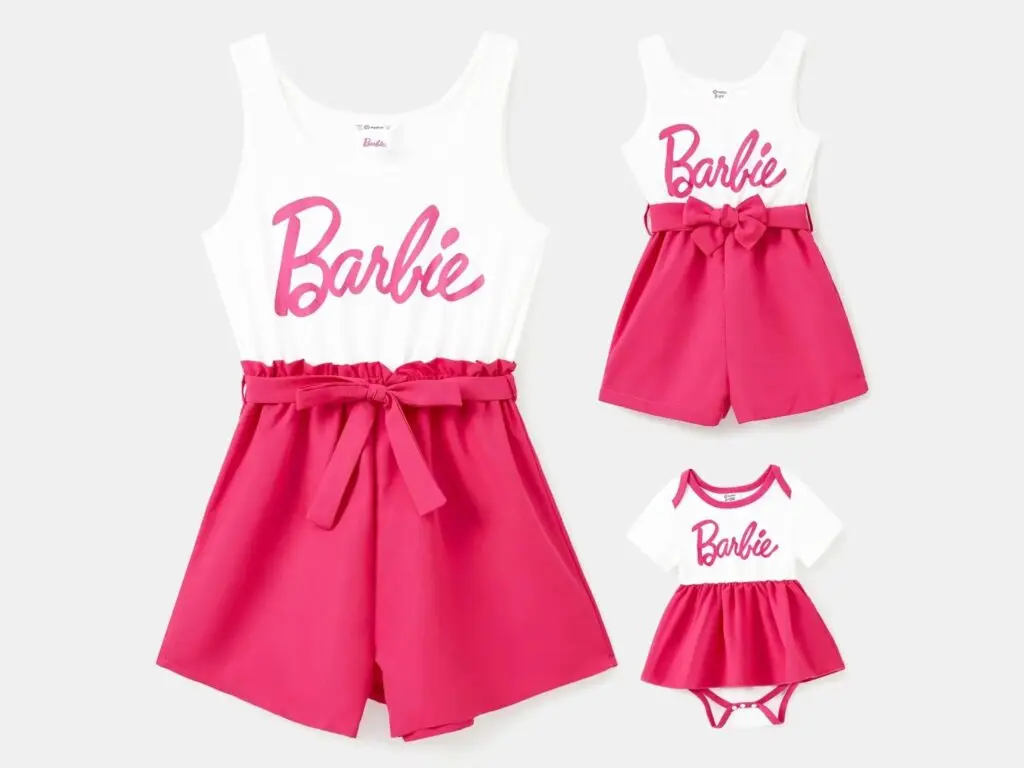

Barbie has been around for decades. Most of us grew up with at least one in the house. But for a long time, Barbie stayed in the toy box. You played with her, you didn’t dress like her.
That’s shifted. Walk through any kids’ clothing section now and you’ll find Barbie prints on everything from t-shirts to pajamas to summer dresses.
It’s not just licensed merch slapped on cheap fabric either. The quality has gotten noticeably better, and parents are actually buying it.
The Movie Changed Everything
The Barbie movie did something no marketing campaign could have pulled off alone. It made Barbie cool for adults again, which trickled down to kids in a big way.
Before the movie, Barbie clothing was mostly limited to Halloween costumes and the occasional graphic tee. After it, pink became a statement. Parents who grew up with Barbie started dressing their kids in it because it felt nostalgic for them too.
That crossover appeal is what turned Barbie from a toy brand into a fashion one.
Why Kids Actually Want to Wear It
Kids are picky about what they wear. Anyone who has tried to dress a four year old knows this. They reject clothes for no logical reason and cling to favorites until they fall apart.
Barbie clothing tends to land in the “favorites” pile. The pink. The sparkle. The recognizable logo. Kids see it and immediately connect it to something they already love.
It’s not complicated. They like Barbie. They want to wear Barbie. Done.
It’s Not Just for Older Kids
Here’s where things have gotten interesting. Barbie apparel has expanded well beyond the five-and-up crowd.
You can now find Barbie prints on onesies, rompers, and tiny legging sets for babies and toddlers. The designs are softer and more subtle than the older kid stuff, but still clearly Barbie.
Parents love it because it’s cute without being over the top. A baby in a pink Barbie onesie gets compliments. Every time.
Matching Across Ages
One trend that’s picked up steam is siblings wearing coordinating Barbie outfits. Older sister in a Barbie dress, younger brother in a Barbie graphic tee, baby in a Barbie romper.
Barbie baby clothes make this possible because the collections now cover infant through toddler sizes alongside the older kids’ range.
It works for family photos, birthday parties, and trips to the park. Nobody looks overdressed. Everyone just looks coordinated.
Quality Has Caught Up
Licensed kids’ clothing used to mean thin fabric, bad stitching, and prints that cracked after two washes. That reputation kept a lot of parents away from character clothing for years.
The newer Barbie collections are different. Fabrics are softer. Prints hold up in the wash. Sizing is more consistent.
When the quality is there, parents stop treating it as disposable and start treating it as actual wardrobe pieces. That shift matters for how often kids get to wear what they actually like.
The Pink Factor
Pink went through a weird phase where people avoided dressing their kids in it. Too gendered. Too predictable. Too much.
Barbie brought pink back without the baggage. It reframed pink as fun and confident rather than limiting. Kids wear pink Barbie shirts to soccer practice and nobody blinks.
That cultural reset gave parents permission to let their kids enjoy pink again without overthinking it.
Birthday Parties and Events
Barbie-themed birthday parties have always been popular. But now instead of just Barbie decorations, kids show up in Barbie outfits.
It doubles as party wear and everyday wear. A Barbie dress works for the party on Saturday and school on Monday. Parents appreciate clothes that pull double duty.
Hand-Me-Down Friendly
Good Barbie clothing lasts long enough to pass down. If the fabric holds and the print doesn’t fade, it goes from one kid to the next without looking worn out.
For families with multiple children, that durability stretches the value of every piece. The baby wears what the toddler outgrew, and it still looks good.
Not Going Anywhere
Some trends fade after a season. Barbie clothing doesn’t seem to be heading that direction.
The brand has stayed relevant across generations. Grandparents recognize it. Parents grew up with it. Kids are obsessed with it. That kind of multi-generational pull keeps demand steady.
If your kids love Barbie, lean into it. The clothing options are better than they’ve ever been, and your kids will actually want to wear them. That alone makes it worth it.
Also Read
- Innovative Technologies in Metalworking Equipment
- Navigating Business Loans: Your Key to Financial Freedom
- Pendeja Meaning in English: Definition, Usage, Cultural Context, and Real-Life Examples



Leave a Comment