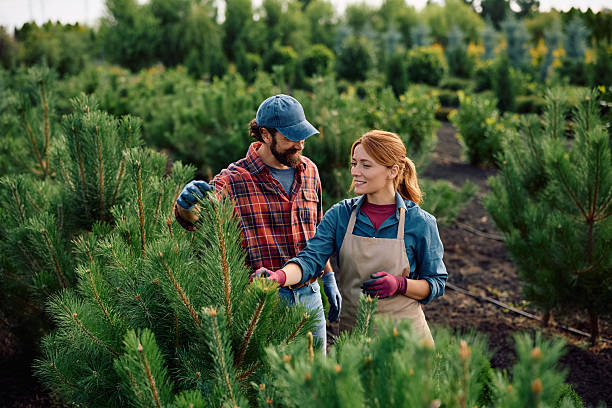

Soil conditions, regional weather, transplanting methods, and ongoing care all influence how trees are managed. A local tree farm may support sustainable practices by growing regionally adapted trees and extending the life of established specimens. Here are some sustainable practices at your local tree farm:
Grow Local Tree Species
Trees grown for local conditions develop within the same climate patterns they will experience after installation. Regional soil also influences root development. Species selection reflects these growing conditions, and local varieties fit the surrounding environment more closely than trees raised under different conditions. This connection begins during production and continues after planting.
Species selection affects how a tree performs within a residential landscape. Mature size influences available planting space, while the surrounding soil affects root establishment. Native and regionally adapted varieties provide options suited to local conditions. Matching a tree with its intended landscape location supports more practical long-term growth.
Local production also lets you evaluate trees before they enter a landscape. Tree structure, trunk development, and visible health provide useful information during selection. Nursery trees receive attention throughout the growing process, and individual trees develop under regional weather conditions.
Transplant Existing Trees
Transplanting provides an alternative when an established tree no longer suits its current location. A tree may be moved elsewhere on the same property, and larger projects can involve relocation to another site. Planning the move requires attention to tree size, root systems, and equipment access. Post-transplant care then supports the tree as it adjusts to its new location.
Established trees require preparation before relocation begins. Equipment crews assess the tree and surrounding space, and the destination site is evaluated for adequate placement room. A professional transplanting process also accounts for handling during movement and placement. Ongoing watering supports the tree’s establishment after relocation.
Maintain Tree Health
Tree maintenance supports structure and health throughout different growth stages. Crown cleaning removes dead or damaged branches, and structural pruning helps guide branch development. Seasonal conditions also affect maintenance needs, particularly after severe weather. Ongoing care addresses different aspects of long-term tree health, and some practices include:
- Remove damaged branches through crown cleaning.
- Guide young branch structure through selective pruning.
- Monitor watering needs during seasonal changes.
- Assess trees after storms cause visible damage.
- Address weakened areas before they deteriorate further.
Storm recovery may involve more than removing broken branches. A damaged tree often requires structural evaluation, and selective care helps preserve healthy portions. Tree farm services that include ongoing maintenance connect tree production with post-installation care. Regular assessments also help identify changes that require professional attention.
Preserve Mature Trees
Established trees add structure to a landscape and often require targeted care as they age. Weak branch unions may benefit from bracing or cabling, while selective pruning reduces excess weight on individual branches. These practices address specific structural concerns and help maintain the tree’s existing framework as it grows. Regular care also helps preserve mature trees as landscape conditions change over time.
Support Trees After Planting
Newly installed trees require attention as their roots establish in unfamiliar surroundings. Watering patterns, mulch placement, and seasonal temperatures influence early growth. Hot temperatures and occasional freezing conditions create different maintenance concerns throughout the year. To support trees after installation:
- Water consistently: Match watering practices with the tree’s establishment needs.
- Place mulch properly: Keep mulch arranged around the root zone without piling it against trunks.
- Monitor summer heat: Watch soil moisture during extended periods of high temperatures.
- Prepare for freezes: Protect vulnerable trees when freezing conditions are expected.
- Schedule ongoing care: Review the tree’s condition as seasonal conditions change.
Learn More About Tree Farm Services
A sustainable landscape also depends on what happens after a tree becomes established. Mature tree care and selective transplanting can extend the life of existing landscape features. Visiting a local tree farm lets you discuss species selection, growing conditions, and long-term maintenance needs with experts. Contact an arborist today for guidance in evaluating trees and identifying practices suited to your property’s landscape conditions.
Read more: Online Social Casino Games Explained Clearly
6 Best LED Inspection Light Bar for Automotive Repair
Exploring the Best Fragrances for Women’s Perfume

Leave a Comment