
Commercial buildings do not need to choose between lower utility costs and a comfortable indoor environment. The strongest energy-saving plans reduce unnecessary runtime, improve airflow, and match heating and cooling output to how each space is actually used. When those pieces work together, offices stay productive, classrooms remain comfortable, and customers receive a better experience.
For commercial property owners in the greater Philadelphia region, HVAC guidance from Diversified Refrigeration can add useful context before a major equipment decision. Diversified Refrigeration evaluates existing infrastructure, available energy sources, and building requirements to help commercial and industrial facilities select heating, ventilation, cooling, controls, and humidity-management solutions that fit the application.
Why Comfort and Efficiency Should Work Together
Energy waste often comes from conditioning the wrong spaces, operating equipment longer than necessary, or forcing a poorly balanced system to overcome airflow problems. For example, cooling an empty conference room all evening adds cost without improving anyone’s comfort. A building-wide approach can reduce that waste while improving temperature consistency, humidity control, and ventilation.
Comfort is influenced by more than the thermostat setting. Air handlers, fans, ductwork, filters, dampers, controls, and exhaust systems all affect how a space feels. A room may feel warm because it receives too little supply air, or feel clammy because humidity is not being managed correctly. Fixing the underlying issue is usually more effective than simply lowering the temperature setpoint.
Start With a Building and Equipment Check
Before replacing a rooftop unit, boiler, air handler, or control system, review the whole operation. Gather utility bills, equipment ages, repair records, operating schedules, and recurring comfort complaints. Compare current performance with the building’s present use, especially if staffing levels, tenant hours, production schedules, or room layouts have changed.
- Identify hot and cold spots, excess moisture, unusual noise, and rooms with repeated complaints.
- Inspect filters, coils, belts, drain pans, dampers, insulation, duct connections, and outdoor units.
- Check whether the equipment is running when the building is vacant.
- Confirm that the system capacity still matches the current occupancy and internal heat loads.
Use Schedules That Match Real Occupancy
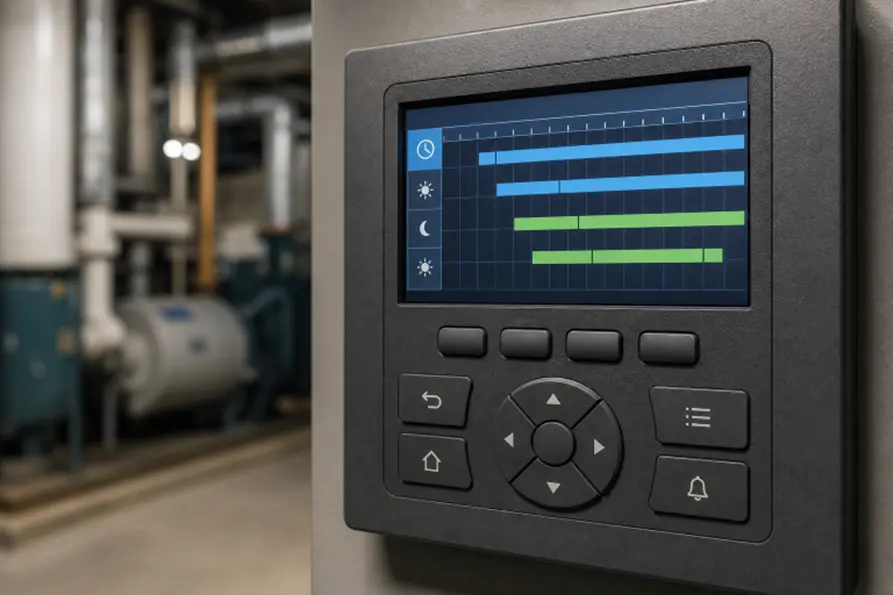
Scheduling is one of the most practical ways to reduce commercial HVAC waste. Set occupied and unoccupied schedules around actual business hours, then account for nights, weekends, holidays, school breaks, and low-production periods. Programmable controls, building automation systems, and optimum start or stop functions can help equipment begin conditioning early enough to meet comfort targets without running all night.
Avoid overly aggressive setbacks. If a building becomes too hot, cold, or humid overnight, the system may need to run at full output for an extended period before occupants arrive. Review schedules after operational changes, then adjust gradually while monitoring early-morning comfort.
Condition only the Spaces That Need It
Zoning helps buildings with different occupancy patterns avoid treating every area the same way. Offices, warehouses, restaurants, schools, medical facilities, and manufacturing sites often contain spaces with sharply different loads and schedules. Storage areas, back offices, meeting rooms, kitchens, loading zones, and high-traffic public areas may each need a different strategy.
- List spaces with different hours, occupancy levels, solar exposure, or equipment loads.
- Verify that thermostats, dampers, and zone controls respond correctly.
- Separate high-traffic areas from storage, service, and lightly used rooms where practical.
- Balance airflow after making zoning changes.
- Track complaints and energy use before and after adjustments.
Improve Airflow Before Replacing Major Equipment
New equipment cannot perform as intended if air cannot move through the building. Clogged filters, dirty coils, blocked return grilles, leaking ducts, loose connections, undersized ductwork, and misadjusted fans can all undermine efficiency. The same problems can create uneven temperatures that lead occupants to change thermostats unnecessarily.
Replace filters consistently, keep supply and return grilles clear of furniture and stored materials, and inspect ductwork for damage or missing insulation. Rooms that stay too warm or too cold should receive airflow testing rather than guesswork. Proper air distribution can sometimes solve a comfort problem without a major replacement.
Choose Controls That Support Better Decisions
Controls turn operating data into action. Useful features include occupancy sensors, remote temperature monitoring, weather-based adjustments, supply-air temperature reset, variable-speed fan control, fault alerts, and trend reports. Strong control strategies help build teams identify equipment that runs too long, zones that never reach setpoint, and patterns that increase demand during peak hours.
Effective commercial air-handler efficiency depends on the full system, including design, fan selection, accessories, controls, and building use. Variable-speed fans can reduce unnecessary airflow during lighter loads, while energy recovery may help buildings that require substantial outdoor air.
Manage Ventilation and Indoor Air Quality Together
Reducing outdoor air too far can compromise indoor air quality, so ventilation should never be treated as a simple cost-cutting target. Review outside-air settings, filtration, humidity, exhaust, and supply air as connected parts of one system. Kitchens, laboratories, healthcare spaces, and production areas may have specialized ventilation requirements that need closer attention.
Carbon dioxide monitoring can provide a useful occupancy-related signal in appropriate spaces, but it does not measure every indoor pollutant. When ventilation needs are high, energy recovery equipment may reduce the heating or cooling load associated with conditioning incoming outdoor air.
Make Preventive Maintenance Part of the Energy Plan
Preventive maintenance protects both comfort and operating costs. Dirty filters slow airflow, neglected coils reduce heat transfer, and worn belts or failing controls can cause equipment to run harder than necessary. The commercial HVAC maintenance guidance from ENERGY STAR emphasizes regular filter checks, annual tune-ups, programmable controls, and lifecycle thinking when planning upgrades.
- Check filters monthly during heavy-use seasons and replace them when needed.
- Clean coils and drain pans, and inspect refrigerant conditions and electrical connections.
- Test belts, bearings, dampers, safeties, and control sequences.
- Review performance after seasonal changeovers.
- Keep records of readings, repairs, replacement parts, and recurring issues.
Know When Replacement Makes Sense
Replacement may be the better value when breakdowns interrupt operations, parts are difficult to obtain, energy use rises despite normal occupancy, or repairs cannot resolve temperature and humidity problems. Consider the total cost of ownership, not just the purchase price. Include installation costs, controls, maintenance, expected service life, energy consumption, downtime risk, and available incentives in the decision.
Use a Simple Measurement Plan
Measure results so improvements are based on evidence. Record baseline energy use, operating hours, temperatures, humidity levels, and comfort complaints. Make one or two targeted changes, then monitor results for several weeks. Keep adjustments that improve both comfort and performance, and revisit those that create unintended problems.
Conclusion
Commercial HVAC savings usually come from several practical improvements rather than one expensive purchase. Better schedules, clean airflow paths, balanced zones, reliable controls, preventive maintenance, and properly matched equipment can reduce waste without making occupants uncomfortable. A measured, building-wide approach gives facility managers a clearer path to lower operating costs and dependable year-round comfort.
Also READ-Innovative Technologies in Metalworking Equipment





Leave a Comment