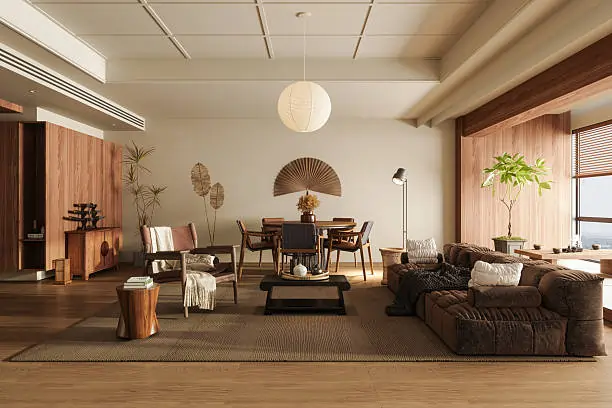

Most apartment renovations begin with surfaces. People talk about flooring, paint, tiles, lights, and furniture before they ask the more important question: what should the home feel like once the work is done? That question matters even more when the goal is to make an apartment feel like a Japanese home.
A Japanese home is often misunderstood as a set of visual signals. People think of shoji screens, tatami mats, pale wood, low tables, and soft paper lamps. Those elements can help, but they are not the whole point. A Japanese home feels calm because it is shaped around daily habits. It creates order without looking stiff. It gives small actions a place. It allows empty space to exist without feeling unfinished. It values quiet, light, texture, and routine over decoration for decoration’s sake.
That means the renovation should not start with copying a theme. It should start with reducing friction. Where do shoes collect? Where does clutter build up first? Which room feels too loud, too bright, or too crowded? What part of the apartment feels temporary no matter how tidy it is? A Japanese-inspired renovation works when it solves those problems in a restrained way.
This approach is useful because many apartments already have the same basic challenge, too many functions squeezed into too little space. One room works as a lounge, office, dining area, and guest space. Storage is shallow where it should be deep, deep where it should be narrow, and absent where it is needed most. The lighting is harsh. The entrance feels like an afterthought. The apartment may not be ugly, but it does not feel settled.
A Japanese home does not try to overpower those limits. It works with them. It uses transitions carefully. It keeps visual noise low. It treats the home as a place of return, not just a place to store possessions. When you renovate with that in mind, even an ordinary apartment can become warmer, clearer, and more personal.
The goal is not to make the apartment look like a film set or a hotel lobby with Japanese references. The goal is to create the kind of home where movement feels natural, materials feel quiet, and every part of the apartment supports the way you actually live. That is what gives the result depth. It feels less like styling and more like belonging.
Redesign the Entrance So Arrival Feels Different
If you want an apartment to feel like a Japanese home, the entrance deserves more attention than the living room. In many homes, the door opens straight into the mess of daily life. Shoes sit in a pile, coats hang over chairs, keys disappear, bags land wherever there is space, and delivery boxes linger too long. That kind of entry makes the whole apartment feel unsettled.
Japanese homes often treat the entrance as a threshold, not just a passage. It marks the shift from outside life to inside life. You remove shoes, slow down, and step into a cleaner, quieter environment. This idea can be translated into almost any apartment, even without changing the structure.
Start with flooring. If the entrance can have its own surface, give it one. Tile, stone-look porcelain, sealed concrete, or another durable finish helps create separation from the rest of the home. Even a subtle floor change sends a message that this area has its own role. If a level change is possible, it strengthens that feeling, but it is not essential. Material contrast can do a lot on its own.
Then address storage. Closed shoe storage is almost always better than open racks in a small apartment. Open shelves look neat for a few hours. Then real life arrives. A slim cabinet, built-in niches, hidden umbrella storage, and a tray or drawer for keys can completely change the mood of the entrance. Add one bench or stool if the space allows. That small act of sitting down to remove shoes slows the body and makes arrival more deliberate.
Lighting matters here too. Entrances are often left with whatever ceiling light the apartment came with, which usually means something cold and functional. Replace it with warmer lighting and, if possible, a second lower light source. A wall sconce, concealed strip, or soft lamp instantly makes the entry feel less like a corridor.
The entrance should also avoid unnecessary visual clutter. Strong patterns, bright colors, too many hooks, or exposed storage can make a small area feel nervous. Keep the palette simple. Wood, soft gray, off-white, muted black, and natural textures usually work better than dramatic contrast. The goal is not to impress. It is to calm.
Once the entrance is working, the entire apartment begins better. That matters more than many people expect. A home that receives you well feels more complete, even if the rest is modest.
Let Space Stay Open, and Let Rooms Change Use
One of the strongest lessons from Japanese homes is that a room does not need to perform only one task. Many apartments feel crowded because every function is assigned to a fixed object or a fixed corner. A large sofa claims the lounge. A dining table dominates the center. A desk takes over one wall. Storage units line the rest. Before long, nothing can move, and the apartment feels full even when it is tidy.
A Japanese-inspired renovation takes a more flexible approach. Instead of filling space, it allows space to stay usable. This does not mean leaving rooms empty. It means making them adaptable. A room should be able to shift with the time of day, the season, or the number of people using it.
Sliding elements are one of the best tools for this. A sliding door, pocket partition, fabric panel, or wood screen can divide space when needed without freezing the layout permanently. This can turn an exposed sleeping area into a private one, soften the visual impact of a kitchen, or create a quiet work zone without building a solid wall. Sliding systems also save valuable floor space because they do not require a door swing.
Furniture selection matters just as much. Low furniture tends to work well because it keeps sightlines open and lets the room breathe. A low storage unit, platform bed, compact dining table, or floor seating used selectively can make the apartment feel calmer. This does not mean the home must be built around floor living if that does not suit your body or routine. It means scale should be respected. Oversized furniture makes small apartments feel tense.
Multi-use pieces are worth considering, but only if they are genuinely practical. A bench with storage, a table that expands when guests arrive, a bed platform with drawers, or nesting side tables can all support flexibility. Avoid gimmicks that look clever in a showroom but become annoying in daily life. A Japanese home feels calm because it reduces effort, not because it turns every object into a puzzle.
Storage should also be integrated with the architecture as much as possible. Freestanding furniture scattered across the room often makes an apartment feel fragmented. Built-in cabinets, wall-length units, recessed shelves, and full-height cupboards help contain objects without chopping the room into pieces. When storage aligns with the walls, the open floor area becomes more useful and more restful to look at.
This approach is especially helpful in apartments where one room must do several jobs. A good renovation allows that to happen with dignity. The room should not feel like it is constantly being converted from one mode to another. It should feel like it was always capable of holding those different uses.
Use Natural Materials to Create Quiet
A Japanese home often feels calm because the materials do not shout. They support light rather than reflecting it aggressively. They age with use instead of looking damaged by it. They invite touch. They carry warmth without heaviness. That is one of the clearest differences between a home that feels grounded and one that feels like a styled rental.
Wood is usually the strongest place to begin. Pale or medium-toned woods, such as oak, ash, maple, or beech, work well because they bring warmth without darkening the apartment too much. Wood can appear in flooring, cabinetry, shelving, window frames, headboards, or simple trim details. It does not need to be everywhere. In fact, restraint usually works better. A few carefully repeated wood tones feel more coherent than a mix of five different finishes.
Wall treatments should stay simple. Bright white walls can look sharp, but in many apartments they make artificial lighting feel colder and shadows harsher. Softer whites, warm grays, clay tones, pale beige, or subtle mineral finishes often create a better background. Textured plaster or limewash can add depth without cluttering the room. Matte surfaces are usually better than glossy ones because they soften light.
Textiles should support the same mood. Linen curtains, cotton bedding, woven rugs, and textured cushions bring softness into a room without making it feel overdecorated. If your apartment currently feels hard or echoing, textiles will do more to change the atmosphere than another decorative object ever could. They reduce sound, soften edges, and make the home feel inhabited.
Paper and fabric can also help reinterpret traditional Japanese design without becoming literal. A paper lamp, a translucent panel, or a woven blind can recall the diffused softness of shoji without copying it directly. That balance matters. The apartment should feel influenced by Japanese home values, not dressed up in costume.
Stone, tile, and ceramic surfaces can be used selectively to ground certain areas. The entrance, bathroom, or kitchen may benefit from a tactile material that contrasts with the warmth of wood. Here too, quieter finishes work better than polished drama. Honed surfaces, matte tile, and subtle texture all support the calm you are trying to build.
Another useful principle is to avoid too many artificial imitations. Fake wood with an overly printed grain, glossy marble-look surfaces used everywhere, and aggressively decorative laminates can break the mood quickly. A Japanese-inspired home usually feels stronger when fewer materials are used, and when each one is allowed to appear honestly.
The result should not feel rustic, precious, or overly designed. It should feel balanced. Materials should look good in morning light, in evening light, and on a rainy day. They should still make sense when books pile up, when laundry is folded on the bed, and when someone leaves a mug on the side table. That is the right test.
Shape Light More Carefully Than You Think You Need To
Lighting can make or break this kind of renovation. Many apartments are sabotaged by poor lighting even after beautiful materials and good furniture have been added. One bright ceiling fixture, a few downlights, and a cold bulb in the bathroom can flatten the whole home. It becomes hard, exposed, and tiring.
A Japanese-inspired home usually treats light with more care. The aim is not darkness. It is soft, layered, and controlled. Light should support different states of living, not flood every room with the same intensity.
Start with daylight. Look at how natural light enters each room during the day. Which windows need privacy without blocking brightness? Which rooms suffer from glare? Which corners stay too dim? Window treatment becomes part of the renovation, not an afterthought. Sheer curtains, woven blinds, roller shades in natural tones, or layered treatments can preserve privacy while letting daylight spread gently.
Avoid clutter around windows. Heavy furniture blocking lower light paths can make an apartment feel smaller and duller. If possible, keep the area around windows more open and use lower furniture nearby. This allows the room to feel airier without changing square footage.
At night, use more than one kind of light. Ambient lighting gives general visibility, but task lighting and low-level accent lighting create mood and function. A pendant over the dining table, a lamp near a reading chair, under-cabinet kitchen lighting, bedside lights, and a soft entry light will create a much better evening environment than a single bright source.
Warm bulbs are usually better for living, sleeping, and relaxing areas. Cooler tones may suit task zones like kitchens or workspaces, but a whole apartment under cool light rarely feels like home. Dimmer controls are also worth the cost. The same room should be able to handle morning activity, dinner, quiet reading, and guests without feeling stuck in one lighting mode.
Paper lamps deserve special mention because they offer one of the easiest ways to introduce softness. Whether you choose a classic rice-paper style or a more modern interpretation, they scatter light gently and reduce glare. Used well, they can shift the emotional tone of a room immediately.
Lighting should also work with reflection. Glossy cabinet doors, polished floors, and mirrored surfaces can bounce light in a sharp way that feels restless. Matte finishes, textured walls, fabric shades, and wood surfaces all help light settle more naturally. This is one reason Japanese interiors often feel so calm even when they are minimal. The light is not fighting the room.
Good lighting is one of the least flashy parts of renovation, but it changes the apartment every evening. That alone makes it one of the smartest areas to treat seriously.
Build Storage That Disappears, Not Storage That Performs
Nothing makes an apartment feel less calm than visible clutter. Yet clutter is not only a tidiness issue. It is often a design issue. When a home lacks the right storage in the right places, objects end up everywhere. Bags live on chairs. Cleaning supplies slip into corners. Kitchen items migrate to open shelves. Seasonal clothing crowds the bedroom. The apartment starts looking busy because it has been forced to improvise.
Japanese homes often handle storage well because they treat it as part of the room, not as an afterthought added later. That does not always mean large amounts of storage. It means thoughtful placement and visual control.
The best storage often disappears. Full-height cabinetry in the hallway, built-in wardrobes with flush doors, storage benches, platform beds with drawers, recessed niches, and deep lower cabinets can all reduce visual noise. Open shelving should be used with care. It is useful for a few chosen things, books, ceramics, tea items, maybe a plant or two. It is less useful for everything else.
Storage should follow routine. The closer it is to the action it supports, the more likely it will be used properly. Shoes belong near the entrance. Tea items belong near the kettle. Cleaning products belong where cleaning happens. Bedding should be stored where it is unfolded. This sounds obvious, but many apartments fail here because storage is added based on where there is spare wall space, not based on how people move.
Closets and cupboards should also be proportioned well. Deep storage can be surprisingly bad because items vanish into the back and never come out. Shallow, well-organized storage is often more useful. Drawers generally outperform shelves for small objects. Internal dividers can be simple, but they matter. A beautiful cabinet full of chaos solves nothing.
When storage is integrated properly, the apartment gains more than neatness. It gains visual stillness. Surfaces stay open. Rooms look clearer. A few selected objects can stand out because they are not competing with everything else. This is one reason Japanese-inspired interiors often feel composed without being sterile. They leave room for absence.
Make the Bathroom and Kitchen Feel Ritual, Not Just Utility
Two rooms carry a huge amount of emotional weight in any home, the kitchen and the bathroom. They shape mornings, evenings, hygiene, nourishment, and recovery. If you want an apartment to feel like a Japanese home, these spaces should support routine with care.
The kitchen should be practical, but it should also feel orderly. Workflows matter. Prep, wash, cook, and store should happen in a sequence that makes sense. Counter space should stay as clear as possible. Appliances that permanently colonize the worktop should be reassessed. Better drawers, slimmer storage, hidden bins, and vertical organization can change a kitchen more than luxury finishes.
Material choices matter here too. Wood tones, matte surfaces, brushed metal, and ceramic elements can make the kitchen feel grounded. Too much gloss and stainless steel can make it feel commercial. The goal is not to create a show kitchen. It is to build a place where making rice, tea, soup, vegetables, or a simple dinner feels calm rather than cramped.
The bathroom should support cleansing and decompression. Even if you do not have room for a large soaking bath, you can still create a better ritual. Use softer lighting, better towel storage, a more thoughtful mirror, durable but quiet materials, and clear separation between wet and dry zones where possible. Improve ventilation if it is weak. Few upgrades affect long-term comfort more than a bathroom that stays dry, clean, and easy to maintain.
Small details matter in these rooms. A wooden stool, a ceramic soap tray, a proper linen towel, a shelf that keeps bottles out of sight, or a better faucet can all shift the atmosphere without becoming decorative clutter. The spaces should feel used well, not filled up.
Create One Corner That Holds Stillness
Every home needs one place that is not trying to do too much. In many apartments, every corner is forced into service. Desk here, shelf there, storage under this, basket beside that. The result may be efficient, but it can also feel relentless. A Japanese-inspired home benefits from one corner that offers pause.
This could be a reading chair beside a lamp, a floor cushion and low table for tea, a narrow bench by a window, a small tatami platform, or a simple shelf with space to sit nearby. It does not need to be large. It needs to feel intentional.
This is where personality enters the home more softly. A few books, a ceramic cup, a branch in a vase, a framed print, a plant, these things can carry more emotional weight here than decorative objects scattered around the apartment. The corner becomes a place to return to. That matters because a home is built through repeated use, not by completing a shopping list.
If the apartment has a balcony, treat it as an extension of this idea. Even a narrow outdoor strip can become valuable with a bench, planters, and simple flooring. In dense urban life, any connection to air, sky, and weather helps a home feel less closed.
Keep Decoration Sparse, and Let Meaning Do the Work
A Japanese home rarely feels rich because it contains a lot. It feels rich because what is present has room to matter. That principle can guide the final stage of the renovation. Once the main architectural moves are done, resist the urge to overfill.
Choose fewer objects. Let a good lamp remain visible. Let a beautiful bowl sit alone on a shelf. Let one textile bring warmth instead of six smaller decorative items fighting for attention. Art can be used, but it should breathe. Plants help, but not if they turn every ledge into a greenhouse. Simplicity becomes convincing when it is selective, not when it is empty.
This also applies to furniture styling. A home does not become calmer because every surface is stripped bare. It becomes calmer when each item has enough visual space around it. That is why scale matters so much. One solid sideboard often works better than three small pieces. One larger rug can unify a room better than several scattered ones. One well-made chair can say more than a cluster of mismatched filler furniture.
When choosing pieces for dining or casual seating, it helps to think less about trends and more about honesty of form. Some homeowners even borrow ideas from well-made restaurant furniture because it is often simple, durable, and designed to handle repeated use without fuss. Used carefully, that same logic can work beautifully in an apartment that is trying to feel calm and grounded rather than overstyled.
This is also where people sometimes make mistakes with imported ideas. They buy every object that looks “Japanese” and end up with a room full of symbols but no peace. The better route is slower. Bring in objects you will use, touch, and keep. Let meaning lead the purchase, not the theme.
The Apartment Feels Different When Life Fits Inside It
The renovation is successful when the apartment stops fighting your habits. You enter and know where things go. The light changes with the evening. Rooms hold more than one use without feeling strained. Materials soften sound and support touch. Storage hides what does not need to be seen. The kitchen helps routine. The bathroom restores it. One corner offers quiet. The apartment begins to feel complete not because everything matches, but because everything belongs.
That is what makes an apartment feel like a Japanese home. It is not the presence of a screen, a lamp, or a low table on its own. It is the overall discipline of calm. It is the refusal to let clutter dominate. It is the respect for thresholds, light, emptiness, and routine. It is the choice to make home a place of return rather than a showroom.
When you renovate with that in mind, the result feels deeper than style. It feels settled. It feels lived in. It feels like the space has finally learned how to hold you.
Read more: Customer Loyalty Data Analytics: A Complete Guide for Marketers
Starlink Internet Bahrain vs Traditional ISPs: A Complete Comparison
Top Reasons to Book a Khajuraho Tour Package from Delhi in 2026

Leave a Comment