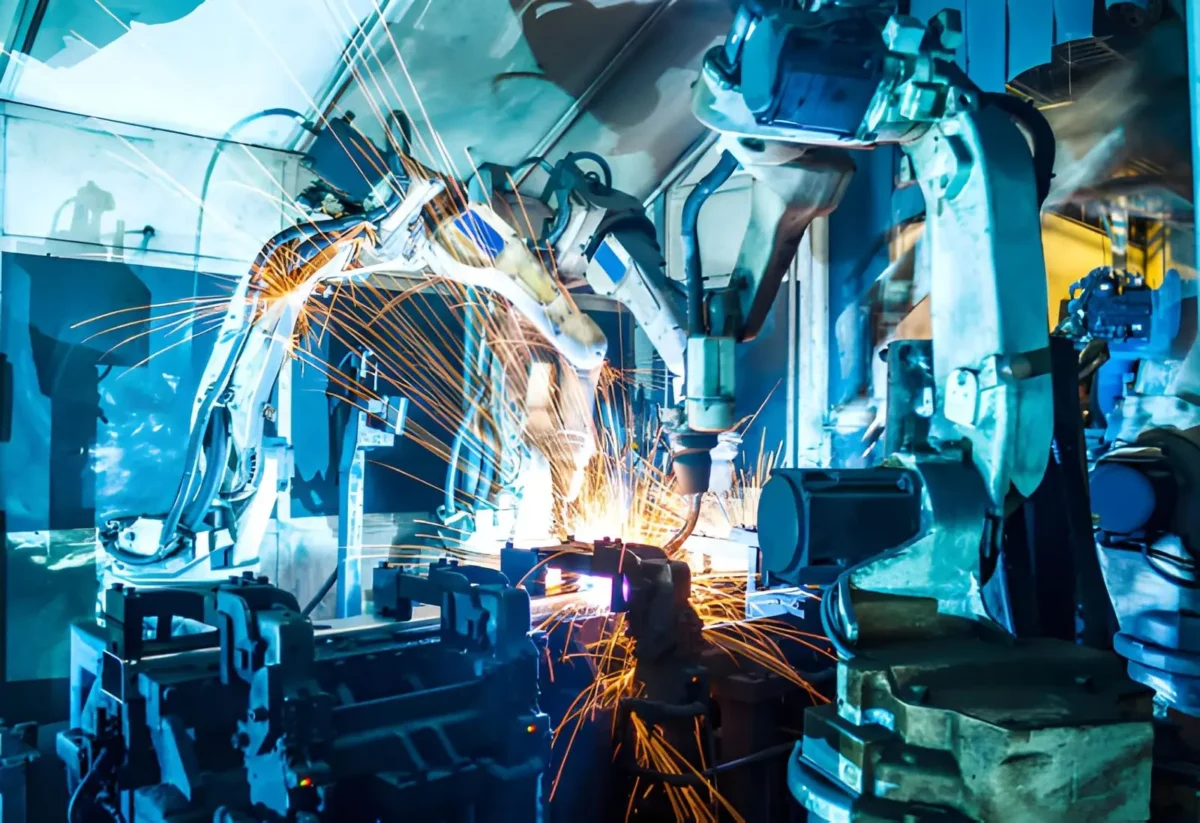

Metalworking equipment integrated with innovative technologies can efficiently and precisely fabricate complex components with tighter tolerances. Advanced metalworking machines minimize manual adjustments and material waste; this enables manufacturing and fabrication industries to optimize resources while boosting productivity. Here are a few innovative technologies that are shaping how metalworking equipment operates:
Hybrid Manufacturing Systems
Hybrid manufacturing systems serve as key metalworking innovations that integrate processes like CNC milling with additive manufacturing, such as 3D printing, within the same equipment. This integration facilitates the layer-by-layer fabrication of metal components with high dimensional accuracy. The fabricated near-net-shape metal parts then undergo precise machining in a single setup without re-fixturing, and this boosts efficiency. 3D printing, as an additive manufacturing provides design flexibility, while CNC milling, a subtractive process, delivers reliability and precision.
Integrated 3D printing and CNC milling promote material utilization by minimizing scrap in high-value metals, like nickel and titanium alloys. 3D printing utilizes lasers to deposit materials like wires or molten metal powder onto a CNC machine’s base. Through CNC machining, the formed rough structures are milled into workpieces with precise dimensional accuracy, helping minimize material waste . 3D printing also enables CNC fabrication equipment to accurately fabricate intricate geometries or features like lightweight lattices and conformal channels.
AI-Driven Process Optimization
Advanced metalworking equipment like hydraulic press brakes and CNC fabrication machines integrates artificial intelligence and machine learning to help analyze their data in real-time. AI algorithms analyze machine data such as material flow, spindle vibration, and temperature. The analysis enables automation and predictive adjustments to help maximize the fabrication process’s efficiency and minimize waste. AI-driven CNC machines are capable of predicting tool wear through real-time data from spindles. This enables them to adjust feed rates automatically, and so they maintain consistent cuts on metals.
Hydraulic press brakes integrated with AI-driven process optimization can analyze the fabrication cycles and determine if there are unusual bend forces. This helps adjust bending angles and back-gauge positioning immediately to protect the metal being fabricated from cracking. AI-driven CNC milling machines also automatically adjust cutting, shaping, and drilling speeds; this helps deliver consistent tolerances in high-volume production runs. This innovative technology helps promote predictive maintenance by analyzing sensor data from CNC mills.
It can forecast failures in components like spindle bearings, linear guides, or servo motors, and prevent unexpected stops. Real-time adjustments during cutting or welding help achieve fabrication output consistency while protecting the equipment’s internal components from excessive wear. This means metalworking machines integrated with AI technology can have an extended service life compared to conventional equipment. Equipment integrated with machine learning also automatically adapts to variations in material thicknesses or hardness levels. This helps maximize fabrication output while also minimizing wastage.
Laser Cutting Technology
Laser cutting technology enables a precise cutting of metals through burning, melting, or vaporizing. This technology can be integrated with CNC fabrication equipment or hydraulic press brakes to deliver precise cuts on complex geometries. It allows for repeatable production of identical parts at scale.
The high-powered laser beam used in this technology helps protect the workpiece from possible mechanical deformation, while also preventing tool wear. This produces cuts with smooth edges and narrow kerf widths. Workpieces produced through laser cutting technology also feature minimal heat-affected zones. These results streamline fabrication due to the reduced need for secondary CNC finishing operations.
IoT and Smart Sensors
The Internet of Things (IoT) helps enhance CNC milling operations when integrated with the machine’s software or sensors. CNC milling machines may include computer-aided design (CAD) or computer-aided manufacturing (CAM) software. IoT integrated with a metalworking machine’s software and sensors aids the collection and exchange of data during operations. The seamless flow of operational data enables real-time monitoring and automation tailored to equipment performance in metal fabrication.
Electrical Discharge Machining
Electrical Discharge Machining (EDM) can be integrated with metaworking machines like coil equipment, shears, and hydraulic press brakes. This technology utilizes controlled electrical sparks to fabricate complex shapes in hard metals instead of using mechanical force. The absence of direct mechanical contact between machines integrated with EDM and the workpiece prevents material deformation; this yields precise mechanical parts and molds. Tight tolerances from EDM metalworking machines make them ideal for industries like aerospace, where high-precision machining is required.
Buy Advanced Metalworking Equipment
Innovative metalworking machines help deliver precisely accurate workpieces, free from dimensional inaccuracies, structural defects, or surface scratches. They also make fabrication processes more efficient due to equipment automation and minimal material wastage. Contact a reliable industrial machinery dealer to find advanced equipment for your metal fabrication operations.
Also Read
- Maximizing Your Reach With White Label Local SEO
- Restoration Techniques That Bring Log Cabins Back to Life
- Restoration Techniques That Bring Log Cabins Back to Life







Leave a Comment