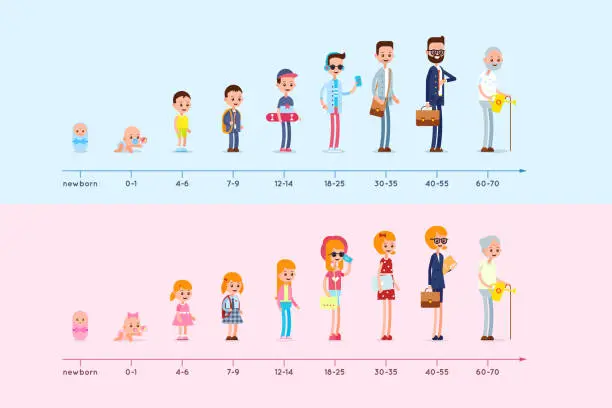

Imagine this: two people walk into a clinic, and both of them are 55 years of age. However, only one of them is the patient in need, struggling with joint pain, high cholesterol, weight problems, and constant fatigue. Interestingly, you’d find it hard to believe that the other person is in their 50s, who carries themselves with the energy of someone decades younger.
What’s going on with this difference? Well, the metric we’re comparing them with is just their chronological age and not their biological age, which shows how well your body is actually functioning at a basic level.
So, if you’ve been wondering why you feel older than you are, you need to understand the difference between these two types of age to correct your lifestyle going forward. Keeping that in mind, let’s break down what chronological and biological age actually mean and why the latter matters a lot more than people think.
What is chronological age, and why is it limited in scope?
So the concept of chronological age is as simple as it gets. It’s the number of years you’ve been alive since the day you were born. It’s the thing that most people rely on to set up milestones in their life – when you should settle down, when you should retire, how your insurance premiums are calculated, and more.
For a long time, this type of age has been the main tool for doctors in assessing any kind of medical risk. If you’re over 50, it’s high time you get a colonoscopy. If you’re over 65, you’re at a higher risk of injury from falls. It’s a well-established system driven by extensive data, and it has served the medical industry well in health planning on a near-global scale.
But that’s the problem: while it can help establish medical risks by age, it basically tells you nothing about your current health status. It simply cannot account for the fact that someone’s body can be older or younger than their age – a 40-year-old might have arteries that look like they belong to someone two decades older, and they’d never know until a serious health complication occurs. It also fails to capture the enormous variation in disease risk, mobility, and resilience among people who happen to have been born in the same year.
Let’s also not forget that no two people grow up the same way. Someone may have spent their years managing stress well, eating nutritious food, staying active and sleeping properly. On the other hand, you could have someone who endured years of chronic stress, poor nutrition, and inadequate rest. Their chronological age will treat them the same, but it will be clear to anyone that their bodies are ageing at completely different rates. To put it simply, it’s a blunt instrument in an era when we have far more precise tools to understand how our bodies truly function.
What is your biological age?
Speaking of precise tools, let’s talk about our biological age now. Contrary to chronological age, this one refers to the age of your cells, tissues, and organs. It measures how well your body is functioning relative to your age group, and unlike the number on your birth certificate, it can be higher or lower depending on your lifestyle. Thankfully, the real magic of biological age lies in its ability to respond to lifestyle changes. Unlike your chronological age, which will always move forward regardless of what you do, your biological age can slow down or even reverse with the right steps. This is what makes it such a powerful tool in longevity and preventive medicine.
Why does biological age matter for your longevity?
To answer this question, all you need to know is that this age is just a better predictor of your health risks and mortality than chronological age. Studies have shown time and again that people with accelerated biological age tend to face a higher risk of developing conditions like diabetes, cardiovascular disease, and even neurodegenerative disorders.
So, rather than waiting for these terrible diseases to manifest and then treating them reactively, you can get your biological age assessed right away and intervene at the right time to slow down or outright stop any potential health problem. Plus, don’t forget, understanding this age is your first step towards not only living a longer life, but a better one too.
As mentioned before, you have much more control over your biological age, and most of it comes down to living a healthy, fulfilling life. The first step in this regard is to get your nutrition and metabolism in order – this will ensure that your body has the fuel and building blocks it needs to function properly. Then, add some workouts into the mix and focus on developing your muscle mass, which is a very strong predictor of healthy ageing. Once these things are sorted, make efforts to improve your sleep quality, manage stress, and have adequate recovery time at the end of each day.
While you’re doing all this, it’s best to pay attention to your hormonal balance and micronutrient status as well, all of which play a significant role in your organ and cellular health. Deficiencies in key vitamins and minerals, or imbalances in hormones like thyroid, cortisol, or sex hormones, can all accelerate biological aging. Once you address these with some targeted supplementation or hormone optimisation routines, you’ll practically feel yourself getting younger and more like your youthful self.
With all that said, if you want to go deep on how one can practice all these things and build a comprehensive approach to longevity in the process, it is best that you speak to a good longevity clinic in London as soon as possible. The doctors there will be best equipped to assess your biological age and recommend the most effective interventions to optimise it. Not only that, but you’ll also get a good idea of the health markers you need to look out for as you grow older, which, in turn, will only make the process much easier – no more trial and errors required.
Taking Control of How You Age
Look, at the end of the day, it is important to admit that time ticks the same for everyone, and you have very little control over your chronological age. It will go up by one every year, no matter what. But you can control your biological age and make the most of your remaining life. The small choices you make, whether on how you eat, move, sleep, or handle stress, can all make a massive difference in how you feel inside – with these choices changing your body’s age at a cellular level.
So, what you’ve done today, understanding the difference between your two ages, is just the first step towards ageing well. There is a whole road ahead of you, one that will require you to actively build an approach to taking care of yourself. As long as you don’t settle for simply growing older and keep your focus on ageing well and living your best life, the rest of this journey will undoubtedly be an easy one.
Also Read-
- Understanding Different Types of Healthcare Services Available in Sydney
- The Importance of Acting Early on Skin Health Advice in South Australia
- Thinking About a Hair Transplant in India? Here’s How a Personal Loan Can Help







Leave a Comment